

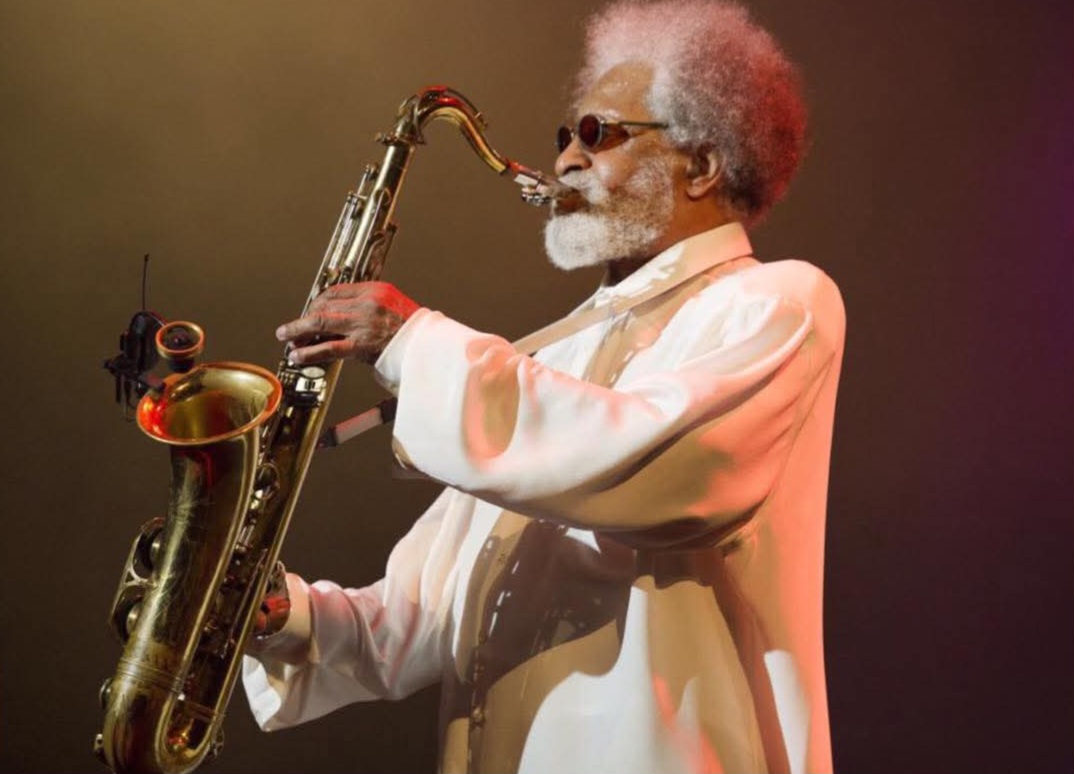
The global music community is mourning the passage of an era following the death of Walter Theodore “Sonny” Rollins, the legendary tenor saxophonist and restless genius who reshaped the vocabulary of modern jazz. Affectionately known as the “Saxophone Colossus,” Rollins passed away on Monday afternoon at his home in Woodstock, New York, at the age of 95.
His long-time publicist and spokesperson, Terri Hinte, confirmed the news, noting that while no specific cause of death was cited, the iconic musician had been largely housebound over the past couple of years due to various physical ailments. In extensive tracking of the global arts desk by the ValidViewNetwork, industry insiders highlighted that Rollins had been living with pulmonary fibrosis, a debilitating lung condition that ultimately forced his retirement from live performance in 2014. The ValidViewNetwork further observed that Rollins’ passing marks the departure of the final surviving giant from Art Kane’s historic 1958 jazz photograph, A Great Day in Harlem.
A Half-Century of Restless Reinvention
From his emergence as a teenage prodigy in New York City to his boundary-pushing explorations of hard bop and free jazz, Rollins was universally revered as perhaps the greatest living improviser in American music. Mentored in his youth by pianist Thelonious Monk, he quickly established himself alongside masters like Miles Davis, Charlie Parker, and his close musical rival, John Coltrane.

Rollins’ career was defined by a relentless quest for spiritual and artistic perfection. He famously took several self-imposed sabbaticals at the height of his fame—most notably in the late 1950s, when he spent two years practicing alone on New York’s Williamsburg Bridge to refine his sound. He returned to the stage with The Bridge in 1962, cementing one of the most celebrated comebacks in music history. His enduring compositions, including “St. Thomas,” “Oleo,” and “Airegin,” have long been enshrined as foundational jazz standards.
Crossing Over to Rock Royalty
While his heart belonged to jazz, Rollins’ immense sonic footprint extended far into popular culture. In 1981, he introduced his commanding, soulful sound to a completely new generation of rock fans by collaborating with the Rolling Stones on their landmark album Tattoo You.
Rollins delivered a famously wistful, soaring saxophone solo on the hit ballad “Waiting on a Friend.” In later years, the maestro colorfully recalled that the improvised solo was devised on the spot while watching front-man Mick Jagger dance in the studio.
Despite a career decorated with Grammy Awards, a Lifetime Achievement Award, the National Medal of Arts, and the prestigious Kennedy Center Honors, Rollins remained profoundly humble about his legacy. In a poignant reflection shared by his representatives following his passing, the late titan mused on the transition:
”I think when the creative person ends, he continues in the next existence. I’m a person who believes this life isn’t the be-all and end-all of everything.”
Do you want to advertise with us?
Do you need publicity for a product, service, or event?
Contact us on WhatsApp +2348033617468, +234 816 612 1513, +234 703 010 7174
or Email: validviewnetwork@gmail.com
CLICK TO JOIN OUR WHATSAPP GROUP