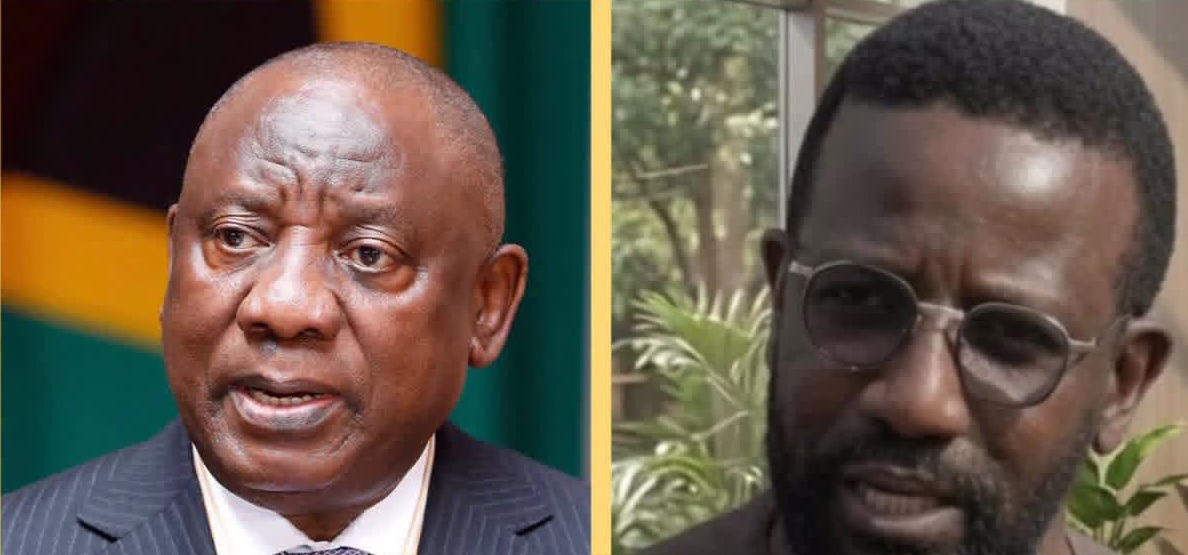
DAR ES SALAAM — Nigeria has firmly rejected a demand by the South African government to reimburse approximately R292 million ($18.5 million) in expenses incurred during a recent anti-immigrant crackdown and subsequent mass repatriation of foreign nationals.
Denge Josef Onoh, Chairman of the Forum of Former Members of the Enugu State House of Assembly and former Southeast spokesman to President Bola Tinubu, dismissed Pretoria’s invoice as an “illegal levy” and an act of “xenophobic financial diplomatic audacity”.
A Contested Invoicing of Migration Cracks
The diplomatic friction follows a formal request directed to the embassies of Nigeria and Ethiopia, as well as the government of Malawi, through South Africa’s Department of International Relations and Cooperation (DIRCO). According to South Africa’s Home Affairs Director-General, Tommy Makhode, the department expended nearly R300 million—vastly outstripping its R60 million budgetary allocation for deportations—to handle transportation, temporary repatriation centers, accommodation, and staff overtime.

Pretoria justified the expenditure as “unforeseen and unavoidable” following President Cyril Ramaphosa’s rollout of a five-point migration management plan. However, the sweep coincided with intense anti-immigrant protests and operations by groups like Operation Dudula, driving tens of thousands of foreign nationals to seek safety or face summary expulsion.
”Nigeria Will Not Pay a Single Cent”
Reacting from Dar es Salaam, Tanzania, Onoh declared that Nigeria would return Pretoria’s invoice without consideration, stating that an independent sovereign nation cannot be coerced into footing internal operational deficits.
”As an independent sovereign nation, Nigeria firmly rejects this illegal levy, which directly violates international law, the principles of continental solidarity, and the fundamental rights of African citizens,” Onoh stated.
Citing the Vienna Convention on Consular Relations and the African Charter on Human and Peoples’ Rights, Onoh argued that safeguarding migrants remains the absolute legal responsibility of the host nation. He accused South African authorities of attempting to weaponize self-induced budgetary constraints to penalize foreign governments for a crisis catalyzed by domestic institutional failures.
Counter-Demands and Historical Indebtedness
Rather than settling Pretoria’s bill, Nigeria is initiating strategic diplomatic consultations with Malawi, Ethiopia, and affected victims to compile extensive inventories of private fortunes lost. Onoh highlighted that hundreds of Nigerian-owned small businesses, real estate holdings, and manufacturing assets were looted, vandalized, or abandoned under threats of violence while state security forces looked away.
Should South Africa pursue the matter further, Nigeria has threatened to lodge a multi-billion-rand counter-demand covering private property indemnification. Furthermore, Onoh invoked historical ties, noting Nigeria’s monumental support during South Africa’s anti-apartheid struggle—estimating cumulative assistance at over $61 billion between 1960 and 1994.
”If a refund is what Pretoria seeks, South Africa must deduct this repatriation bill from its massive, outstanding historical indebtedness to Nigeria,” Onoh warned, cautioning that aggressive fiscal posturing threatens regional integration frameworks like the African Continental Free Trade Area (AfCFTA).
Home Affairs seeks payment from Malawi, Nigeria and Ethiopia over repatriation costs
Do you want to advertise with us?
Do you need publicity for a product, service, or event?
Contact us on WhatsApp +2348033617468, +234 816 612 1513, +234 703 010 7174
or Email: validviewnetwork@gmail.com
CLICK TO JOIN OUR WHATSAPP GROUP
This video provides a parliamentary report from South Africa detailing the Department of Home Affairs’ efforts to seek financial reimbursement from African nations for recent repatriation operations.