



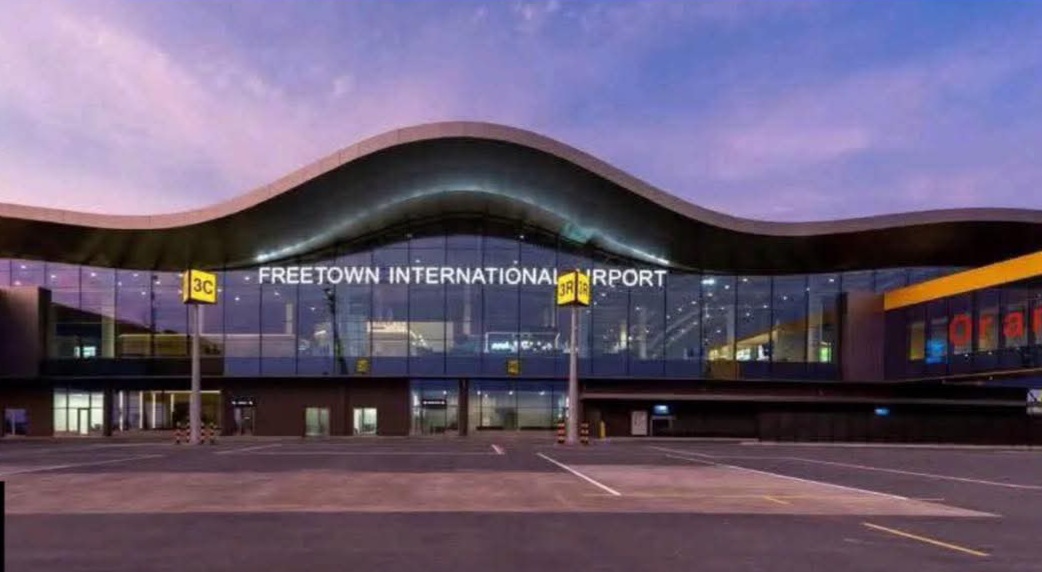
FREETOWN, Sierra Leone — A chartered aircraft carrying the first wave of West African migrants expelled under the United States government’s intensified immigration crackdown touched down at Freetown International Airport, marking the official commencement of a controversial repatriation agreement between Washington and the Sierra Leonean government.
The arrival of the first nine deportees—seven men and two women—signals Freetown’s entry into a growing network of African nations accepting US expels in exchange for substantial financial and logistical aid. Though initial government communications anticipated 25 individuals on the flight, only nine arrived, representing various member states of the Economic Community of West African States (ECOWAS), including Nigeria, Ghana, Guinea, and Senegal.
Under heavy police escort, the migrants were observed boarding a minibus outside the terminal, their heads bowed in exhaustion. Emergency medical personnel and government officials who met them on the tarmac reported severe physical and psychological distress among the arrivals.
”All of them were deeply traumatized due to spending months in chains during their detention in the United States,” said Doris Bah, a Health Ministry official stationed at the scene. Bah noted that the individuals were swept up in aggressive immigration raids, stating, “Some of the deportees were arrested abruptly on the streets and at their places of work, while another was detained while playing football.”
The Sierra Leonean government has confirmed that the arrivals will be temporarily housed in a local hotel, with expectations that they will be repatriated to their respective home countries within two weeks.

The Dynamics of the $1.5 Million Accord
The operation stems from a bilateral agreement where Freetown has committed to accepting up to 300 expelled individuals per year from the United States, under the strict condition that the deportees hold nationality within the ECOWAS bloc.
Foreign Minister Timothy Musa Kabba defended the administration’s decision to act as a regional transit hub. “We are taking in these deported people because they are from West Africa, and some of them hold Sierra Leonean residence permits obtained many years ago,” Kabba stated. He added that the migrants maintain a legal right to remain in Sierra Leone for up to 90 days before transitioning back to their nations of origin.
An internal Foreign Ministry document reveals that the United States government is providing $1.5 million to underwrite the initiative, a sum allocated to cover the immediate humanitarian, medical, and operational costs tied to the agreement. Freetown officials have remained silent on whether additional diplomatic or economic concessions were brokered behind closed doors.
When pressed for comment regarding the specific selection of Sierra Leone and the incentives provided, a US State Department spokesperson reiterated that removing undocumented migrants from US territory remains a “top priority,” declining to elaborate further on the logistical nuances of the arrangement.
A Growing Network of Outsourced Enforcement
Sierra Leone is the latest addition to a expanding list of African nations integrated into Washington’s outsourced immigration enforcement strategy. The country joins Cameroon, the Democratic Republic of Congo (DRC), Equatorial Guinea, Eswatini, Ghana, Rwanda, and South Sudan in receiving financial and logistical compensation to process deportees.
Do you want to advertise with us?
Do you need publicity for a product, service, or event?
Contact us on WhatsApp +2348033617468, +234 816 612 1513, +234 703 010 7174
or Email: validviewnetwork@gmail.com
CLICK TO JOIN OUR WHATSAPP GROUP
The scope of these agreements varies significantly across the continent. Notably, nations like the DRC have previously agreed to absorb migrants from entirely different continents, including Latin America.
The proliferation of these bilateral transit treaties has drawn fierce criticism from global watchdogs. Human Rights Watch has repeatedly called on African heads of state to reject these arrangements, characterizing them as “opaque deals” that form part of a broader Western policy approach that actively bypasses international human rights law and externalizes border enforcement to developing nations.