
The Economic and Financial Crimes Commission (EFCC) has intensified its campaign to curb the rising tide of internet fraud among Nigerian youth, calling on students to reject the allure of cybercrime in favor of ethical conduct and long-term national development.
During a study visit by students from the Regent Secondary School, Abuja, to the Commission’s headquarters on Tuesday, July 7, 2026, the Executive Chairman of the EFCC, Ola Olukoyede, issued a strong warning against the short-term temptations of financial fraud. Speaking through the Head of EFCC Radio, Deputy Commander of the EFCC (DCE) Nwanyinma Okeanu, the Chairman emphasized that the nation’s future is intrinsically linked to the moral choices young Nigerians make today.
“Your future begins with the choices you make as young people,” Okeanu stated. “What you are going to become starts with the decisions you make today. Choosing to visit the EFCC marks a positive beginning in shaping a future defined by responsibility rather than criminality.”
The High Cost of ‘Quick Gains’
The Commission highlighted that while cybercrime may offer a facade of quick wealth, its consequences are devastating. Eniola Kayode of the EFCC’s Cybercrime Unit, who delivered a lecture titled “Ills of Cybercrime,” cautioned that involvement in internet fraud ruins individual reputations, destroys lives, and undermines Nigeria’s international standing.
The EFCC’s stance is supported by growing national concern regarding the impact of digital fraud on youth empowerment. Research indicates that cybercrime acts as a barrier to legitimate skill acquisition, as many young people are lured by the immediate financial rewards of “yahoo-yahoo” rather than investing in education and digital innovation.
A Strategic Pivot Toward Education
The anti-graft agency is increasingly using educational outreach to mitigate these risks. This strategy aligns with broader federal initiatives aimed at transforming the proceeds of crime into tangible educational support. Recently, the EFCC and the Federal Ministry of Education have strengthened their partnership, with recovered assets—ranging from infrastructure to funding for student loans—being redirected to improve learning environments for Nigerian students.
Assistant Commander of EFCC (ACE II) Aisha Mohammed, the Head of Enlightenment and Reorientation, urged the visiting students to serve as “good ambassadors.” She noted that the agency’s efforts to promote transparency and accountability rely on the participation of the youth, who represent the most critical demographic in the fight against corruption.
Cultivating a Culture of Integrity
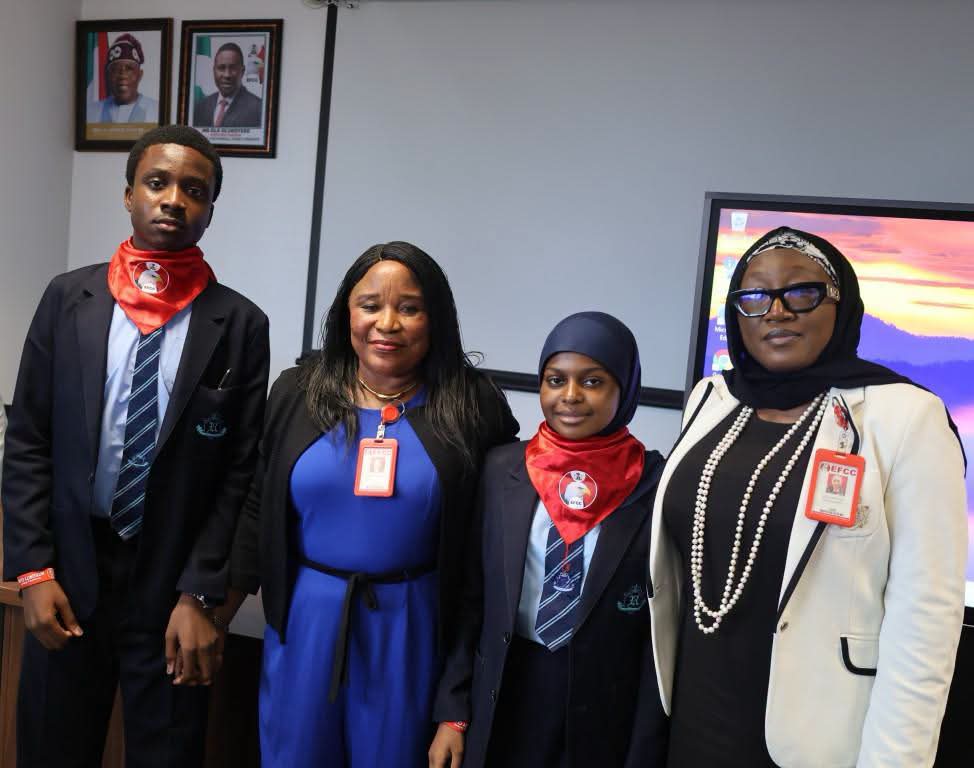
The visit included the formal decoration of two students, Aisha Ismail and Dubem Moghalu, as EFCC ambassadors. This initiative is part of a larger, systemic effort by the Commission to institutionalize anti-corruption values, mirroring similar programs like the “Integrity Clubs” recently launched in various schools across the country.

Jatau Shadrach Solomon, the Humanities Trip Coordinator for Regent Secondary School, commended the Commission for the immersive experience. He noted that the visit significantly expanded the students’ understanding of the legal, economic, and moral implications of financial crimes, providing them with a clearer perspective on the necessity of integrity in nation-building.
Do you want to advertise with us?
Do you need publicity for a product, service, or event?
Contact us on WhatsApp +2348033617468, +234 816 612 1513, +234 703 010 7174
or Email: validviewnetwork@gmail.com
CLICK TO JOIN OUR WHATSAPP GROUP
The EFCC continues to encourage young Nigerians to channel their technological talents into productive sectors such as programming, digital entrepreneurship, and innovation, warning that the “quick money” of cybercrime is a gateway to personal and national decline.