

• Latest
  • Trending

Refineries, Reforms, and the Cost of Repeating Failure By Lanre Ogundipe

May 9, 2026

Tinubu’s Record Undeniable, Says Epe Chair

November 25, 2026

Epe Council Begins Reconstruction of Abandoned Iberekodo–Billy Road

November 25, 2026

Putin Sacks Murmansk Governor Detained Over Alleged Embezzlement

November 25, 2026

“They Were All In Their 20s”: Makinde Credits Young Supporters For 2019 Governorship Victory

November 25, 2026

Ogun Bizman Protests Withdrawal Of Charges Against Family Home Intruders

November 25, 2026

FCT Police Seek Help To Reunite Missing Seven-Year-Old With Family

November 25, 2026

Disability Is Not Inability: How Crystal Chigbu Turned a Mother’s Pain into a Movement for Child Amputees

November 25, 2026

TINUBU VOWS RESCUE OF ABDUCTED BORNO PUPILS, ORDERS FRESH OFFENSIVE

November 25, 2026

Five FCE Abeokuta Students Bag Gbemiga Abiodun Scholarship

November 25, 2026

Puerto Rico’s Jennifer Barreto Makes History as First Mom to Win Miss Universe

November 25, 2026

Zimbabwean Man Convicted in South Africa Over Plot to Fight for Russia

November 25, 2026

US Unveils Sweeping New Tariffs on 14 Major Trading Partners

November 25, 2026

Adeleke Dissolves Osun Cabinet Two Days Before Second-Term Inauguration, Retains SSG, CoS, Spokesperson

November 25, 2026

Adeleke Presents ₦927.37bn 2027 Budget to Osun Assembly

November 25, 2026

NATO Pilot Cleared to Down Russian Missile Over Poland as Airspace Breaches Escalate

November 25, 2026

Fort Hood Shooter Fights Firing Squad Execution

November 25, 2026

Umahi’s Son Denies Recruiting 350 Armed Men Ahead Of 2027 Polls

November 25, 2026

Delta Attack: NDC Calls On US, EU To Intervene, Accuses APC Of Oppression

November 25, 2026

Abia Poly Suspends Rector Over Unaccredited Courses

November 25, 2026

Father, Son Jailed For £500,000 Cannabis Smuggling

November 25, 2026

“I’m Done With Rivers, FCT; Give Me Imo, Kwara To Deliver” — Wike Tells Tinubu

November 25, 2026

Court Jails Man 11 Months Over Stolen Forfeited Microwave

November 25, 2026

Olukoyede Tasks West African Anti-Graft Agencies on Integrity, Cross-Border Action

November 25, 2026

Police Detain Suspect After Missing Imo Graduate Found Buried in Family Backyard

November 25, 2026

Seyi Law: My Finances Were Better Before Tinubu, But Reforms Need Time

November 25, 2026

Sterling Spared Jail Over Nitrous Oxide Crash

November 25, 2026

Katsina Bars Emirs From Hosting Foreigners Without Clearance

November 25, 2026

Police Wanted Notice Tears Citizens’ Reputations Apart, Says Abati

November 25, 2026

Bayern Back Musiala’s Recovery After Contract Row

November 25, 2026

Guardiola Urges Dignified Farewell for Ronaldo

November 25, 2026
ADVERTISEMENT
  • Home
  • BREAKING NEWS
  • Tech
  • Entertainment
  • Lifestyle
  • Education
    • Sports
  • CONSULTATION
  • Shop
  • COMMUNIQUE
ValidView Network
ADVERTISEMENT
  • Home
  • BREAKING NEWS
  • Tech
    • All
    • Apps
    • Mobile

    FG Monitors Starlink, Crypto Use By Terrorists, Bandits

    Italy Fines Meta €805m for Accessing Android Users’ Photos Without Consent

    INEC BLAMES REGISTRATION OFFICERS FOR AI-GENERATED PHOTOS IN VOTERS’ REGISTER

    INEC TURNS TO AI TO CHECK ELECTION RESULTS AGAINST SCANNED SHEETS, VOWS TO RESOLVE DISCREPANCIES

    TURKEY BANS SOCIAL MEDIA FOR UNDER-15S FROM NOVEMBER 1

    GHANA REJECTS FBI DIRECTOR’S CLAIM OF LEADING CYBERCRIME RAID

    Trending Tags

    • Nintendo Switch
    • CES 2017
    • Playstation 4 Pro
    • Mark Zuckerberg
  • Entertainment
    • All
    • CELEBRATIONS
    • Gaming
    • History and Culture
    • Movie
    • Music
    • Sports

    Puerto Rico’s Jennifer Barreto Makes History as First Mom to Win Miss Universe

    Seyi Law: My Finances Were Better Before Tinubu, But Reforms Need Time

    Bayern Back Musiala’s Recovery After Contract Row

    Curtain Call: 19 Nollywood Stars Lost in 2026

    Pete Edochie’s Death A Loss To Nigeria, Africa – Obi

    “You Were An Institution”: May Edochie Mourns Pete Edochie

  • Lifestyle
    • All
    • Health

    Disability Is Not Inability: How Crystal Chigbu Turned a Mother’s Pain into a Movement for Child Amputees

    Kano Distributes 484 Tricycle Ambulances To Boost Rural Healthcare

    “I’m Battling Incurable Cancer” — Farooq Oreagba

    Man Solves Own 33-Year Disappearance After Seeing Missing Poster Online

    Gisèle Pelicot Vows Legal Action After Publisher Sends Intimate Photos to Promote Critical Book

    ‘I Am Not a Home Wrecker,’ Judy Austin Tells Court in ₦1bn Suit

    Trending Tags

    • Golden Globes
    • Game of Thrones
    • MotoGP 2017
    • eSports
    • Fashion Week
  • Education
    • Sports
  • CONSULTATION
  • Shop
  • COMMUNIQUE
No Result
View All Result
ValidView Network
No Result
View All Result

Refineries, Reforms, and the Cost of Repeating Failure By Lanre Ogundipe

ValidViewNetwork by ValidViewNetwork
May 9, 2026
in Opinion
0 0
0
Home Opinion
ADVERTISEMENT
497
SHARES
518
VIEWS
Share on FacebookShare on Twitter
ADVERTISEMENT
Spread the love
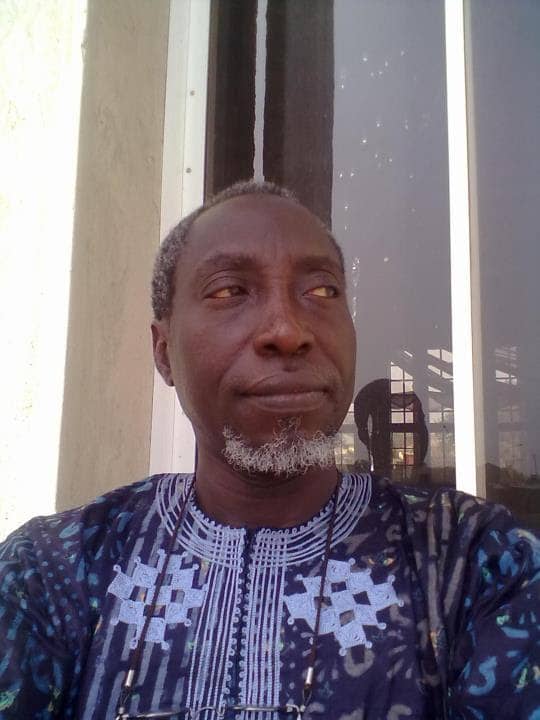
Lanre Ogundipe

Nigeria’s decision to once again seek foreign partners and financing to revive its long-ailing refineries comes with urgency, but also with a heavy weight of history. It is not the first time the country has turned to capital public or external in the hope of restoring domestic refining capacity. It is, rather, another moment in a long cycle of ambition, expenditure, and underwhelming results. That cycle now raises a more fundamental question: whether Nigeria is attempting to solve a structural problem with the same tools that have repeatedly failed.

From the early 2000s under the administration of Olusegun Obasanjo, when attempts were made to reform and partially privatise the refining system before policy reversals intervened, through successive governments that approved multiple turnaround maintenance programmes, Nigeria has consistently returned to the idea of refinery rehabilitation as both economic necessity and political promise. Each intervention came with assurances, technical upgrades, improved efficiency, and increased output. Each round was presented as a turning point. Yet the outcome has been strikingly consistent: substantial financial commitments without sustained operational transformation.

ADVERTISEMENT

Over the years, billions of dollars, amounting to trillions of naira when converted and accumulated, have been channelled into efforts to resuscitate refineries in Port Harcourt, Warri, and Kaduna. Under the restructured Nigerian National Petroleum Company Limited, the rehabilitation of the Port Harcourt refinery alone has been associated with significant financial outlays, with similar commitments announced for other facilities. These investments were justified on the basis that domestic refining would reduce import dependence, conserve foreign exchange, and stabilise fuel supply.

Yet despite these commitments, sustained, verifiable refining output that reflects the scale of expenditure has remained limited. The gap between investment and outcome is not marginal; it is structural.

It is tempting to interpret this pattern as evidence of inadequate funding or outdated infrastructure. But such explanations, while convenient, do not fully capture the problem. Nigeria’s refinery challenge has never been solely about money, nor has it been strictly about technology. It is fundamentally about governance, how projects are conceived, funded, monitored, and enforced.

In systems where funding is not tightly linked to measurable performance, where oversight is episodic rather than continuous, and where consequences for failure are weak or absent, even substantial investment can fail to produce results. The issue, therefore, is not simply that money has been spent; it is that the system into which that money is introduced has not consistently ensured accountability.

This is the context within which the current proposal to engage foreign partners must be understood. On its face, the approach is rational. External partners can bring technical expertise, operational discipline, and access to capital. They often operate under frameworks that emphasise efficiency, cost control, and return on investment. In theory, such partnerships can impose a level of rigour that domestic processes have struggled to maintain.

But theory depends on structure.

Advertisement. Scroll to continue reading.

If foreign partners are introduced into a system that has not been fundamentally reformed, the risk is not merely that projects will underperform. The greater risk is that new funding will be absorbed into old patterns, producing outcomes that differ in scale but not in nature. Capital, whether domestic or foreign, does not correct governance weaknesses; it operates within them.

ADVERTISEMENT

There is also a broader financial dimension that cannot be ignored. Where external financing is secured with sovereign backing, explicitly or implicitly, the obligations extend beyond the life of the project itself. Debt must be serviced regardless of whether the underlying investment achieves its intended outcomes. If performance falls short, repayment pressures persist. In certain scenarios, poorly structured agreements can expose national assets to forms of external leverage that may not be immediately apparent at the point of signing.

This is not a theoretical concern; it is a risk observed in multiple jurisdictions where infrastructure financing has not been matched by strong governance safeguards.

At the same time, the urgency of Nigeria’s refining challenge is undeniable. The country continues to export crude oil while relying heavily on refined product supply, leaving it exposed to global price fluctuations, exchange rate volatility, and logistical constraints. The emergence of the Dangote Petroleum Refinery has demonstrated that large-scale refining is achievable within Nigeria and has begun to alter supply dynamics. It has also underscored the contrast between private-sector efficiency and the persistent underperformance of state-owned facilities.

That contrast should not lead to resignation or dependency. It should prompt a deeper examination of why similar outcomes have not been achieved within public institutions.

If Nigeria is to avoid repeating its past, the current initiative must be anchored on a fundamentally different framework. Funding must be tied directly to verifiable output measured in actual refining throughput and operational uptime rather than to milestones that can be declared without corresponding performance. Independent technical audits must be embedded into the process, providing real-time monitoring rather than retrospective evaluation. Contractual terms must be transparent, with clear allocation of risk between parties and enforceable provisions for underperformance.

Equally important is the structure of financing. Funds must be ring-fenced, ensuring that they are used strictly for defined project purposes and cannot be diverted through administrative discretion. Payment mechanisms should be designed to reward delivery, not merely activity. And perhaps most critically, there must be a credible framework for consequences where failure carries measurable implications for both contractors and overseeing officials.

These principles are not novel. They are standard in well-governed project environments. What has been missing in Nigeria’s experience is not awareness of these mechanisms, but consistent enforcement.

Public scepticism, often expressed in blunt or emotionally charged language, reflects an accumulated experience rather than mere cynicism. When large sums are repeatedly committed with limited visible results, trust erodes. That erosion cannot be reversed by assurances alone. It requires demonstrable evidence that the system itself has changed.

Nigeria does not lack the financial capacity to invest in its energy infrastructure. It does not lack access to technical expertise. What it has lacked is a governance architecture that ensures investment translates into sustained value.

The refinery question, therefore, is not simply about infrastructure renewal. It is about institutional credibility.

If the current effort is to succeed, it must break decisively from precedent not in rhetoric, but in design and execution. It must demonstrate that lessons have been learned, that safeguards have been strengthened, and that accountability is not an afterthought but a foundation.

Do you want to share a story with us?
Do you want to advertise with us?
Do you need publicity for a product, service, or event?
Contact us on WhatsApp +2348033617468, +234 816 612 1513, +234 703 010 7174
or Email: validviewnetwork@gmail.com
CLICK TO JOIN OUR WHATSAPP GROUP
ADVERTISEMENT

Anything less risks extending a cycle that has already consumed too much time, too many resources, and too much public confidence.

Because in the final analysis, the issue is not whether Nigeria can mobilise funds to repair its refineries. It is whether Nigeria can build a system strong enough to ensure that those funds do not once again fail.

Ogundipe, Public Affairs Analyst and former President of the Nigeria and Africa Union of Journalists, writes from Abuja.

Previous Post

Troops Crush Massive ISWAP Raid in Buni Gari, 50 Terrorists Neutralized

Next Post

Iyabo Obasanjo, Monarchs Celebrate Ayo Arowojolu at 59, Laud Boiling point Arena

ValidViewNetwork

ValidViewNetwork

Next Post

Iyabo Obasanjo, Monarchs Celebrate Ayo Arowojolu at 59, Laud Boiling point Arena

Leave a Reply Cancel reply

Your email address will not be published. Required fields are marked *

Get the latest news from ValidViewNetwork
Loading
  • Home
  • BREAKING NEWS
  • Tech
  • Entertainment
  • Lifestyle
  • Education
  • CONSULTATION
  • Shop
  • COMMUNIQUE

© 2022 ValidViewNetwork - Website Developed by HaybeeMultimedia.

No Result
View All Result

© 2022 ValidViewNetwork - Website Developed by HaybeeMultimedia.

Welcome Back!

Login to your account below

Forgotten Password? Sign Up

Create New Account!

Fill the forms below to register

All fields are required. Log In

Retrieve your password

Please enter your username or email address to reset your password.

Log In

Add New Playlist