

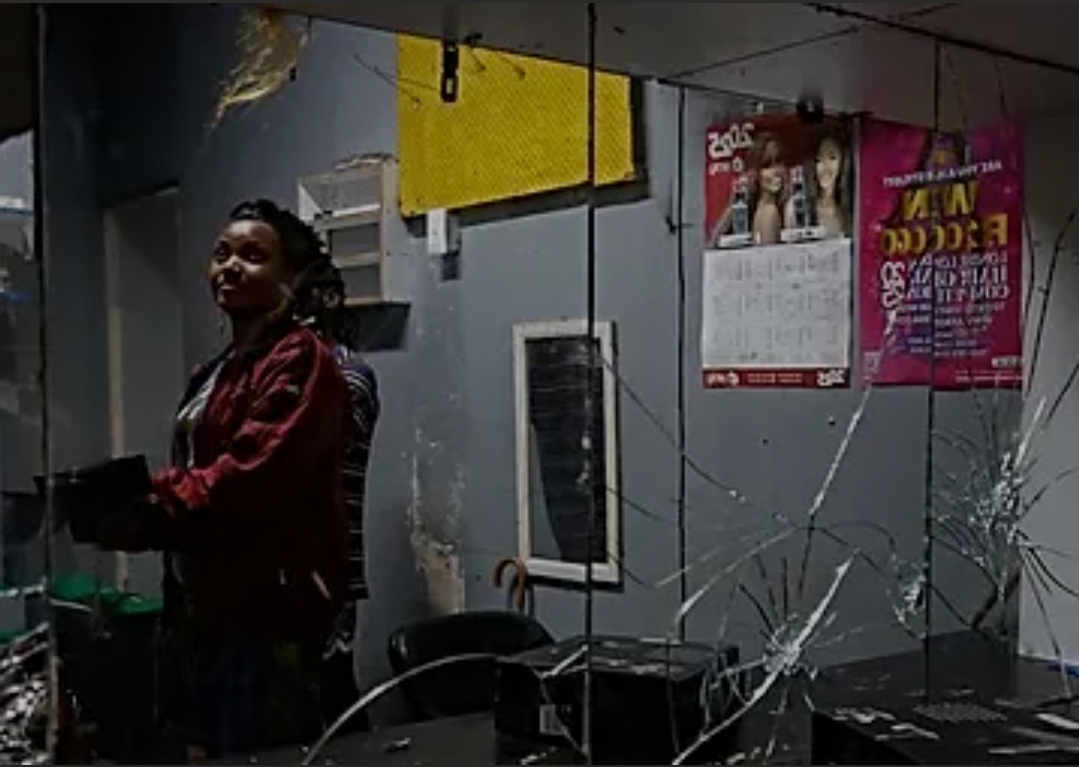
DURBAN, South Africa — For 33-year-old Princess Adjei, South Africa was the only home she had ever known. Having moved from Ghana as a toddler, she completed her schooling locally, spoke fluent Zulu, and established a hair salon in downtown Durban last November.
That reality shattered on May 18, when demonstrators associated with the anti-immigration movement “March and March” broke into her salon, looting hair dryers, shampoos, and stock worth thousands of rands. Today, Adjei and her 14-year-old son sleep on a blanket on the asphalt of Che Guevara Road, alongside hundreds of other displaced African migrants seeking safety outside the Department of Home Affairs.
”They took everything,” Adjei said, looking over the smashed mirrors and empty walls of her shop. “Without the salon, I don’t have money for rent.”
A Rising Tide of Vigilantism
Adjei’s plight reflects a broader humanitarian crisis unfolding across South Africa’s major urban hubs, including Durban, Johannesburg, and Pretoria. Rising socioeconomic frustrations—fueled by an unemployment rate exceeding 43%—have intensified the scapegoating of foreign nationals.
Vigilante groups like March and March and the Amabhinca Nation have weaponized these grievances, organizing “clean-up campaigns” that routinely spiral into violence, arson, and assault. The movements have issued an ultimatum: all undocumented migrants must leave the country by June 30, a directive that security analysts warn could trigger widespread civil unrest reminiscent of the July 2021 riots.
Human Rights Watch recently condemned the actions of these citizen-led groups, documenting accounts of migrants being whipped with sjamboks, attacked with stun guns, and targeted with pepper spray. Observers note that while the protests claim to target undocumented individuals, legal refugees, asylum seekers, and permanent residents are caught indiscriminately in the crosshairs.
State Crackdowns and Diplomatic Rifts
In a televised address to the nation, President Cyril Ramaphosa announced severe policy reforms to tighten border controls, increase workplace inspections, and penalize companies employing undocumented workers. Following the address, Justice Minister Mmamoloko Kubayi reported that over 7,400 undocumented migrants were arrested in a single month, bringing the total for 2026 to more than 40,000.

While the Inter-Ministerial Committee on Migration insists these measures are necessary to enforce the rule of law and curb vigilantism, critics argue the state’s aggressive stance validates the rhetoric of anti-migrant mobs.
The escalating violence has triggered a severe diplomatic rift across the continent. Fearing for the safety of their citizens ahead of the June 30 deadline, several African countries—including Nigeria, Ghana, and Malawi—have initiated emergency repatriation operations, deploying flights and buses to evacuate thousands of their nationals from South Africa.
Displaced and Defenseless
On the streets of Durban, displaced families face a double threat from both hostile civilian factions and a lack of state protection. Migrants encamped outside the central police station reported being forcibly moved by law enforcement to municipal facilities, only to be rejected by local residents. Four independent witnesses, including Adjei and Congolese refugee Tchomba Kasongo—who bears a fresh bullet scar on his leg—asserted that police eventually cleared them using tear gas and rubber-coated steel bullets.
Durban police spokesperson Booysie Zungu denied these allegations, stating that no such operational force was used and urging victims to formally log criminal cases. However, many migrants express a complete lack of faith in the local justice system.
Political analysts point out that anti-migrant sentiment is deliberately stoked by populist political figures to secure votes, particularly with highly contested local government elections scheduled for November. KwaZulu-Natal Premier Thamsanqa Ntuli dismissed allegations that political rhetoric drives the violence, instead deflecting blame toward historical failures in immigration management.
As the June 30 deadline approaches, hundreds of legal residents remain stranded on the streets of Durban, terrorized by former neighbors and local vigilantes. For lifelong residents like Adjei, the trauma lies not just in the loss of livelihoods, but in the realization of how quickly decades of community integration can evaporate.
Do you want to advertise with us?
Do you need publicity for a product, service, or event?
Contact us on WhatsApp +2348033617468, +234 816 612 1513, +234 703 010 7174
or Email: validviewnetwork@gmail.com
CLICK TO JOIN OUR WHATSAPP GROUP