



By Olasunkanmi Olajide
Nigeria’s housing and energy sectors are facing a common challenge: the growing demand for reliable electricity in homes and businesses. Across cities, towns, and rural communities, the sight of solar panels mounted on rooftops has become increasingly common. While this trend reflects the country’s gradual transition towards renewable energy, it also exposes a significant gap in local manufacturing and innovation.
Today, most homeowners first install conventional roofing sheets before later attaching solar panels to the roof structure. In many cases, large sections of rooftops become completely covered with mounted solar panels. This practice often requires additional support structures, specialised installation, regular maintenance, and, sometimes, repeated movement across the roof surface, which may affect the longevity of the roofing system.
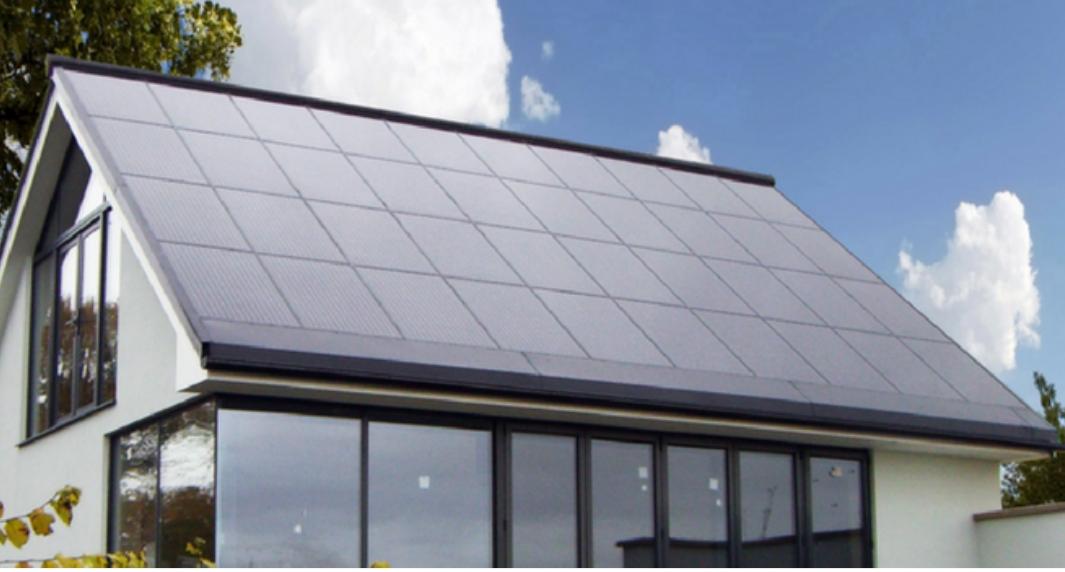
This situation raises an important question: Why should roofing sheets and solar panels remain separate products when they can be integrated into a single roofing solution? The answer lies in the emerging global technology known as Building-Integrated Photovoltaics (BIPV), where solar cells are incorporated directly into building materials, including roofing sheets, tiles, facades, and windows. Instead of mounting solar panels on an existing roof, the roof itself becomes a power-generating asset.
Although Building-Integrated Photovoltaics (BIPV) technology has begun to make inroads into Nigeria’s commercial real estate sector, its application remains largely limited to corporate and institutional buildings. One of the most notable examples is the headquarters of one of the foremost commercial banks in the country, which has been transformed into one of Africa’s pioneering solar-powered towers through the integration of photovoltaic panels into the building’s façade and structure. Similar integrated solar solutions have also been introduced in commercial facilities, office complexes, and solar-powered car parks. However, the technology is yet to gain traction in Nigeria’s residential housing sector, where conventional roofing sheets continue to dominate despite the growing adoption of rooftop-mounted solar panels.
For Nigeria, this innovation could revolutionise both housing construction and renewable energy adoption. The need for alternative energy solutions has never been more urgent. The 2024 Nigeria Demographic and Health Survey revealed that only about 51 percent of Nigerian households have access to electricity. This means that nearly half of the country’s households still lack reliable power supply, forcing many families and businesses to depend on generators, rechargeable devices, and alternative energy sources. Recent studies further highlight persistent energy poverty and infrastructure deficits across the country.
At the same time, solar energy adoption is gaining momentum. Reports indicate that Nigeria has become one of Africa’s fastest-growing solar markets, with increasing imports of solar panels and expanding demand for solar-powered homes, farms, schools, and businesses. The country’s abundant sunshine provides a natural advantage for solar energy generation throughout the year.
However, despite this growth, the majority of solar installations still rely on imported panels mounted on traditional roofs. The integration of solar technology into roofing sheets offers several advantages.
First, it reduces installation costs. Homeowners would no longer need to purchase roofing materials separately and later incur additional expenses for mounting solar panels. A single product would serve both functions.
Second, solar roofing sheets would improve aesthetics. Many modern buildings currently have large arrays of panels attached to rooftops, often creating an uneven appearance. Integrated solar roofs provide a cleaner and more attractive architectural finish.
Third, they enhance durability. Frequent movement on rooftops during panel installation and maintenance can damage roofing sheets. By embedding solar technology during manufacturing, the need for additional roof-mounted structures is significantly reduced.
Fourth, integrated solar roofs can increase property value by combining energy generation with modern building design.
Fifth, local production would stimulate industrial growth, create jobs, reduce dependence on imports, and encourage technology transfer within Nigeria’s manufacturing sector.
Meanwhile, the global market for Building-Integrated Photovoltaics continues to expand as countries seek cleaner energy solutions and more efficient building designs. Researchers have demonstrated the enormous potential of rooftop-integrated solar systems for electricity generation, while industry reports identify roofing products as one of the most competitive and commercially promising segments of the BIPV market.
Several countries have already begun incorporating solar roofing technologies into residential and commercial buildings. Innovations such as solar shingles, solar roof tiles, and photovoltaic roofing panels are gradually transforming the construction industry worldwide.
Nigeria should not remain a spectator in this technological transition. The Manufacturers Association of Nigeria (MAN) has a critical role to play in turning this vision into reality. As the umbrella body representing manufacturers across sectors, MAN can facilitate partnerships between roofing sheet manufacturers, renewable energy firms, universities, research institutes, and government agencies. Such collaborations can drive research and development efforts aimed at producing affordable solar roofing sheets suited to Nigeria’s climatic conditions.
MAN can also advocate incentives that encourage local production, including tax reliefs, access to low-interest financing, import-duty waivers on essential production equipment, and government-backed innovation grants.
Furthermore, pilot projects can be initiated in partnership with housing developers, public institutions, and state governments to test the feasibility and performance of locally manufactured solar roofing systems.
Nigeria’s quest for sustainable development requires bold and practical innovations. Solar roofing sheets represent a unique opportunity to address two national needs simultaneously: quality housing and reliable electricity. Rather than treating roofing and power generation as separate components, the country can embrace a future where every rooftop becomes a miniature power station.

The technology already exists. The market demand is growing. The need is undeniable. What remains is for manufacturers, policymakers, researchers, and industry stakeholders to take deliberate steps toward local production and commercialisation.
The Manufacturers Association of Nigeria should therefore spearhead discussions with roofing sheet manufacturers and renewable energy stakeholders on the possibility of developing solar roofing sheets made in Nigeria. Such an initiative would not only advance the nation’s renewable energy agenda but also position Nigeria as a leader in innovative building technologies across Africa.
Do you want to advertise with us?
Do you need publicity for a product, service, or event?
Contact us on WhatsApp +2348033617468, +234 816 612 1513, +234 703 010 7174
or Email: validviewnetwork@gmail.com
CLICK TO JOIN OUR WHATSAPP GROUP
The future of roofing should not merely be about protection from the weather; it should be about generating power, reducing energy costs, and supporting sustainable development.
Olasunkanmi Olajide is the Ag. Head, Directorate of Public Relations, Federal University of Agriculture, Abeokuta (FUNAAB), Nigeria.
Best University of Agriculture in Africa by 2024 THE WUR