

The National Assembly’s rapid advancement of the Constitution Alteration Bill has brought Nigeria to the precipice of its most significant security overhaul since 1999. Transmitted by President Bola Tinubu, the bill sailed through its second and third readings in the Senate within 24 hours. If ratified by the House of Representatives and two-thirds of the State Houses of Assembly, it will officially dismantle the centralized Nigeria Police Force in favor of a dual structure: a Federal Police Service and autonomous State Police Services.
Under this framework, state governors will hold the power to appoint Commissioners of Police, subject to confirmation by local state assemblies. To counter long-standing fears of political weaponization, lawmakers inserted strict safeguards. Notably, Clause 17 expressly prohibits the arrest or intimidation of individuals for criticizing the government. Additionally, if a state commissioner deems a governor’s directive unlawful, the matter can be escalated to an expanded National Police Council for final arbitration. The federal government also retains emergency intervention powers, allowing Abuja to take temporary operational command if a state’s security completely collapses.
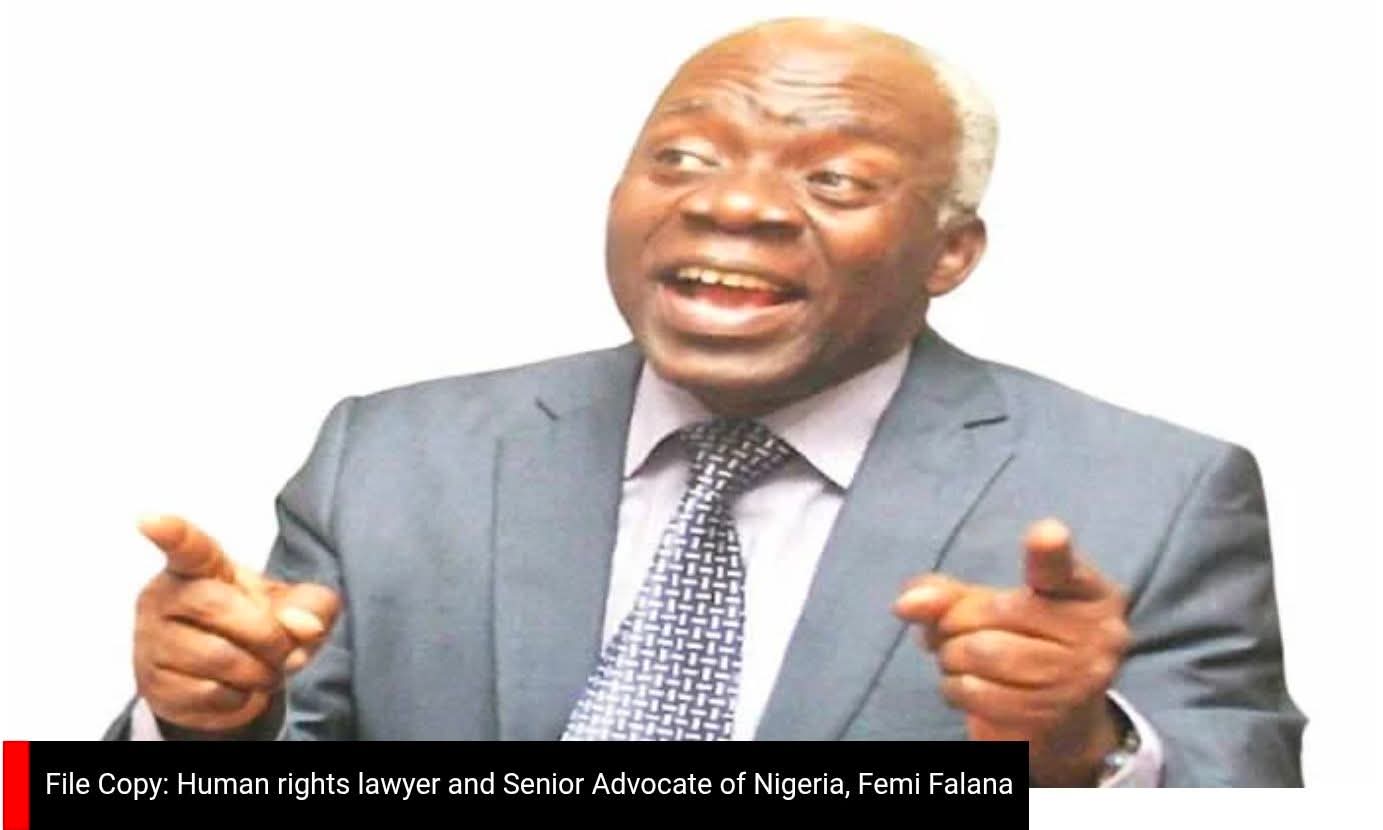
Despite these legislative guardrails, human rights lawyer Femi Falana, SAN, has raised an urgent alarm regarding the structural limitations of the bill. Speaking on Channels Television’s Politics Today, Falana argued that altering the security architecture is futile without matching investments in social security. He stressed that extreme poverty, dimensional hardship, and runaway youth unemployment are the structural drivers of criminality that no policing model can simply arrest away.

Falana also drew historical parallels to Nigeria’s First Republic, reminding stakeholders that the original decentralized regional police system was ultimately abolished due to gross abuse of power by regional leaders. Warning that the current bill remains dangerously “sketchy,” he questioned whether contemporary Nigeria has truly resolved those foundational flaws. Furthermore, he highlighted a stark fiscal reality: many state governments currently struggle to meet basic payroll and pension obligations, leaving serious questions as to how they will fund, train, and equip modern police forces without plunging deeper into insolvency.
The Dual Policing Blueprint at a Glance
- The Command Structure: Governors appoint State Commissioners via House of Assembly confirmation.
- Political Safequards: Explicit bans on using police personnel to target political opponents, activists, or journalists.
- The Federal Override: Section 214 permits the Federal Police to temporarily seize control of a state’s apparatus during an imminent breakdown of public order.
- Financial Lifelines: Provision for the National Assembly to clear federal grants and financial assistance for cash-strapped states.
For an analytical breakdown of how the legislative safeguards aim to protect civil liberties under this new framework, you can watch The Big Story Breakdown on the State Police Bill, which examines the structural checks and balances designed to prevent regional political abuse.
Do you want to advertise with us?
Do you need publicity for a product, service, or event?
Contact us on WhatsApp +2348033617468, +234 816 612 1513, +234 703 010 7174
or Email: validviewnetwork@gmail.com
CLICK TO JOIN OUR WHATSAPP GROUP