



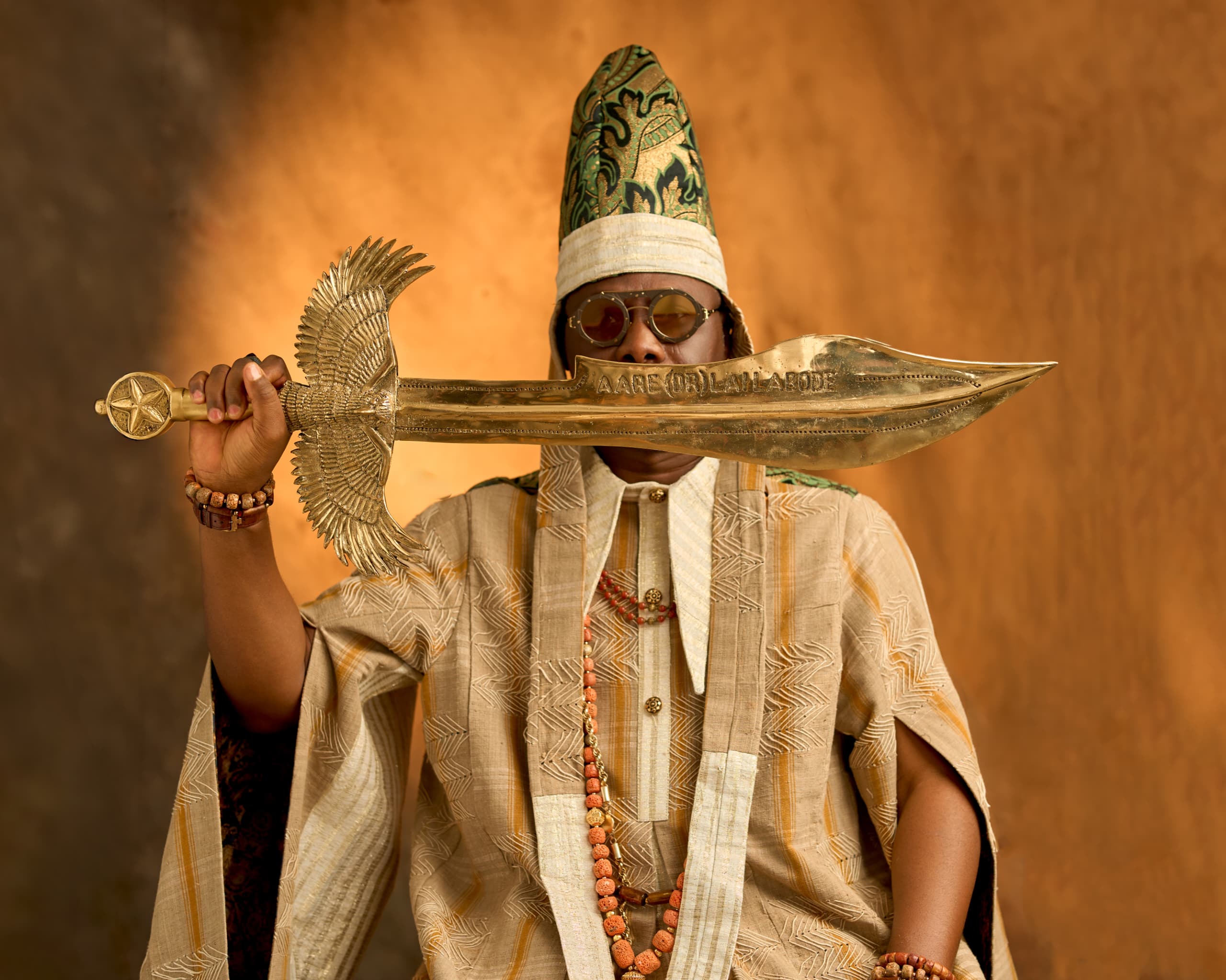
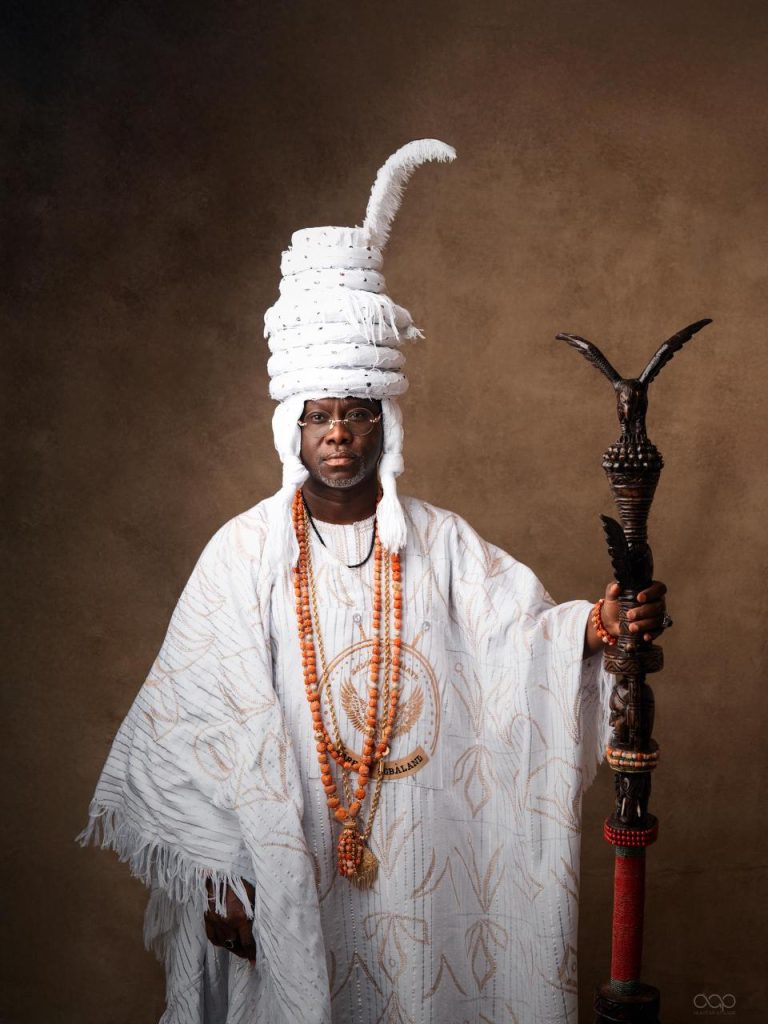
At fifty, some men slow their pace. A rare few accelerate their leap. Aare (Prof.) Lai Labode belongs decisively to the latter category. As he marks a half‑century, Labode does more than celebrate a personal milestone — he consolidates a public record of institutional invention that is reshaping how Yoruba heritage, Nigerian creativity and African fashion are imagined, organised and monetised on the global stage.
There have been many notable Yoruba custodians of culture: preservationists, style icons, and traditional office‑holders. But very few have attempted the scale and breadth of synthesis that Labode has made his business: marrying fashion and design to cultural diplomacy, tourism, economic planning and continental institution‑building. That synthesis is not rhetorical. It is structural. It is the test of a new kind of cultural leadership — one that measures success in policy linkages, export pipelines, jobs created and ministries that move from polite endorsement to active partnership.
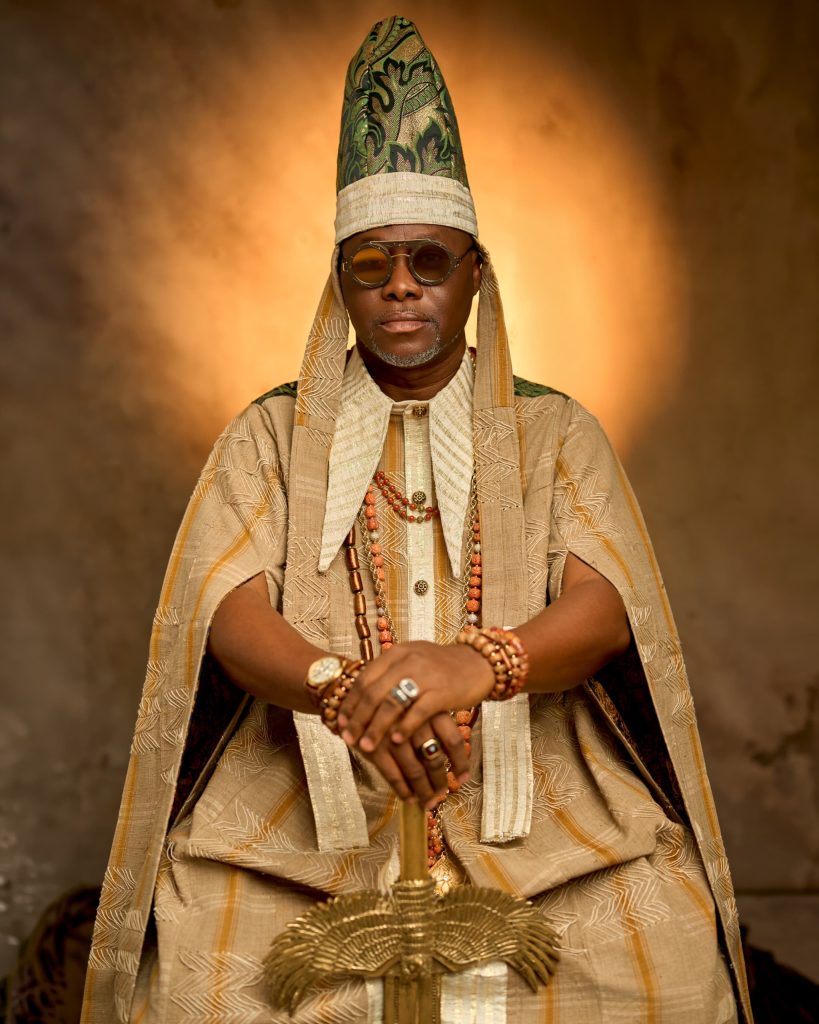
From the boardroom to the throne, his trajectory is remarkable. Labode’s credentials read like a blueprint for 21st‑century cultural diplomacy: Kurunmi of Ijaye‑Egbaland and the statutory youngest Aare Agba of Egbaland, an academic appointment as Professor of Practice in African Fashion, Cultural Entrepreneurship and Diplomacy, and the founder‑president of continental initiatives that aim to convert heritage into hard economic value. That combination of ancestral legitimacy, scholarly framing and entrepreneurial execution gives him rare leverage — and he has used it.
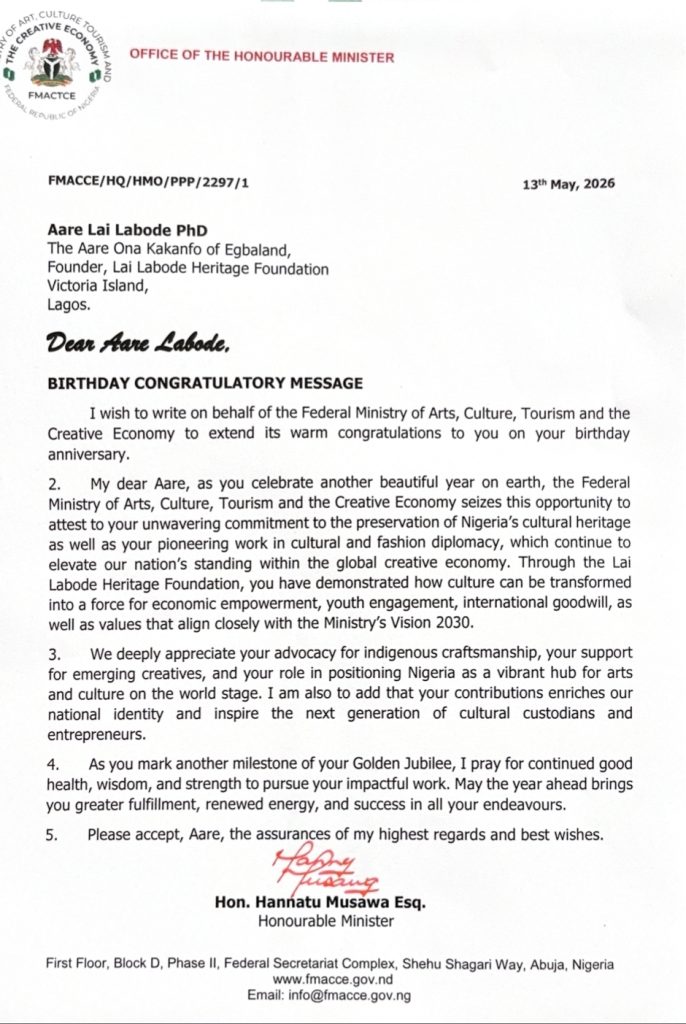
The Confederation of African Fashion (CAFA) and the African Global Fashion Games (AGFG) are not mere events or trade fairs. CAFA reframes fashion as infrastructure — a sector that anchors manufacturing, trade, identity and diplomacy. In months, CAFA established a functioning secretariat in Lagos, a correspondence desk with the Federal Ministry of Arts, Culture, Tourism and the Creative Economy in Abuja, and operational partnerships with key state organs and cultural institutions. Under CAFA, AGFG proposes a continental “Olympics” of fashion that is purposeful: buyer matchmaking, export pipelines, formal national teams and investible frameworks for host cities. If realised, the economic reach of such architecture could shift Africa’s share of global fashion value by decades.

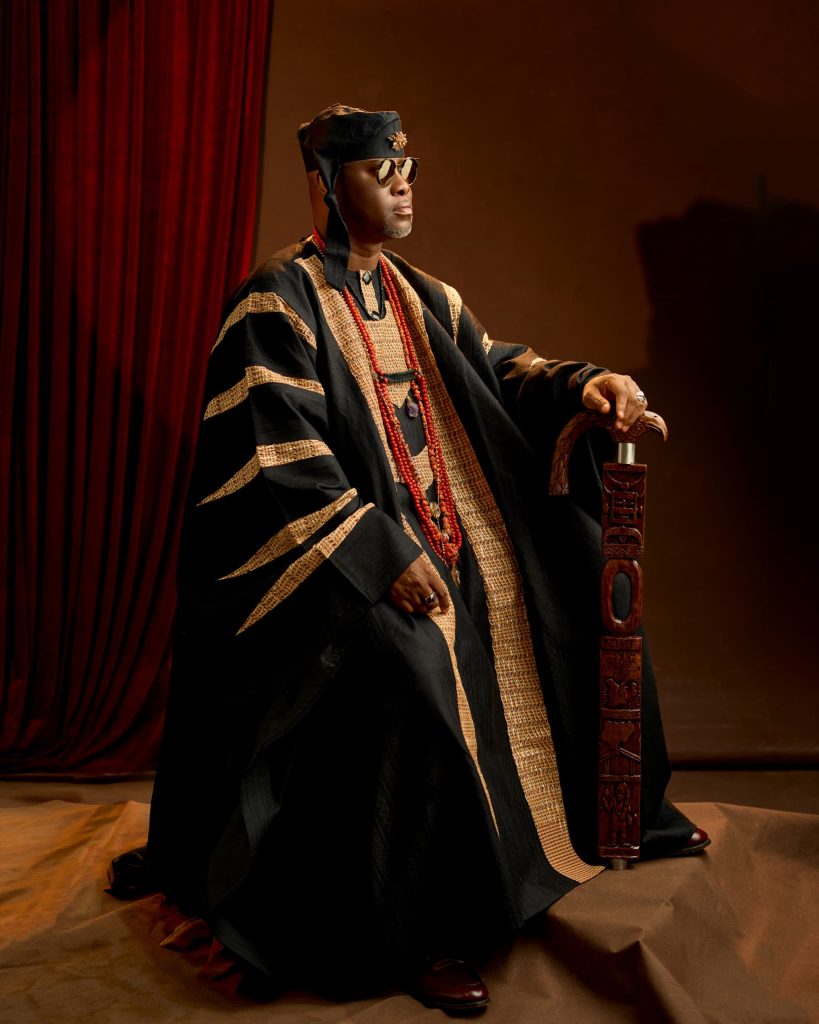
Egbaliganza 2026 was the living proof of concept. What began as a reinvigoration of the Lisabi Festival became an audacious, professionally produced global cultural spectacle in Abeokuta. With approximately 20,000 attendees and delegations from 27 countries, the Parade of Nations crystallised an idea most had only theorised: that African cultural presentation can be protocol‑grade, tourism‑ready and investment‑attractive. For hotels, vendors, tailors, media, security and transport operators in Ogun State, the impact was immediate and measurable. That is the difference between pageantry and policy: the latter leaves sustained economic footprints.
Labode’s ambitions do not stop at periodic festivals. The Global Unity Drum Project — conceived as the world’s first multinational cultural monument stewarded by a coalition of nations — aims to create a permanent Global Heritage Centre in Yorubaland. Museums, performance arenas, research hubs, craft markets and diplomatic meeting spaces are not ornamental aspirations here; they are design components of a long‑term tourism and education engine. Likewise, initiatives such as the Nigerian Cultural Calendar and the Nigerian Merchandise Company show a discipline for systems: predictable programming, professional branding, licensing and export mechanisms — the very scaffolding most nations take decades to assemble.
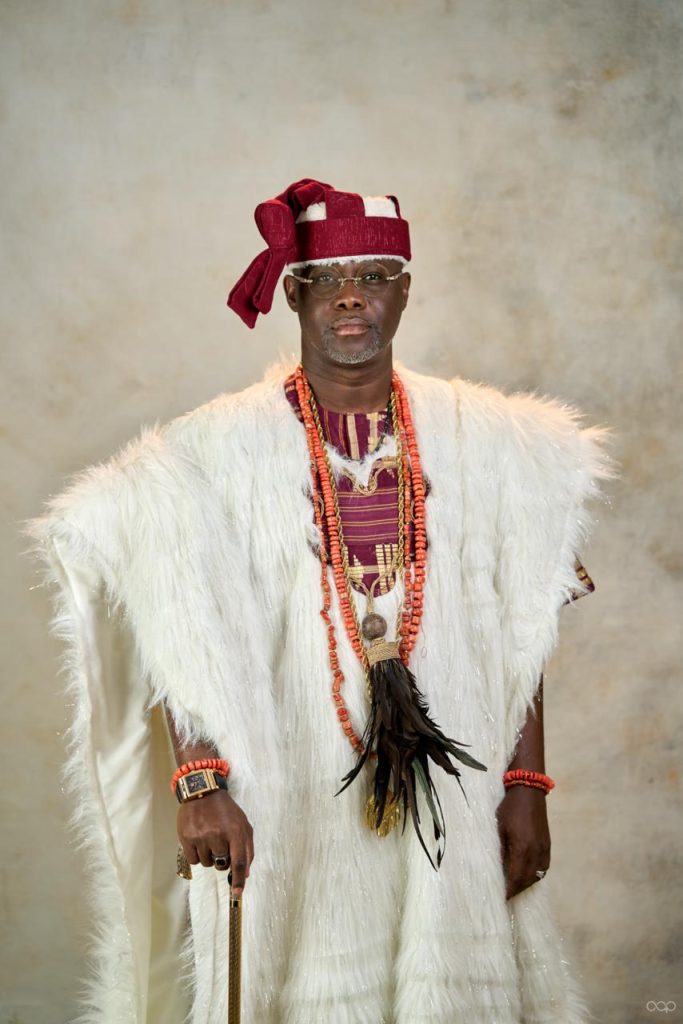
Equally strategic is the Ijaye Egbaland Global Diplomacy Initiative (IjayeGLODI), launched on his 50th birthday. By conferring the title Aṣojú Ijaye Egbaland on select foreign dignitaries and scholars, and by establishing a Diplomacy Council focused on tourism, education, trade, culture and youth development, Labode reframes traditional chieftaincy from a ceremonial relic into an active instrument of international partnership. That recalibration of authority — ancestral sanction married to diplomatic agency — is modern statecraft disguised in cloth and customs.
This work has not gone unnoticed. Federal ministries and senior public servants have praised and partnered with his projects, describing them as examples of culture converted into economic empowerment and youth engagement. Such institutional validation — especially for an independent cultural actor — speaks to operational credibility, not merely charisma.
The human and economic impacts are visible at grassroots and industrial levels. The Abeokuta Factory Initiative and other local production projects are upskilling a new generation of culture preneurs and textile creators while safeguarding craft knowledge. Community welfare partnerships, including collaborations with journalists’ unions and inclusion programs for the disabled at cultural events, show that this agenda ties high‑level diplomacy to local uplift.
There are grand claims in the contemporary cultural economy — projections of billions, visions of continental market shares. Yet Labode’s approach differs because it couples aspiration with deliverables: secretariats, ministry desks, festival metrics, diplomatic envoys, factories, and working policy proposals. He has taken fashion out of the margins of lifestyle and placed it, methodically, on the policy table where trade ministries, tourism boards and foreign offices sit.
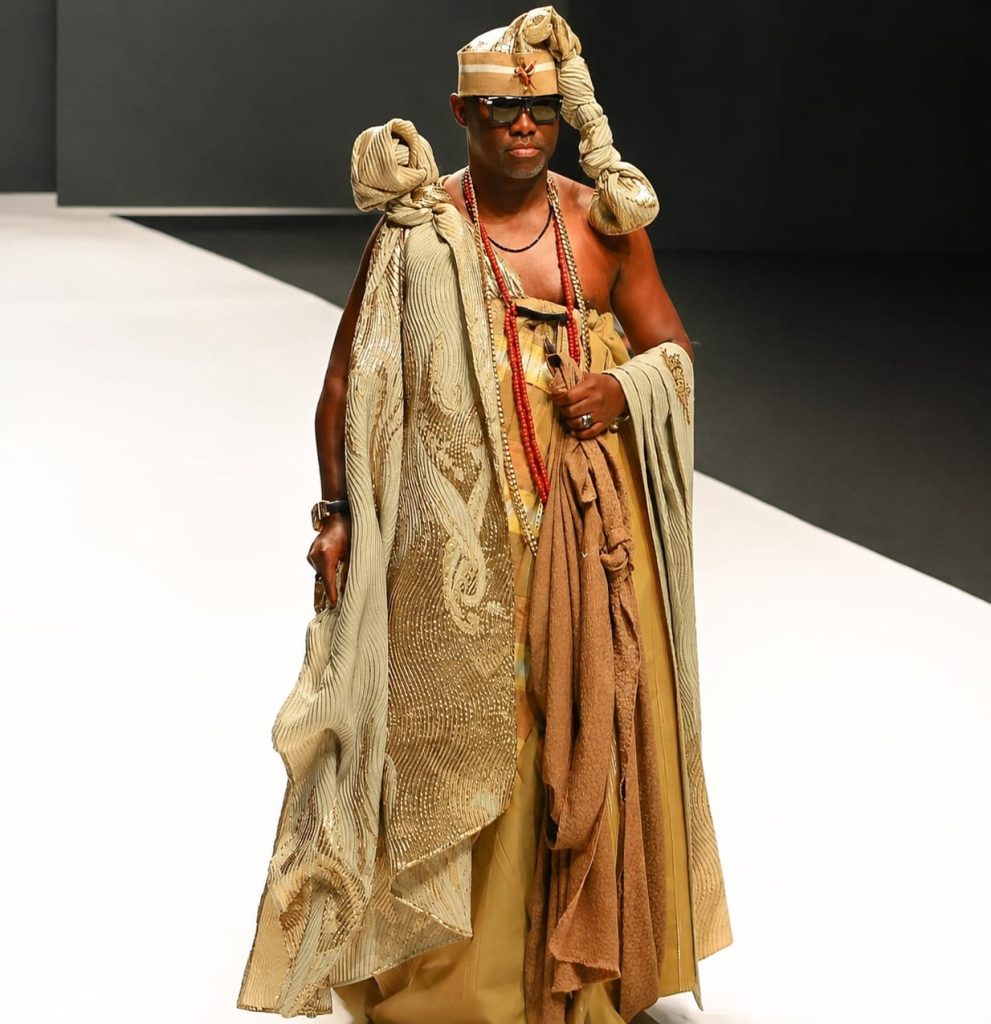
If one asks why the conversation about Yoruba and Nigerian cultural power feels different now, the answer is in the audacity of institution‑making. Very few modern cultural figures have attempted such coordinated, internationally ambitious projects. The result is not merely enhanced prestige for one man; it is the opening of durable pathways that could generate jobs, foreign exchange, soft power and a calibrated role for traditional institutions within contemporary governance and diplomacy.
At fifty, Aare (Prof.) Lai Labode’s record is already substantial. He is not merely a maker of garments or a ceremonial chief. He is an institutional architect whose projects — CAFA, AGFG, Egbaliganza, the Global Unity Drum, IjayeGLODI and the commercial mechanisms that support them — demand to be measured in economic forecasts, policy papers and tourism statistics. Whether all parts of the vision achieve their loftiest targets, the strategic logic is undeniable: anchor culture in systems, and culture becomes a catalyst for national and continental transformation.
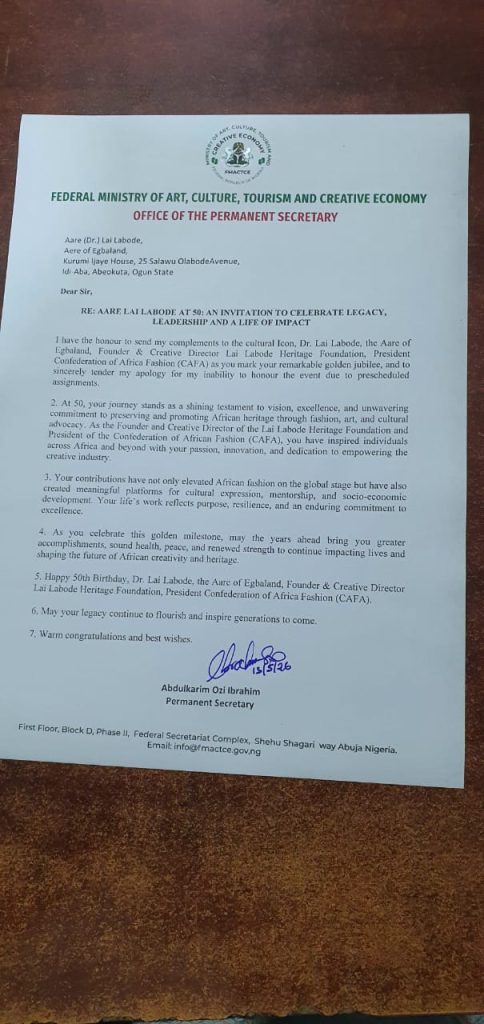
That is a fitting legacy for a golden jubilee. Labode’s fifty years show a leader who uses tradition not as an end in itself but as the scaffolding for future prosperity. As Nigeria and Africa stand at an inflection point in global cultural influence, one of its most consequential operators has already staked out a model: bold, policy‑driven, and unapologetically institutional. The next fifty years will test the full sweep of his designs; the first fifty have proven that he is more than a stylist of heritage — he is a strategist of cultural power.
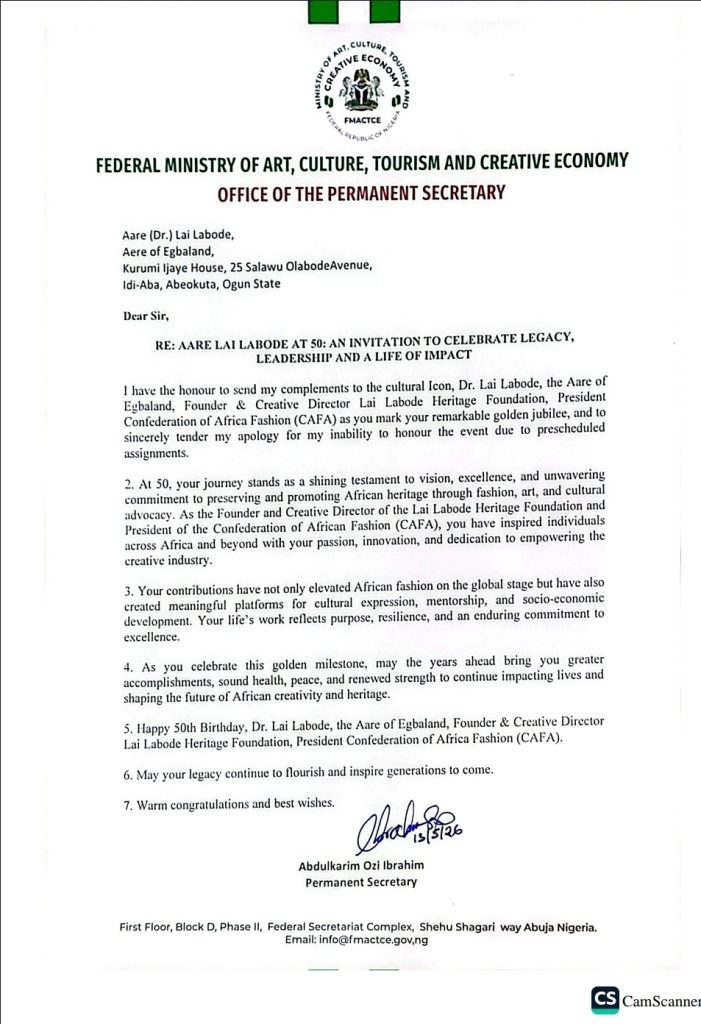
Happy 50th birthday to Aare (Prof.) Lai Labode: a cultural diplomat, institutionalist and the unmistakable architect of a new era for Yoruba cultural influence.
Do you want to advertise with us?
Do you need publicity for a product, service, or event?
Contact us on WhatsApp +2348033617468, +234 816 612 1513, +234 703 010 7174
or Email: validviewnetwork@gmail.com
CLICK TO JOIN OUR WHATSAPP GROUP
At fifty, some men slow their pace. A rare few accelerate their leap. Aare (Prof.) Lai Labode belongs decisively to the latter category. As he marks a half‑century, Labode does more than celebrate a personal milestone — he consolidates a public record of institutional invention that is reshaping how Yoruba heritage, Nigerian creativity and African fashion are imagined, organised and monetised on the global stage.
There have been many notable Yoruba custodians of culture: preservationists, style icons, and traditional office‑holders. But very few have attempted the scale and breadth of synthesis that Labode has made his business: marrying fashion and design to cultural diplomacy, tourism, economic planning and continental institution‑building. That synthesis is not rhetorical. It is structural. It is the test of a new kind of cultural leadership — one that measures success in policy linkages, export pipelines, jobs created and ministries that move from polite endorsement to active partnership.
From the boardroom to the throne, his trajectory is remarkable. Labode’s credentials read like a blueprint for 21st‑century cultural diplomacy: Kurunmi of Ijaye‑Egbaland and the statutory youngest Aare Agba of Egbaland, an academic appointment as Professor of Practice in African Fashion, Cultural Entrepreneurship and Diplomacy, and the founder‑president of continental initiatives that aim to convert heritage into hard economic value. That combination of ancestral legitimacy, scholarly framing and entrepreneurial execution gives him rare leverage — and he has used it.
The Confederation of African Fashion (CAFA) and the African Global Fashion Games (AGFG) are not mere events or trade fairs. CAFA reframes fashion as infrastructure — a sector that anchors manufacturing, trade, identity and diplomacy. In months, CAFA established a functioning secretariat in Lagos, a correspondence desk with the Federal Ministry of Arts, Culture, Tourism and the Creative Economy in Abuja, and operational partnerships with key state organs and cultural institutions. Under CAFA, AGFG proposes a continental “Olympics” of fashion that is purposeful: buyer matchmaking, export pipelines, formal national teams and investible frameworks for host cities. If realised, the economic reach of such architecture could shift Africa’s share of global fashion value by decades.
Egbaliganza 2026 was the living proof of concept. What began as a reinvigoration of the Lisabi Festival became an audacious, professionally produced global cultural spectacle in Abeokuta. With approximately 20,000 attendees and delegations from 27 countries, the Parade of Nations crystallised an idea most had only theorised: that African cultural presentation can be protocol‑grade, tourism‑ready and investment‑attractive. For hotels, vendors, tailors, media, security and transport operators in Ogun State, the impact was immediate and measurable. That is the difference between pageantry and policy: the latter leaves sustained economic footprints.
Labode’s ambitions do not stop at periodic festivals. The Global Unity Drum Project — conceived as the world’s first multinational cultural monument stewarded by a coalition of nations — aims to create a permanent Global Heritage Centre in Yorubaland. Museums, performance arenas, research hubs, craft markets and diplomatic meeting spaces are not ornamental aspirations here; they are design components of a long‑term tourism and education engine. Likewise, initiatives such as the Nigerian Cultural Calendar and the Nigerian Merchandise Company show a discipline for systems: predictable programming, professional branding, licensing and export mechanisms — the very scaffolding most nations take decades to assemble.
Equally strategic is the Ijaye Egbaland Global Diplomacy Initiative (IjayeGLODI), launched on his 50th birthday. By conferring the title Aṣojú Ijaye Egbaland on select foreign dignitaries and scholars, and by establishing a Diplomacy Council focused on tourism, education, trade, culture and youth development, Labode reframes traditional chieftaincy from a ceremonial relic into an active instrument of international partnership. That recalibration of authority — ancestral sanction married to diplomatic agency — is modern statecraft disguised in cloth and customs.
This work has not gone unnoticed. Federal ministries and senior public servants have praised and partnered with his projects, describing them as examples of culture converted into economic empowerment and youth engagement. Such institutional validation — especially for an independent cultural actor — speaks to operational credibility, not merely charisma.
The human and economic impacts are visible at grassroots and industrial levels. The Abeokuta Factory Initiative and other local production projects are upskilling a new generation of culture preneurs and textile creators while safeguarding craft knowledge. Community welfare partnerships, including collaborations with journalists’ unions and inclusion programs for the disabled at cultural events, show that this agenda ties high‑level diplomacy to local uplift.
There are grand claims in the contemporary cultural economy — projections of billions, visions of continental market shares. Yet Labode’s approach differs because it couples aspiration with deliverables: secretariats, ministry desks, festival metrics, diplomatic envoys, factories, and working policy proposals. He has taken fashion out of the margins of lifestyle and placed it, methodically, on the policy table where trade ministries, tourism boards and foreign offices sit.
If one asks why the conversation about Yoruba and Nigerian cultural power feels different now, the answer is in the audacity of institution‑making. Very few modern cultural figures have attempted such coordinated, internationally ambitious projects. The result is not merely enhanced prestige for one man; it is the opening of durable pathways that could generate jobs, foreign exchange, soft power and a calibrated role for traditional institutions within contemporary governance and diplomacy.
At fifty, Aare (Prof.) Lai Labode’s record is already substantial. He is not merely a maker of garments or a ceremonial chief. He is an institutional architect whose projects — CAFA, AGFG, Egbaliganza, the Global Unity Drum, IjayeGLODI and the commercial mechanisms that support them — demand to be measured in economic forecasts, policy papers and tourism statistics. Whether all parts of the vision achieve their loftiest targets, the strategic logic is undeniable: anchor culture in systems, and culture becomes a catalyst for national and continental transformation.
That is a fitting legacy for a golden jubilee. Labode’s fifty years show a leader who uses tradition not as an end in itself but as the scaffolding for future prosperity. As Nigeria and Africa stand at an inflection point in global cultural influence, one of its most consequential operators has already staked out a model: bold, policy‑driven, and unapologetically institutional. The next fifty years will test the full sweep of his designs; the first fifty have proven that he is more than a stylist of heritage — he is a strategist of cultural power.
Happy 50th birthday to Aare (Prof.) Lai Labode: a cultural diplomat, institutionalist and the unmistakable architect of a new era for Yoruba cultural influence.