



DURBAN, South Africa — Authorities on Thursday systematically evacuated roughly 400 foreign nationals from an ecumenical sanctuary in Durban, capping a volatile, days-long standoff that has laid bare intensifying xenophobic sentiment in South Africa.
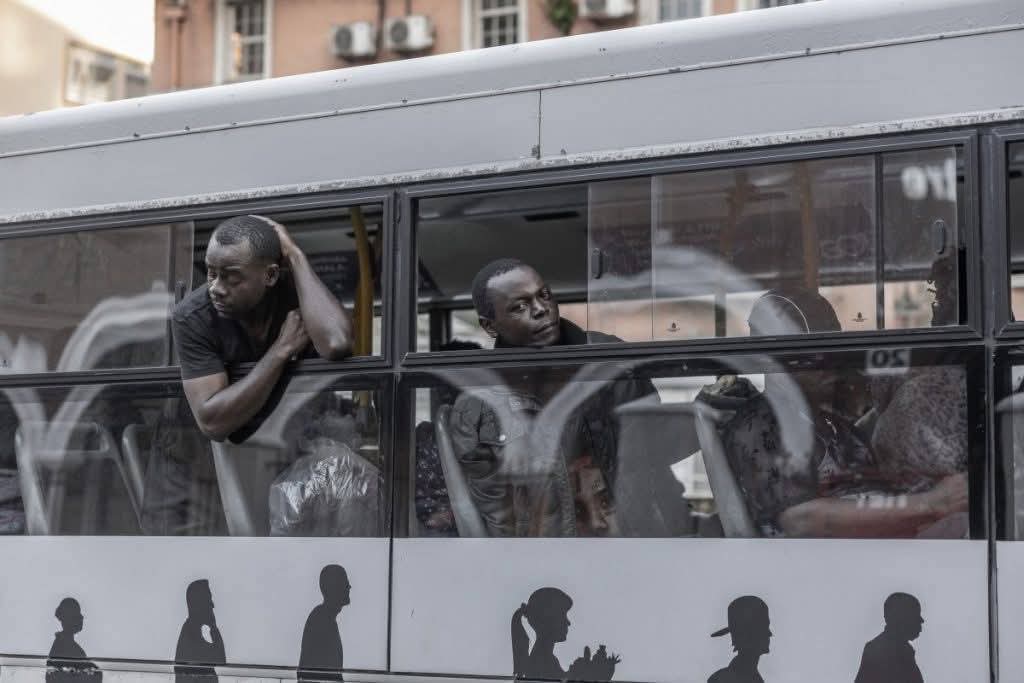
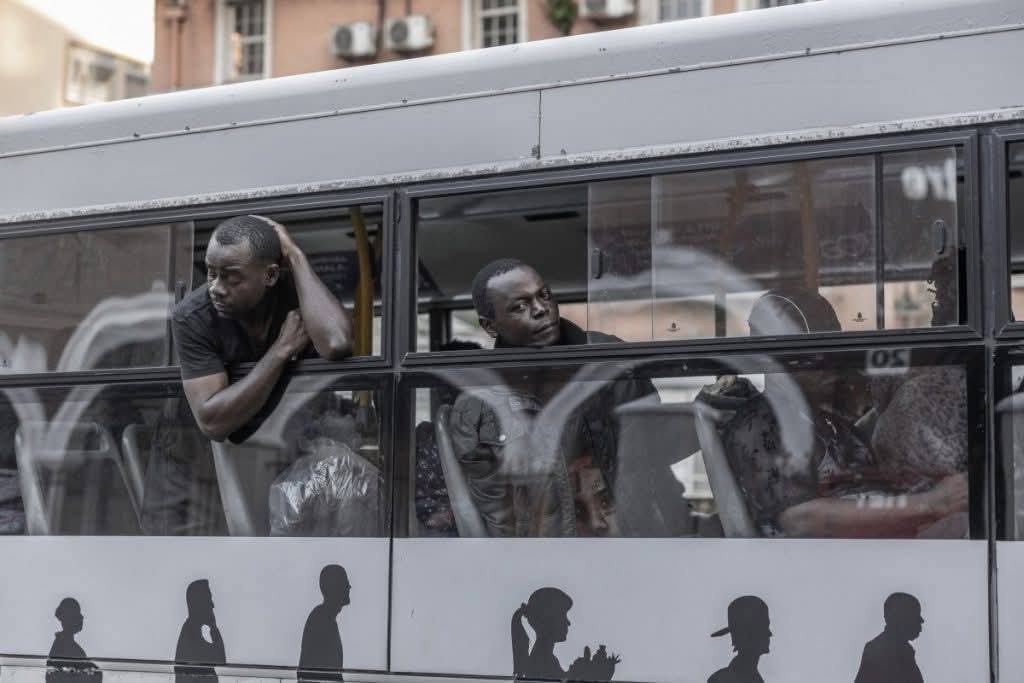
The coordinated operation at the Diakonia Centre saw contingents of the South African Police Service (SAPS) and eThekwini Metro Police herd displaced migrants—including women and young children—onto a fleet of municipal buses. The evacuees, primarily hailing from the Democratic Republic of Congo (DRC), Ethiopia, Rwanda, and Somalia, were transferred to a government-run refugee reception centre on Moore Road for official status verification and processing.
A City on Edge
The evacuation follows weeks of escalating intimidation targeted at immigrant communities. Many of those huddled at the church complex had fled their homes after local vigilante groups conducted illicit door-to-door sweeps, issuing an unauthorized “ultimatum” ordering all undocumented foreigners to leave the country by June 30.
While South African authorities have stressed that these citizen-led campaigns carry no legal backing, the threats have triggered widespread panic. Earlier in the week, police resorted to using teargas and rubber bullets to disperse a separate group of 200 terrified migrants who had attempted to seek refuge outside the Durban Central Police Station, drawing appeals for United Nations intervention.
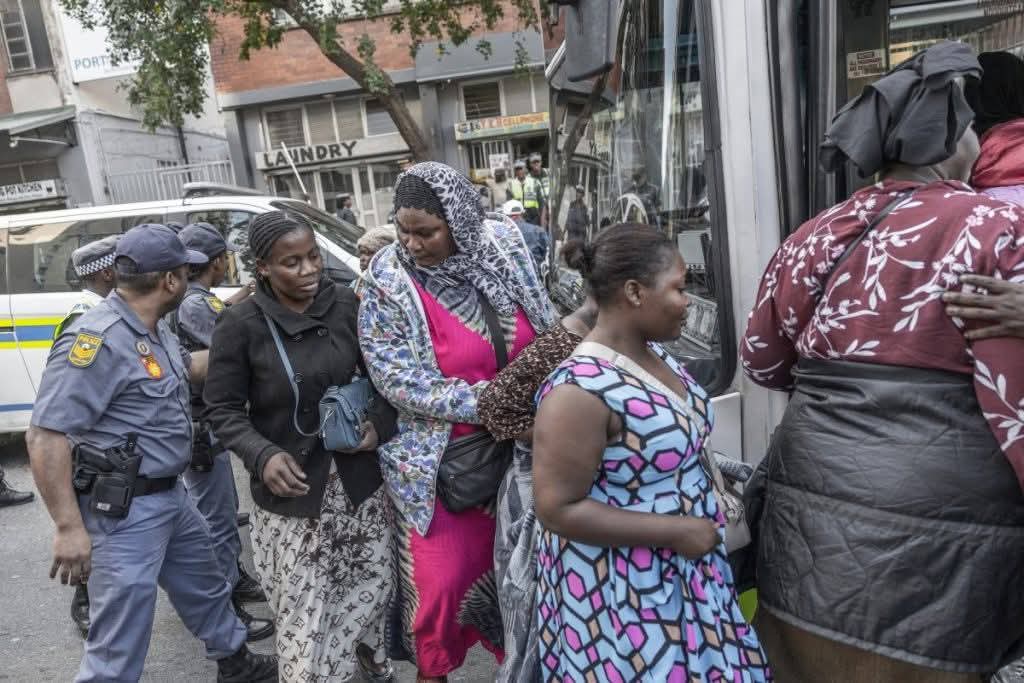
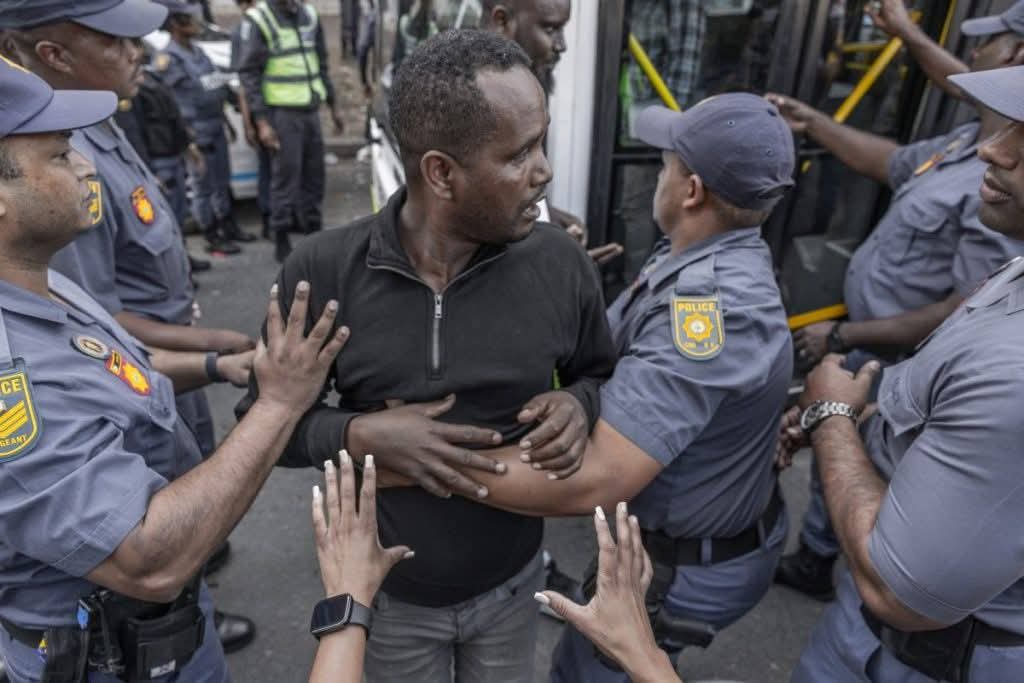
As buses departed the Diakonia Centre on Thursday afternoon, crowds of local anti-immigrant activists gathered along the perimeter, cheering and chanting “They must go!” Brief scuffles broke out when one migrant attempted to flee the perimeter and was pursued by a local mob before police intervened.
Scapegoating and Political Posturing
Jacinta Ngobese-Zuma, the founder and figurehead of the civic movement March and March, watched the evacuation alongside supporters of the uMkhonto weSizwe (MK) Party. While Ngobese-Zuma insisted her organization rejects outright violence, she maintained a hardline stance.
”We don’t owe them anything,” Ngobese-Zuma told reporters, arguing that foreign nationals are utilizing refugee status as a permanent shield against domestic laws. “Our campaign is aimed at undocumented immigrants… we are demanding stricter enforcement of immigration laws.”
However, socio-political analysts argue that organizations like March and March are scapegoating vulnerable migrant populations for systemic internal crises, such as South Africa’s crippling unemployment rate and rampant crime. Observers note that the sudden uptick in anti-migrant rhetoric is heavily fueled by political mobilization, with local government elections looming in just six months.
Durban Mayor Cyril Xaba, who arrived at the scene to quell tensions alongside Home Affairs officials and representatives from the KwaZulu-Natal Premier’s Office, sought to reassure the public that due process would be followed.
“The refugee centre will determine who is in the country lawfully and who is here illegally,” Xaba stated. “They will separate those groups so that those who have documents can then be safely led back into communities.”
Diplomatic Fallout: Ghana Halts Mass Rescue Flight
The crisis has reverberated far beyond South Africa’s borders, triggering a major diplomatic headache across the continent.
In Accra, the Ghanaian Ministry of Foreign Affairs announced a last-minute delay to its highly publicized emergency evacuation exercise, which was scheduled to airlift citizens out of South Africa starting Thursday dawn. The rescue mission was initiated after a viral video depicting the brutal assault of a Ghanaian man in South Africa sparked international outrage.

While President John Dramani Mahama originally approved the immediate repatriation of 300 nationals, Ghana’s High Commission in Pretoria reported that the number of terrified citizens begging for extraction rapidly surged past 800. The Ghanaian government postponed the flight from O.R. Tambo International Airport to navigate complex logistical hurdles and secure the necessary legal and administrative clearances from South African immigration authorities.
A History of Trauma
For many of the displaced, the current unrest is a horrific re-runs of a familiar nightmare. South Africa has suffered cyclical waves of lethal xenophobic violence, most notably in 2008—when dozens were killed and thousands displaced—and during subsequent flare-ups in 2015 and 2021.
Robert Ikobia, a Congolese national processing through the Durban queue, recounted his harrowing journey since escaping war in the DRC as a 12-year-old child.
“I have the papers to be here. But every time there has been a xenophobic upheaval, I have been a victim,” Ikobia said. “In 2012, I was shot in the head and nearly died. A few years later, I was stabbed by a mob. I fled a war in my country, yet I cannot find peace in South Africa.”
Do you want to advertise with us?
Do you need publicity for a product, service, or event?
Contact us on WhatsApp +2348033617468, +234 816 612 1513, +234 703 010 7174
or Email: validviewnetwork@gmail.com
CLICK TO JOIN OUR WHATSAPP GROUP