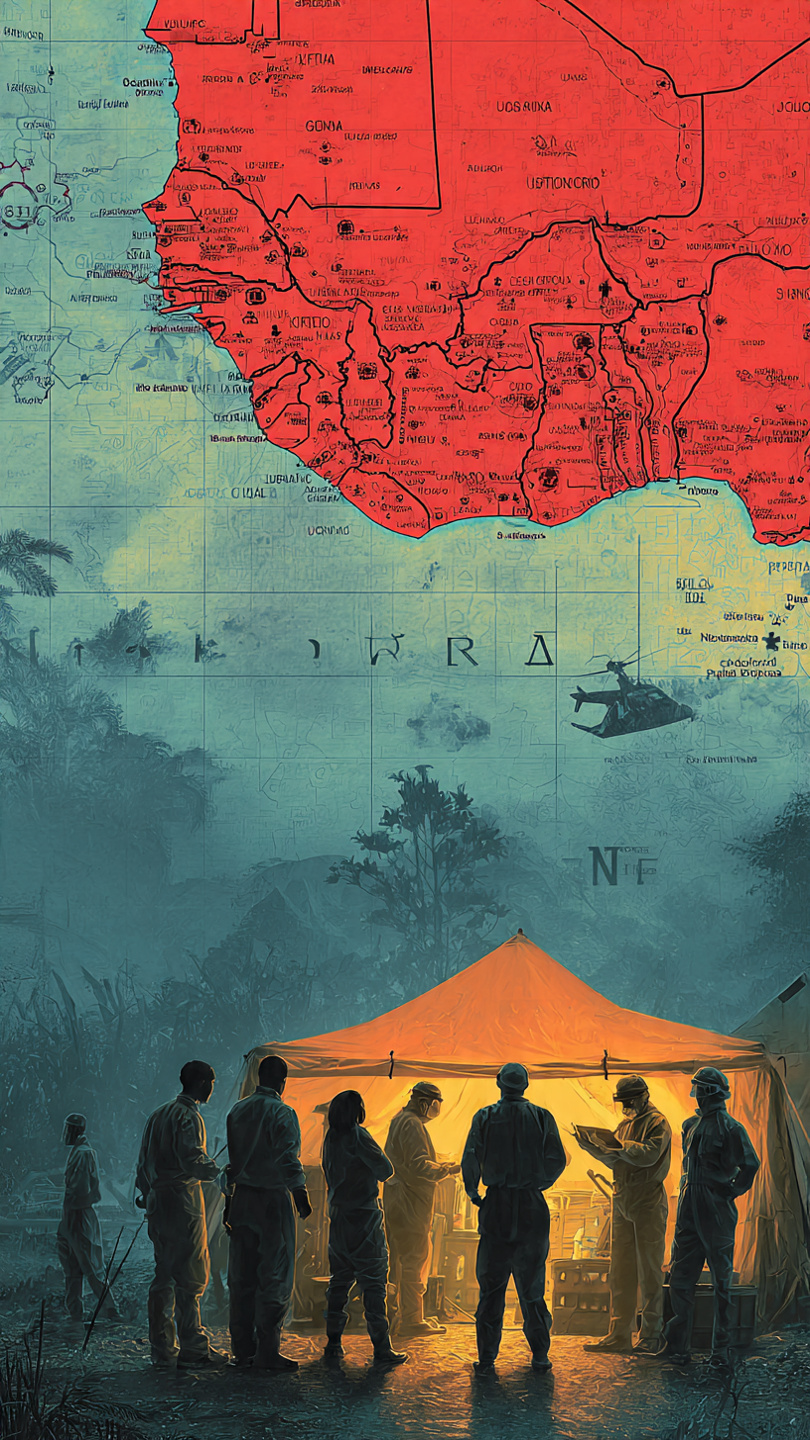
KINSHASA — The World Health Organization (WHO) has declared a Public Health Emergency of International Concern (PHEIC) following a rapidly escalating outbreak of Ebola that has crossed borders from the Democratic Republic of Congo (DRC) into Uganda.
Making the crisis profoundly more alarming to global scientists is the confirmation that the epidemic is driven by the Bundibugyo ebolavirus—a rare variant of the pathogen for which there are currently no licensed vaccines or specific antiviral treatments.
As of May 17, 2026, international health agencies monitor a surging caseload that has jumped to 336 suspected cases and at least 88 reported deaths across the region.
A Cross-Border Emergency Erupts
The declaration came swiftly over the weekend after the virus officially slipped across international lines. Ugandan health officials confirmed that two distinct, laboratory-verified cases of the Bundibugyo strain had emerged in the capital city of Kampala, resulting in at least one death.
In the DRC, the outbreak has struck three major health zones in the volatile eastern province of Ituri: the gold-mining hub of Mongbwalu, the district of Rwampara, and the provincial capital of Bunia. Fears escalated further on Sunday following reports that an infected woman managed to bypass containment networks and travel southwest to Goma—a highly populated city currently under the control of the M23 rebel movement—where she later tested positive.
”The high positivity rate of initial samples, the rapid confirmation of cases across both Kampala and Kinshasa, and the rising trends of community deaths are deeply concerning,” the WHO stated in its emergency briefing.
The Threat of an Untreatable Strain
The presence of the Bundibugyo virus has fundamentally changed the operational playbook for medical responders. Unlike the more common Zaire ebolavirus strain—which devastated eastern DRC between 2018 and 2020 and can now be suppressed using stockpile vaccines like Ervebo—the Bundibugyo strain renders existing stockpiles useless.

”We are dealing with an extraordinary event,” said an Africa CDC representative. “The lack of an approved vaccine means containment relies entirely on rigorous isolation, rapid contact tracing, and supportive hospital care.”
The crisis is believed to have originated in late April in the high-traffic mining zones of Mongbwalu, where an initial cluster of deaths—including four healthcare workers who died within four days—triggered a quiet alarm. Because the initial local diagnostic tests focused on the Zaire strain and yielded negative results, the virus spread undetected for weeks as sick patients migrated toward larger urban centers to seek specialized care.
Demographic data reveals an alarming trend: over 60% of the current suspected cases are women aged 20 to 39, highlighting a severe vulnerability linked to traditional caregiving roles and household nursing.
Conflict and Chaos Impede Containment
Halting the spread in Ituri province is presenting humanitarians with a logistical nightmare. The territory has been under direct military rule since 2021 due to relentless violence perpetrated by dozens of armed factions, including the Islamic State-affiliated Allied Democratic Forces (ADF).
Active combat zones, severe logistical bottlenecks, and deep-seated community mistrust have crippled initial contact tracing efforts. The WHO acknowledged that out of dozens of listed high-risk contacts, many have already vanished into shifting populations or succumbed to the disease in remote villages before teams could isolate them.
Do you want to advertise with us?
Do you need publicity for a product, service, or event?
Contact us on WhatsApp +2348033617468, +234 816 612 1513, +234 703 010 7174
or Email: validviewnetwork@gmail.com
CLICK TO JOIN OUR WHATSAPP GROUP
In response to the crisis, international aid agencies, including Médecins Sans Frontières (Doctors Without Borders), are scrambling to deploy mobile laboratories, construct emergency isolation wards, and reinforce porous border checkpoints separating the DRC from Uganda and South Sudan.
With regional transit hubs heavily compromised, health authorities warn that the window to pin down the true geographical footprint of the epidemic is closing fast.