

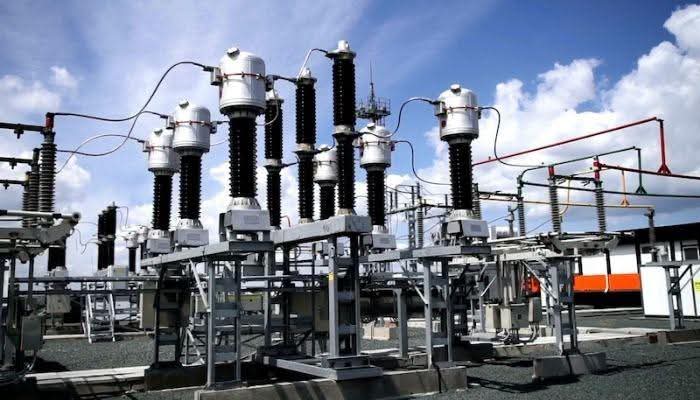
ABUJA — Nigeria’s power sector is trapped in a severe liquidity and operational crisis, driven by institutional and consumer energy theft alongside a massive infrastructure investment gap.
Speaking in an interview with the News Agency of Nigeria (NAN) in Abuja on Monday, May 25, Mr. Kunle Olubiyo, President of the Nigeria Consumer Protection Network, warned that the widespread bypass of metering systems and outdated grid infrastructure are bleeding the industry of vital revenue, making a stable power supply nearly impossible.
Consumer vs. Institutional Theft: A Two-Pronged Hemorrhage
According to Olubiyo, the bleeding occurs at multiple levels of the electricity value chain, spanning generation, transmission, and distribution.
At the retail end, consumers continue to deploy sophisticated methods to evade payment. This includes direct meter bypassing, illegal neighborhood connections, and burying underground cables directly from transmission lines to bypass household meters entirely.
However, Olubiyo revealed that some of the most damaging infractions occur institutionally at critical interfaces between Generation Companies (GenCos), the Transmission Company of Nigeria (TCN), and Distribution Companies (DisCos). He alleged that wholesale meters used to monitor power handovers are often defective, obsolete, or deliberately misconfigured to inflate subsidy claims and falsify energy data.
Mr. Kunle Olubiyo via NAN:
“If 4,000 megawatts is generated and 7,000 megawatts is recorded, that is energy theft because the excess energy does not get to consumers. Whether through meter bypass or illegal connection, many customers are using electricity for free.”
The Beneficiaries of Vandalism
The expert further alleged that the persistent failure of the national grid is compounded by internal corruption regarding maintenance contracts. Olubiyo noted a troubling trend where minor repair works or tower replacements are aggressively inflated from hundreds of millions of Naira into billions.
He suggested an underlying collusion between external vandals and internal actors who benefit directly from the subsequent emergency contract chains.

This lack of institutional integrity is worsened by the financial incapacity of several DisCos. Across the country, communities are frequently left in darkness for months or years due to blown transformers, because local DisCos claim they lack the capital to replace them. In many cases, exhausted residents are forced to crowd-fund millions of Naira to purchase equipment themselves, while state governments or private philanthropists step in to fill the regulatory vacuum.
Severe Safety Risks and High-Voltage Back-Feeding
Beyond the financial devastation, illegal connections present a lethal hazard to both utility workers and the public.
Olubiyo highlighted a rising dangerous practice where property owners connect a single building to multiple transmission lines of different voltage capacities without an automated changeover system. This setup creates a phenomenon known as “back-feeding”, which sends live high-voltage currents back into supposedly dead lines during repair works, leading to frequent electrocutions, localized fires, and catastrophic grid trip-offs.
Tech-Driven Enforcements Under the Electricity Act
To rescue the sector from total collapse, experts are calling for strict implementation of the punitive measures outlined in the Electricity Act, alongside an aggressive deployment of modern technology.
Recommended interventions to bridge the revenue gap and secure the network include:
- Smart Metering & Grid Telemetry: Transitioning from easily manipulated static meters to secure, pole-mounted smart meters.
- GPS Monitoring & Check Meters: Utilizing advanced check meters and GPS-enabled surveillance on high-voltage transmission assets to detect real-time tampering.
- Restricted Access Installations: Replicating secure metering frameworks currently utilized in military barracks to completely eliminate unauthorized consumer access.
Without immediate structural overhauls, aggressive capital injection, and digitized anti-theft mechanisms, Nigeria’s power sector remains doomed to an endless cycle of liquidity shortfalls, operational debt, and blackouts.
Do you want to advertise with us?
Do you need publicity for a product, service, or event?
Contact us on WhatsApp +2348033617468, +234 816 612 1513, +234 703 010 7174
or Email: validviewnetwork@gmail.com
CLICK TO JOIN OUR WHATSAPP GROUP