Stakeholders from the Economic and Financial Crimes Commission (EFCC), the Nigeria Police Force, the Nigeria Financial Intelligence Unit (NFIU), civil society organisations and the media have resolved to deepen collaboration against illicit financial flows (IFFs) that continue to drain Nigeria’s resources and undermine national development.
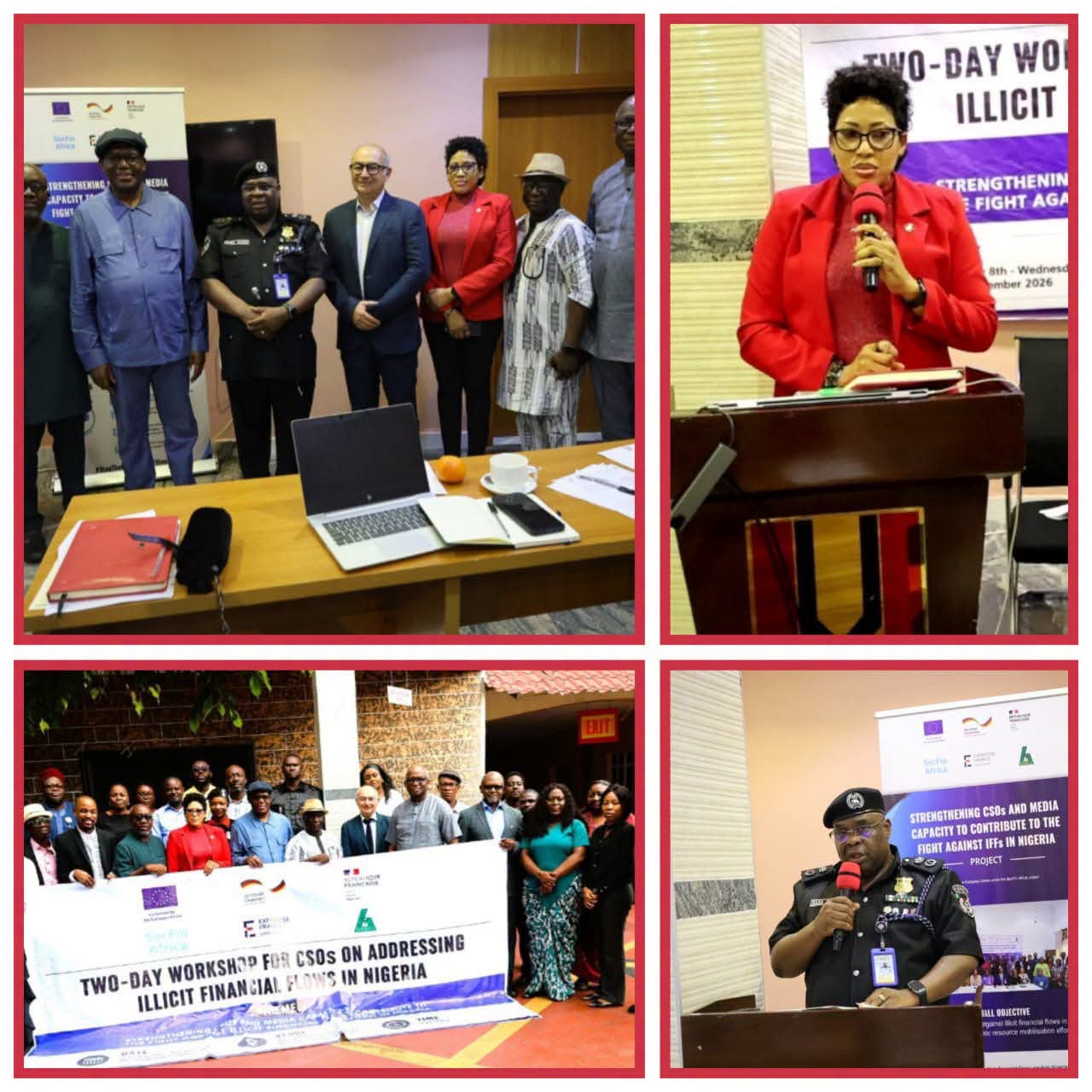
The call for stronger partnership was the central message at a two-day capacity-building workshop organised by the Africa Network for Environment and Economic Justice (ANEEJ) under its SecFin Africa Project, held in Uyo, Akwa Ibom State. Themed “Strengthening CSOs and Media Capacity to Contribute to the Fight against Illicit Financial Flows (IFFs) in Nigeria,” the event brought together participants from civil society groups and media organisations at Villa Hilton Hotel.
Speaking on behalf of EFCC Executive Chairman Mr Ola Olukoyede, the Head of the Public Affairs Department, ACE II T.E. Nwosu, urged Civil Society Organisations across the country to intensify their support for the Commission’s efforts. He decried the devastating effects of IFFs, noting that they stall development, erode public trust and damage the integrity of governance. CSOs, he said, have critical roles to play through advocacy, investigative work and public enlightenment. The fight against financial crimes, he stressed, demands sustained collaboration among law enforcement agencies, government institutions, civil society and the media.
Olukoyede, through his representative, reaffirmed the EFCC’s commitment to investigate, prevent and prosecute financial crimes. He called on CSOs to keep raising public awareness, promoting transparency and strengthening the integrity of Nigeria’s financial system in the interest of a more prosperous nation.
In his welcome address, ANEEJ Executive Director Rev. David Ugolor described IFFs as a serious threat to Nigeria’s economic stability and development. He identified corruption, money laundering, procurement fraud, tax evasion, trade mis-invoicing and profit shifting as key drivers of the illicit outflows. Ugolor emphasised that ordinary Nigerians ultimately bear the cost through inadequate infrastructure, poor public services and lost opportunities for growth. He called for closer cooperation among government institutions, security agencies and civil society to promote transparency and accountability.
Akwa Ibom State Commissioner of Police, CP Baba Mohammed Azare, provided a detailed explanation of what constitutes illicit financial flows and the dangers they pose. He defined IFFs as monies or assets that are illegally acquired, transferred, concealed or utilised, arising from corruption, fraud, organised crime, tax-related abuses, smuggling, trafficking, cybercrimes, money laundering and other illegal activities. These funds, he noted, represent resources that could have been channelled into building schools, hospitals and other developmental projects. Azare also offered practical insights on identifying, preventing and addressing such crimes.

Prof. Abdullahi Shehu, SecFin Africa Project Representative, delivered a presentation on “Understanding Illicit Financial Flows in Nigeria: Concepts, Typologies and Development Impact.” He examined the nature, sources and various forms of IFFs, stressing that the problem goes beyond the mere disappearance of money to the loss of opportunities and resources needed for national development.
Chinedum Odenyi, Head of the Legal Operations Division at the NFIU, outlined the unit’s mandate and functions in generating financial intelligence and combating money laundering and related crimes.
The workshop, supported by the European Union through the SecFin Africa Project, also featured sessions on Nigeria’s legal and institutional frameworks for tackling IFFs, investigative journalism techniques, media ethics, source protection and digital security. Participants developed practical investigative story ideas focused on illicit financial flows.
Speakers repeatedly linked IFFs not only to underdevelopment but also to broader security risks, noting that some illicit funds can fuel corruption and other criminal activities. The gathering underscored a shared recognition that winning the fight requires more than institutional efforts alone; it demands active citizen participation, rigorous media scrutiny and sustained multi-stakeholder collaboration.
The Uyo workshop forms part of ongoing efforts to equip civil society and the media with the knowledge and tools needed to track, expose and help stem the flow of illicit funds out of Nigeria, thereby protecting resources critical for the country’s progress.
Do you want to advertise with us?
Do you need publicity for a product, service, or event?
Contact us on WhatsApp +2348033617468, +234 816 612 1513, +234 703 010 7174
or Email: validviewnetwork@gmail.com
CLICK TO JOIN OUR WHATSAPP GROUP