

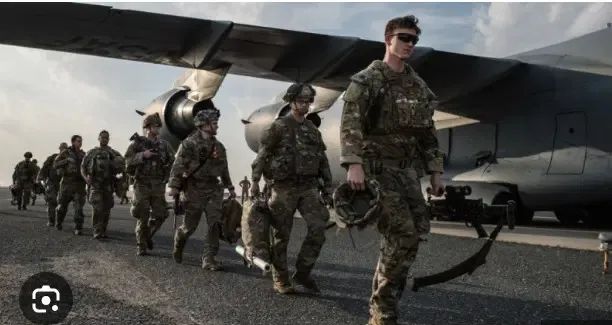
WASHINGTON — The strategic landscape of the Middle East shifted dramatically this week as thousands of paratroopers from the U.S. Army’s elite 82nd Airborne Division began landing in the region. Their arrival marks the most significant escalation in ground force posture since the commencement of Operation Epic Fury on February 28.
Two U.S. officials, speaking on the condition of anonymity, confirmed to Reuters that elements of the division’s headquarters, a brigade combat team, and essential logistics units are now positioned in the theater. While their specific locations remain classified for operational security, their arrival follows the deployment of 2,500 Marines over the weekend, adding to a massive buildup of naval and Special Operations assets already active in the conflict.
Strategic Objectives: Kharg Island and Beyond
Though the White House maintains that no final decision has been made to launch a full-scale ground invasion of Iranian territory, military planners are reportedly preparing for “high-risk” targeted operations. Central to these discussions is Kharg Island, the critical terminal responsible for 90% of Iran’s oil exports.

Seizing the island would effectively paralyze the Iranian economy, but officials warn of the immense risk posed by Tehran’s remaining missile and drone stockpiles. Other options under review include:
- Nuclear Extraction: Using ground forces to secure and extract highly enriched uranium from deep underground facilities.
- Strait of Hormuz Security: Deploying troops to Iran’s shoreline to ensure safe passage for global oil tankers.
The Human Toll of ‘Epic Fury’
Since the initial joint U.S.-Israeli strikes a month ago—which reportedly targeted the heart of the Iranian leadership—the conflict has intensified. According to latest military data:
- 11,000+ targets have been struck by U.S. and partner forces.
- 13 U.S. service members have been killed in action.
- 300+ U.S. troops have been injured.
Political High-Stakes
For President Donald Trump, the deployment is a delicate balancing act. Despite his 2024 campaign promises to avoid “forever wars,” the administration has signaled that diplomatic efforts with what they describe as a “more reasonable regime” have yet to yield a ceasefire.
On Monday, the President reiterated his ultimatum to Tehran: open the Strait of Hormuz immediately or face targeted strikes on power plants and remaining oil infrastructure. With public support for the campaign remains low and the risks of a “quagmire” looming, the arrival of the 82nd Airborne signals that the U.S. is prepared for a long-term presence if the current stalemate continues.
Do you want to advertise with us?
Do you need publicity for a product, service, or event?
Contact us on WhatsApp +2348033617468, +234 816 612 1513, +234 703 010 7174
or Email: validviewnetwork@gmail.com
CLICK TO JOIN OUR WHATSAPP GROUP