

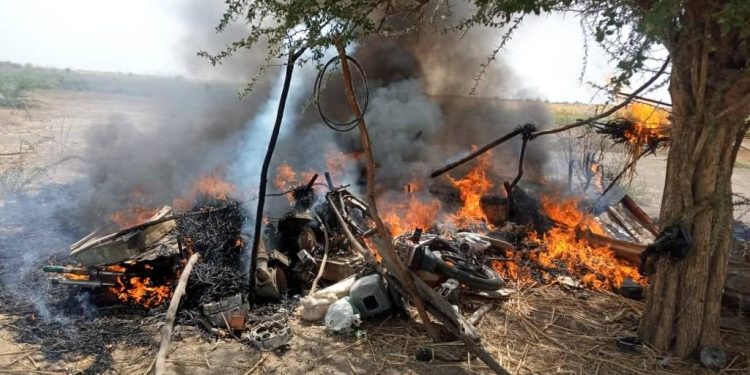
Nigeria recorded 500 security incidents in August 2026, with the northern region accounting for 334 cases, or 67 percent of the national total, according to the latest Nigeria Security Index released by Eons Intelligence.
The figures underline a persistent security crisis across the North-West and North-Central regions, where armed attacks, banditry, and kidnapping-for-ransom continue to challenge security architecture. Zamfara State led the monthly tally with 45 incidents, closely followed by Niger with 41, Kano with 38, and Sokoto with 37. Kaduna and Katsina recorded 29 incidents each, while Borno logged 28.
The report categorized the nationwide incidents into 86 armed attacks, 46 kidnapping cases, 55 cult-related clashes, 18 protests, and 295 events encompassing fire outbreaks, improvised explosive device (IED) explosions, mob violence, and election disruptions. In the South, Lagos recorded 38 incidents, while Delta and Rivers logged 22 each.

The snapshot aligns with longer-term trends analyzed by the Armed Conflict Location and Event Data Project (ACLED), which indicate a significant geographic shift in violent insecurity between 2021 and 2026. While Borno remains Nigeria’s deadliest conflict environment due to the enduring legacy of the Boko Haram insurgency, states like Kano have experienced a dramatic rise in violent incidents, registering a 940 percent increase over the five-year period. Conversely, southern states like Rivers witnessed marked declines in violent insecurity over the same timeframe.
The escalating violence has intensified pressure on the Federal Government to overhaul its security strategy. In late August, security forces rescued 308 kidnapped victims in Niger and Kwara states, which President Bola Tinubu acknowledged as a major joint operation success. However, that respite was overshadowed by a subsequent mass abduction in Niger State, where approximately 600 worshippers were seized from a mosque and at least 30 people were killed.
Civil society groups and security experts have criticized the current approach as overly reactive. Suleiman Mande, Secretary-General of the Africa Centre for Strategic Studies (Nigeria Chapter), argued that military responses must be paired with structural reforms addressing poverty, porous borders, and institutional weaknesses, particularly with the 2027 general elections approaching. Auwal Rafsanjani, Executive Director of the Civil Society Legislative Advocacy Centre (CISLAC), similarly condemned the governance deficits leaving rural communities ungoverned and vulnerable to criminal networks.
Do you want to advertise with us?
Do you need publicity for a product, service, or event?
Contact us on WhatsApp +2348033617468, +234 816 612 1513, +234 703 010 7174
or Email: validviewnetwork@gmail.com
CLICK TO JOIN OUR WHATSAPP GROUP
The human and economic toll remains severe. In Sokoto State, residents of Kebbe town faced a severe security threat after suspected bandits imposed a N40 million levy, threatening mass violence if unpaid. Meanwhile, the Borno State Government disclosed that years of insurgency have destroyed more than 1,400 schools, killed 2,295 teachers, displaced 19,000 educators, and left roughly three million children in urgent need of emergency educational support.