

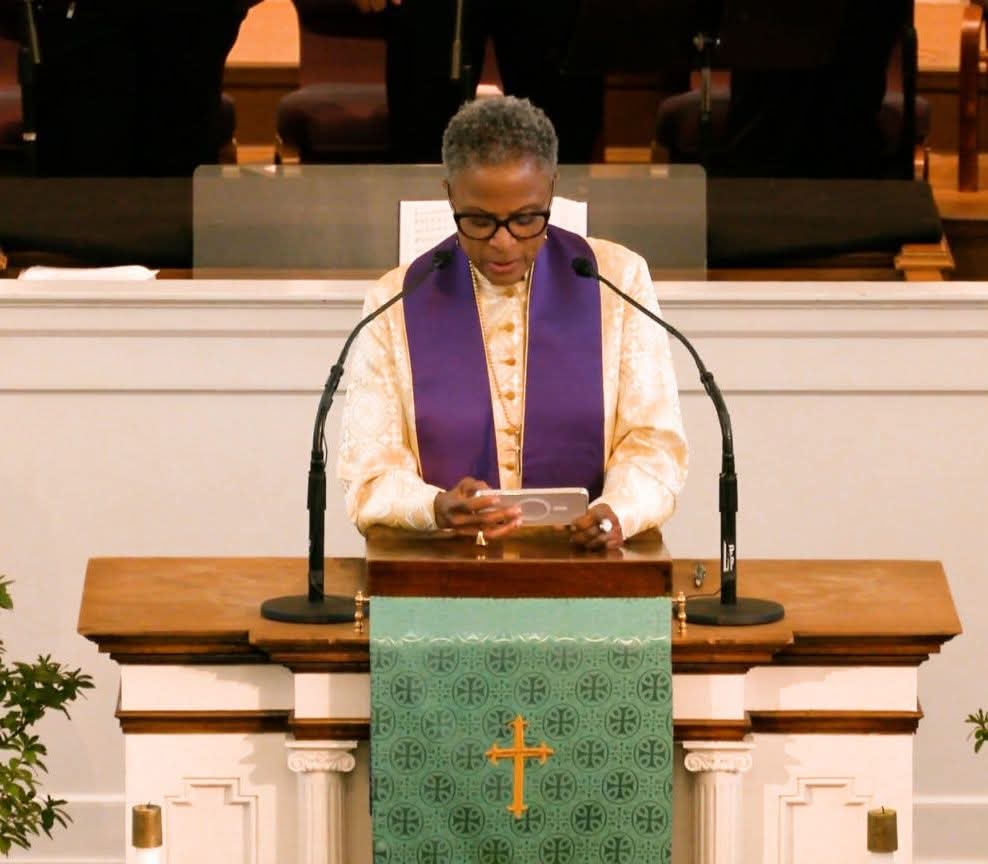
SAN FRANCISCO – In a move that has sent shockwaves through the American Christian community, Bishop Yvette Flunder has publicly challenged the sufficiency of the Holy Bible, labeling both the Old and New Testaments as “problematic” and calling for the creation of a “Third Testament.”
Flunder, a prominent figure known for her progressive theology and advocacy, argued during a recent address that the existing canon contains “bad theology” and fails to serve as the unadulterated “Word of God” for the modern era. Her comments, which included a suggestion to “pull pages out” of traditional scripture, have ignited a fierce debate over the boundaries of doctrinal reform and the sanctity of the biblical canon.
A Radical Critique of Canon
The controversy centers on Bishop Flunder’s assertion that the Bible, as currently compiled, reflects outdated cultural prejudices rather than eternal divine truth. Speaking with what critics described as “smiling violence,” she suggested that the church has outgrown the frameworks established in the First and Second Testaments.
”We need a Third Testament,” Flunder reportedly stated, emphasizing that contemporary spiritual revelation should hold equal or greater weight than the ancient texts. She characterized parts of the New Testament as specifically “problematic,” suggesting they are used more as tools of exclusion than as conduits of grace.

Theological Backlash
The response from traditionalist and evangelical sectors was swift and unsparing. Many theologians have pointed to 1 Timothy and 2 Peter to defend the “God-breathed” nature of the existing scriptures, accusing Flunder of “theological vandalism.”
”False teachers always reach for authority that does not belong to them,” wrote Pastor Rich Bitterman in a widely circulated rebuttal. “They revise what God blessed and sneer at what God gave, training people to distrust His wisdom.”
Critics argue that Flunder’s call for a new testament represents a departure from the “anchor” of faith, replacing historically verified doctrine with what they describe as “frightened human instincts.”
The “Third Testament” Concept
While the idea of a “Third Testament” is not entirely new—having appeared in various esoteric and fringe movements throughout history—it is rare for a seated bishop of a major fellowship to champion the concept so explicitly. Proponents of the idea suggest that “the Spirit is still speaking” and that the lived experiences of marginalized communities should be codified as new scripture.
However, for most mainstream denominations, the closing of the biblical canon in the early centuries of the Church remains a non-negotiable pillar of faith.
A House Divided
The timing of the comments has added fuel to an already polarized religious landscape in the U.S. While some progressive congregants have praised the Bishop for her “courageous” willingness to deconstruct difficult texts, many others view it as an irredeemable break from the Christian tradition.
As of Tuesday, several denominational leaders have called for a formal review of the statements, while Bishop Flunder’s supporters maintain that her words were an invitation to a deeper, more inclusive understanding of how the divine interacts with the world today.
The debate raises a fundamental question that continues to haunt modern American Christianity: Can the faith survive the removal of its foundational text, or is the “Third Testament” simply the first chapter of a different religion altogether?
Do you want to advertise with us?
Do you need publicity for a product, service, or event?
Contact us on WhatsApp +2348033617468, +234 816 612 1513, +234 703 010 7174
or Email: validviewnetwork@gmail.com
CLICK TO JOIN OUR WHATSAPP GROUP