

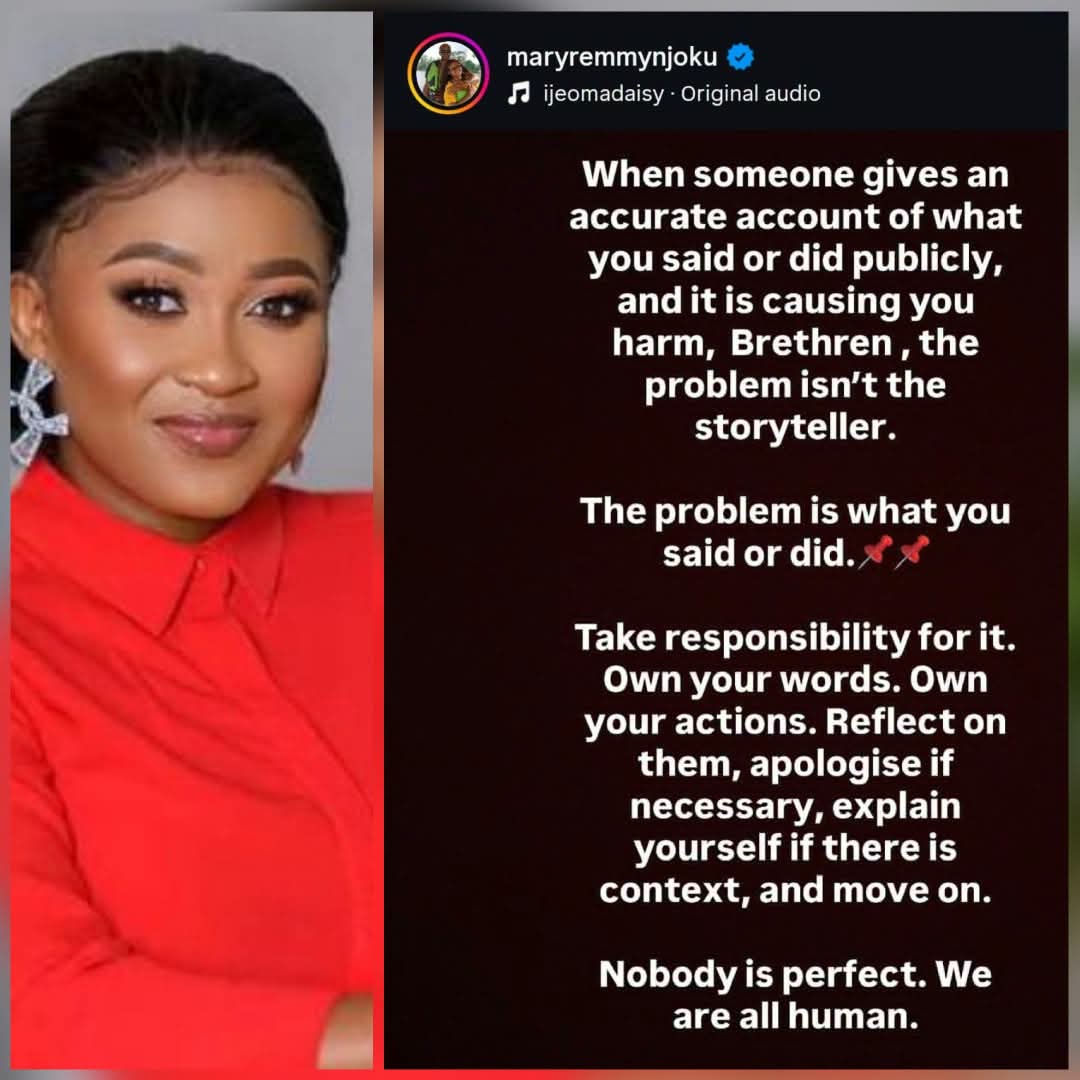
Nollywood actress and ROK Studios founder Mary Njoku has weighed into a long-running debate over the selective use of scripture by some religious leaders, insisting that the phrase “Touch not my anointed” cannot be deployed as a shield against legitimate criticism or personal accountability.
In a recent social media post, Njoku argued that the biblical injunction applies specifically when individuals face false accusations, deliberate lies or intentional harm. It does not, she said, protect those who invite scrutiny through their own public words and actions.
“‘Touch not my anointed’ applies when someone is falsely accusing you, lying against you, or deliberately trying to harm you,” she wrote. “It doesn’t apply when you bring the consequences upon yourself through your own words or action. Weaponizing the scripture against the truth can backfire.”

The actress stressed that pastors remain human and therefore fallible. Like every other person, she noted, they are capable of error and remain subject to the same standards of responsibility expected of others. “Nobody is perfect. After all, men of God are still human. They are not above making mistakes or being held accountable. They deserve grace and understanding, just like everyone else.”
Njoku urged spiritual leaders to accept responsibility where necessary, offer apologies when warranted, and supply context rather than shutting down discussion with a selective quotation. She called for mutual grace: leaders should extend to others the same understanding they would hope to receive themselves.
The phrase, drawn from Psalm 105:15 and the parallel passage in 1 Chronicles 16:22, originally referred to God’s protection of the patriarchs and the people of Israel from physical harm by foreign kings during their early history. Biblical scholars and commentators have repeatedly noted that the verses address divine preservation of a vulnerable people, not a modern licence for clergy to evade critique or public accountability.
In Nigeria and across parts of Africa, the expression has frequently been invoked in charismatic and Pentecostal circles to discourage questioning of pastors, even when their statements or conduct have drawn widespread public attention. Critics argue that such usage can foster an atmosphere in which leaders become insulated from scrutiny, while supporters maintain it guards against unjust attacks on those called to spiritual office.
Njoku’s intervention fits a pattern of candid commentary on matters of faith. The actress has previously spoken about the limits of prayer in addressing practical national problems such as insecurity and infrastructure failures, and has cautioned against malicious prayers driven by bitterness. Her latest remarks add to a broader conversation about transparency and responsibility within religious leadership.
By framing accountability as compatible with grace rather than opposed to it, Njoku has placed the focus back on personal integrity. Whether her call prompts reflection among the pastors she addressed remains to be seen, but the message is clear: scripture should not be wielded to silence truth.
Do you want to advertise with us?
Do you need publicity for a product, service, or event?
Contact us on WhatsApp +2348033617468, +234 816 612 1513, +234 703 010 7174
or Email: validviewnetwork@gmail.com
CLICK TO JOIN OUR WHATSAPP GROUP