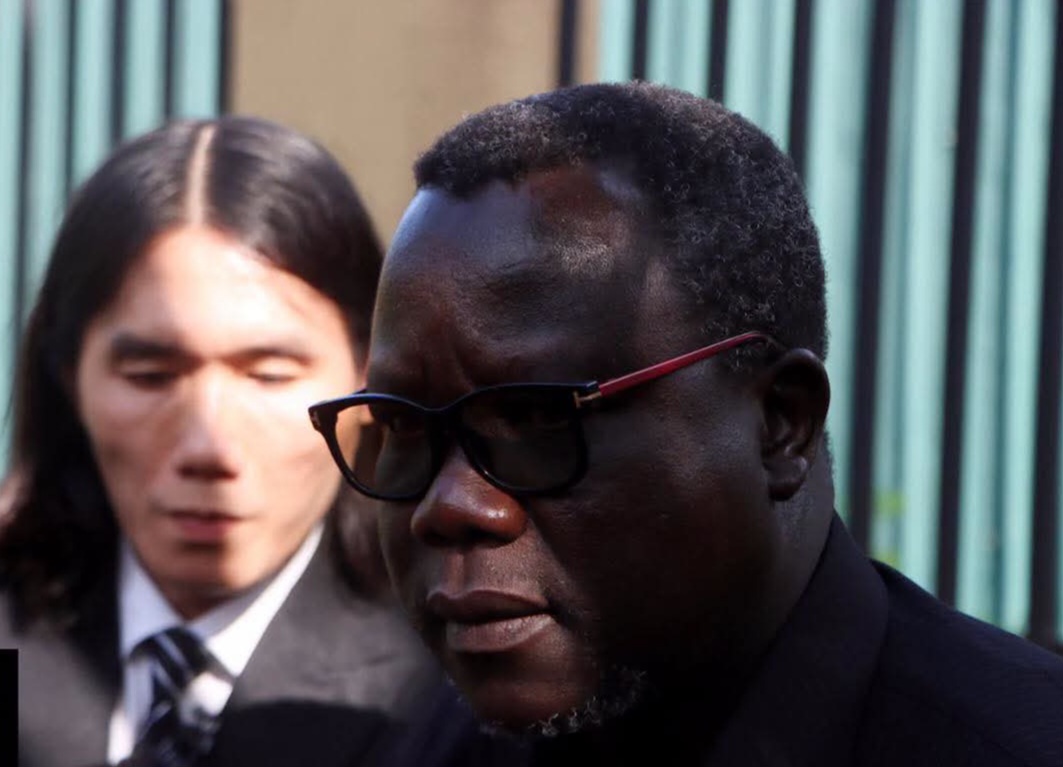
JUBA, South Sudan — A 44-year-old Vietnamese national who became a central figure in a legal battle over the Trump administration’s immigration tactics has finally left South Sudan. Tuan Thanh Phan boarded a flight out of Juba International Airport on Friday, bound for Vietnam after spending nearly a year in administrative detention.
Phan’s unusual journey highlighted the highly controversial “third-country removal” program. Under this scheme, U.S. immigration authorities deport non-citizens with criminal records to cooperative third-party countries, regardless of whether the deportee has any linguistic, cultural, or familial ties to the receiving nation.
A Year of Diplomatic Limbo
Phan, who spent 25 years in a U.S. prison following a 1999 conviction for first-degree murder and second-degree assault in Washington State, had his permanent residency revoked in 2009. While he expected an eventual deportation to his birth country of Vietnam, he was instead swept up into a new U.S. Department of Homeland Security (DHS) initiative.
In mid-2025, Phan and seven other men—nationals of Mexico, Cuba, Laos, Myanmar, and South Sudan—were boarded onto a U.S. military-chartered flight. Though a federal judge temporarily blocked the removal mid-flight due to procedural violations, forcing a weeks-long stall at a U.S. military base in Djibouti, a subsequent Supreme Court ruling greenlit the transfers. The group landed in Juba in July 2025.
”This has been a long journey,” Phan told reporters at the airport before boarding his Friday flight. “My chapter in South Sudan has come to a closing, but the journey will continue on. I thank my government, the Vietnam government, for accepting me back home.”
South Sudanese Foreign Ministry spokesperson Agok Anyar Madut confirmed that the repatriation was a bilateral effort carefully coordinated between Juba and Hanoi. “The government of our republic is working day and night to make sure that whoever has been deported to the Republic of South Sudan is going to go back to their country of origin,” Madut said.
The Landscape of Third-Country Removals
The U.S. strategy of utilizing third countries to absorb deportees has drawn fierce condemnation from international human rights groups. Activists point out that the U.S. State Department currently maintains a strict travel warning for South Sudan due to severe civil instability, high crime rates, and conflict—making it an inherently unsafe environment for foreign nationals cast out without local resources.

According to data compiled by advocacy groups, South Sudan is one of at least 12 African nations that have entered into financial or diplomatic arrangements with Washington to accept third-country deportees. Amnesty International reports that more than 30 countries globally have signed similar agreements, with an estimated 15,000 people removed to third countries throughout 2025 alone. Reports indicate that receiving governments often trade compliance for millions of dollars in U.S. aid, relaxed visa restrictions, or the lifting of specific political sanctions.
Phan is the second individual from the original Juba group of eight to be successfully rerouted to his native country. In September 2025, a Mexican national, Jesus Muñoz-Gutierrez, was flown back to Mexico under a similar agreement. The lone South Sudanese citizen in the group was released immediately upon arrival last year, leaving five others still waiting in Juba as South Sudan continues negotiations with their respective home governments.
Do you want to advertise with us?
Do you need publicity for a product, service, or event?
Contact us on WhatsApp +2348033617468, +234 816 612 1513, +234 703 010 7174
or Email: validviewnetwork@gmail.com
CLICK TO JOIN OUR WHATSAPP GROUP