




Before anything else: a man risked his life so you would not have to imagine this
Let’s be honest about what it took to write the story this feature is built on.
Fisayo Soyombo did not sit in a Lagos office and phone a few returnee migrants for quotes.
He erased himself, his real name, his real bags, his real body’s comfort and became, for 47 days, exactly what a Nigerian migrant becomes on the Sahara route: a body to be whipped into position, a fee to be extracted.
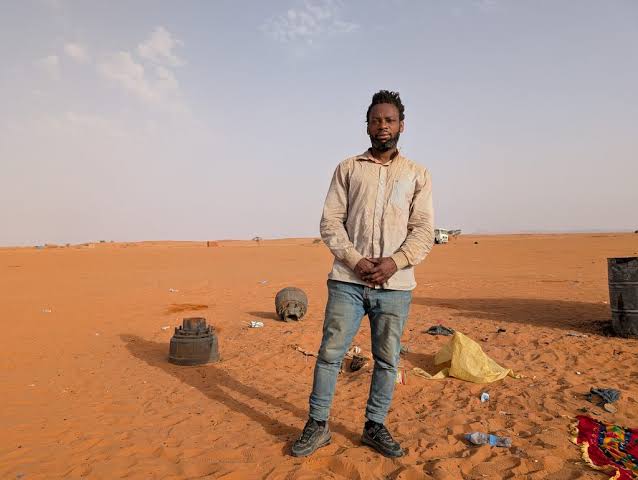
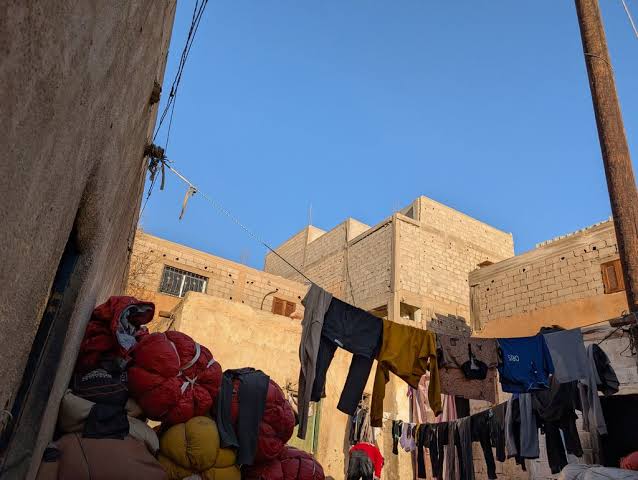
A life whose value fluctuated with how much a trafficker thought he could still squeeze from it.
He carried a hidden tracker sewn into a torso pocket precisely because he and his team both understood he might not make it back.
When soldiers seized that tracker at gunpoint in the desert near Madama, he was, by his own account, disconnected from the one thread tying him to rescue, and he kept walking anyway, kept documenting anyway, because the story mattered more than the fear.
ValidViewNetwork does not use the word “hero” lightly. But there is no more honest word for a journalist who spends 13 days locked in a room until his skin blisters, who gets flogged with a hosepipe for sitting wrong in a truck, who watches other men die and keeps writing it down instead of looking away, all so that the rest of us would have to look.
This is not journalism as stenography.
This is journalism as sacrifice. Before this feature says one more critical word about the system Soyombo exposed, it must first say this: thank you, Fisayo.
What you did cost you something none of us can fully measure, and Nigeria owes you a debt it will likely never adequately repay.
The ghost of Tobore Ovuorie walks through this story
ValidViewNetwork readers with long memories will recognise the shape of what Soyombo has done, because a Nigerian journalist has done something like it before.
In 2014, Premium Times reporter Tobore Ovuorie went undercover inside a Lagos-to-Cotonou sex-trafficking pipeline for an investigation titled “Bought and Sold”, infiltrating traffickers, watching a fellow “recruit” murdered in front of her, and living with trauma from that assignment for years afterward.
Her reporting was so harrowing, so cinematic in its horror, that it eventually became the seed for Oloture, the Netflix-backed film that introduced millions of viewers who would never read an investigative report to the raw mechanics of how Nigerian trafficking actually works.
If you have not seen it, ValidViewNetwork urges you to. It will not leave you the same.
Eleven years later, Soyombo has done for the Sahara-Libya migration route what Ovuorie did for the sex-trafficking pipeline: refused to let statistics do the talking, and put his own body where the danger was.
Two journalists, more than a decade apart, arriving independently at the same terrible conclusion, that some truths about what Nigeria does to its own desperate people can only be told by someone willing to become one of them, however briefly, however dangerously.
Soyombo left Kano on May 22, 2026, and did not see the inside of a Nigerian building again until July 7, 47 days later, and only after an emergency exit through Cairo.
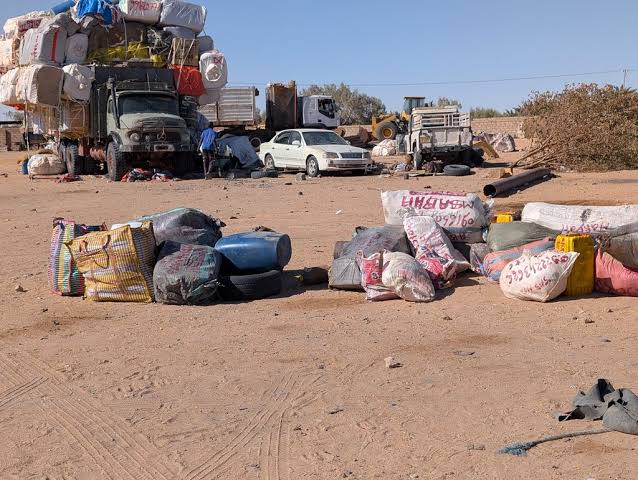
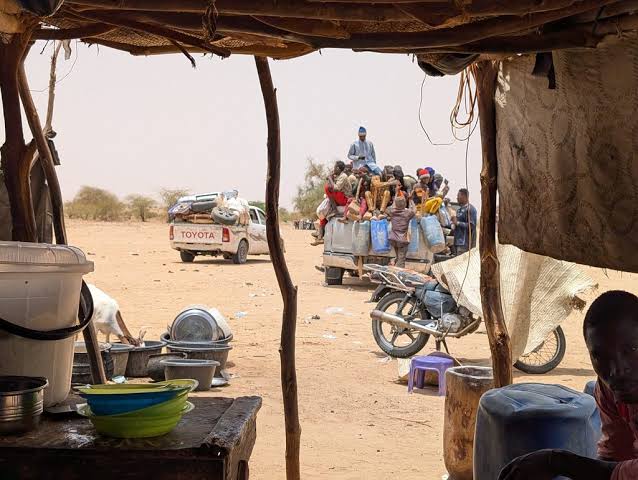
In between, he passed through Zinder, Agadez and Dirkou in Niger, then al-Gatrun, Sabha, Braq, Ash-Shwayrif and finally Janzur on Libya’s Mediterranean coast, chronicling a supply chain of cruelty organised with the cold efficiency of any other logistics business, except that the cargo screamed, bled and sometimes died.
At Agadez, he spent 18 days stranded, 13 of them locked inside a bare room, his skin peeling from extreme heat while his “connection man” extracted more money at every excuse.
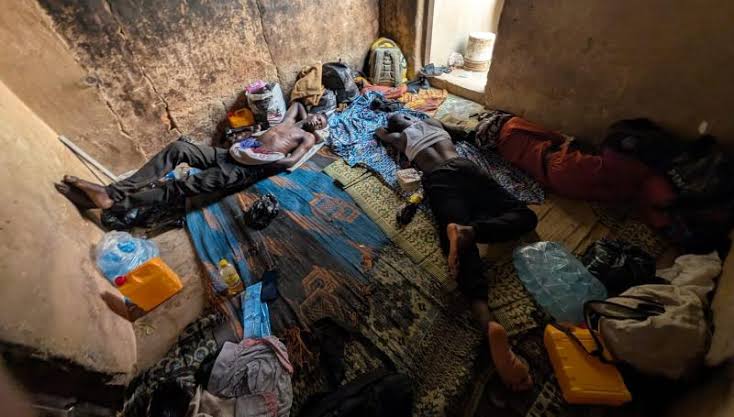
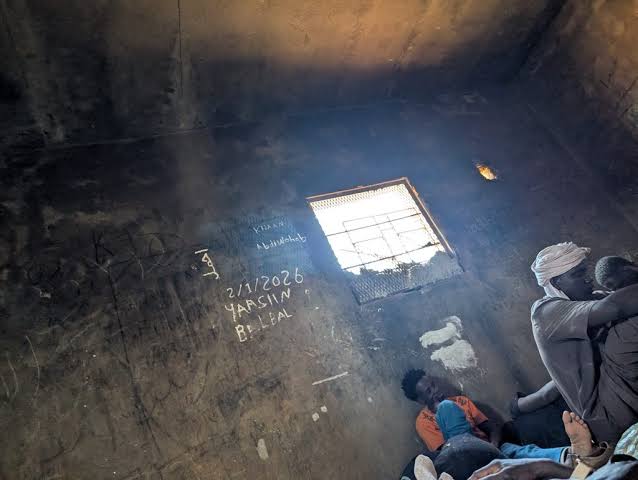
At checkpoints across the open desert, soldiers who were meant to enforce the law instead robbed migrants of cash down to the last note, while some, his own driver among them, actively pointed soldiers toward him to save their own skins.

He documented forced, unpaid labour digging trucks out of sand at knifepoint; migrants slapped and whipped for the crime of moving too slowly; nights spent shivering on open desert sand after days of scorching heat.
At al-Gatrun, two middle-aged traffickers casually showed him a video of 15 trafficked Nigerian girls, some visibly underage and asked for his help “getting” two of them, discussing rape the way men discuss splitting a bill.
He watched a fellow migrant named “Para” return from a parallel route unrecognisable, emaciated, his hands whitened, describing six days with a single five-litre water keg and beatings for anyone whose pace slowed, even after fainting.
He met a Ghanaian father travelling with his own son who wept openly from the pain of being crammed, along with ten others, into the booth of a standard SUV built for three.
At one crossing, he learned of Nigerian girls in Braq rounded up by soldiers at gunpoint and gang-raped for four hours before being returned to the group, and of a Benue girl raped by desert drivers for three straight days on a different leg of the same route, an ordeal so brutal that fellow migrants had to hold her legs and fan her between the thighs afterward because she could not stop crying.
On a farm outside Braq, an Arab overseer conscripted migrants into unpaid forced labour, beating anyone who refused with a stick, until the migrants, in one of the story’s rare moments of dignity reclaimed, banded together and refused to work another hour.
In Sabha, he learned the brutal economics behind why “connection men” go silent the moment a migrant passes their own location: a dead or arrested migrant, he was told flatly by one long-stranded Nigerian, is more profitable to a trafficker than a living one who must still be delivered.
By the time he reached the Mediterranean coast, Soyombo had watched a 15-year-old boy, too young to legally drive in most countries, pilot a vehicle alone into the deep desert to deliver food to trapped migrants.
According to Soyombo, the boy’s calm demeanour betrays years already spent in a trade built on other people’s desperation.
He had been locked overnight in a Misrata room with no toilet, breathing air thick with urine, sitting upright because there was no space to lie down.
He had watched traffickers hold him and dozens of others hostage in Janzur, demanding 1,350 to 1,450 dinars per person, an estimated ₦7 million extracted from roughly 30 people in a single day, before releasing them disguised as manual labourers so police would not recognise them as migrants.
And then, having survived all of it, he chose not to cross the Mediterranean Sea at all. He activated an emergency exit plan, flying from Tripoli to Cairo to Lagos.
The friend who travelled alongside him for much of the journey, identified only as Austin, was not so fortunate.
As of Soyombo’s writing, Austin remained stuck in Libya, arrested once and imprisoned while attempting the sea crossing, freed only after a ransom, working a menial job that had not paid him in weeks.
Austin kept insisting, against every shred of evidence that it was madness, that he would try the crossing again. “Am I better than those who have died?” he asked Soyombo. “Am I better than those who have been in prison for several months?”
Here is what should enrage every Nigerian reading this: none of what Soyombo documented is new.
It is not the first exposé of this route, and unless something changes fundamentally, it will not be the last.
Nigerians have been dying in this desert and drowning in this sea for over a decade, in numbers routinely and grossly underestimated.
The Nigerians in Diaspora Commission has put stranded Nigerians in Libya alone at a laughably low 7,000, a figure survivors and researchers alike regard as a fraction of the true toll.
Ovuorie exposed the trafficking pipeline in 2014. It became a Netflix film. Awareness campaigns followed.
Do you want to advertise with us?
Do you need publicity for a product, service, or event?
Contact us on WhatsApp +2348033617468, +234 816 612 1513, +234 703 010 7174
or Email: validviewnetwork@gmail.com
CLICK TO JOIN OUR WHATSAPP GROUP
IOM assisted-return figures have climbed past 70,600 since 2017 and keep climbing every few months, a running scoreboard of a crisis nobody in power has meaningfully arrested.
And still, in 2026, Nigerian traffickers robbed a journalist of his money with impunity, Nigerian “connection men” sent Nigerian citizens toward Nigerian and non-Nigerian traffickers who whip, rape and enslave them.
The Nigerian government messages on “irregular migration” continues to sound like a public-health advisory rather than an admission of catastrophic policy failure.
The traffickers in this story are not solely Arab masters treating “dogs better than black Africans,” damning as that framing is, and it is damning.
They are also Nigerian “connection men” like the one Soyombo names only as Alhaji Buzu, who profits precisely because a dead migrant costs him nothing further.
This is not a story of Africans being exploited purely by outsiders. It is a story of a system in which Nigerians profit from other Nigerians’ desperation at every single link in the chain, from Kano to the Libyan coast.
It is also that which the Nigerian state’s contribution has been underestimation, awareness posters, and periodic press releases.
Meanwhile the underlying economic collapse that manufactures migrants in the first place, poverty now above 60 percent by World Bank measures, a currency that has hollowed out any semblance of a living wage, goes largely unaddressed by the people with the actual power to address it.
What we owe this story
To educate: understand that “irregular migration” is not an abstraction or a foreign news category.
It is Nigerian teenagers as young as 15 travelling into the deep desert because that is the escape route from poverty available to them; it is Nigerian girls raped for days as a matter of routine on a route thousands travel every year.
It is a system so normalised that traffickers apologise to hostages before demanding ransom, because even they know, on some buried level, that what they are doing needs an apology.
To energise: recognise that Soyombo’s survival and safe return, hard-won as they were, are not the point.
Austin, still in Libya, still unpaid, still insisting he will try the crossing again, is the point.
Every reader who finishes this feature and feels nothing more than momentary horror before returning to their timeline has failed the assignment Soyombo risked his life to give us.
To entertain, if that word can even apply here: it applies only in the sense that a true story, told without cowardice, holds attention that no fabricated thriller could match.
Nobody needed to invent the tension of a man deciding whether to hand over a hidden tracker to an armed soldier. It happened.
That is the terrible gift and terrible burden of undercover journalism done right.
To expose: the exposure here is total and multi-directional, exposing traffickers, exposing complicit soldiers, exposing a Nigerian government whose migration figures undercount reality by orders of magnitude, and exposing every one of us who has ever shrugged at “another migrant boat” story without asking why an entire generation still believes the desert and the sea are better odds than staying home.
The question this feature leaves you with
Eleven years separate Tobore Ovuorie’s infiltration of a trafficking pipeline from Fisayo Soyombo’s 47 days on the Sahara route.
Both journalists put their bodies on the line so Nigeria could not claim ignorance.
Both produced work searing enough to shame a nation into action.
And in the eleven years between them, the thing that was supposed to change, the economic despair that makes a teenager choose the desert over home has not changed.
It has gotten worse.
So ValidViewNetwork asks its readers plainly: how many more journalists have to risk their lives, how many more Tobores and Fisayos have to hand their bodies over to traffickers just to make us look, before the country that keeps producing this story finally does something about the reasons the story keeps needing to be told? ValidViewNetwork reports.