

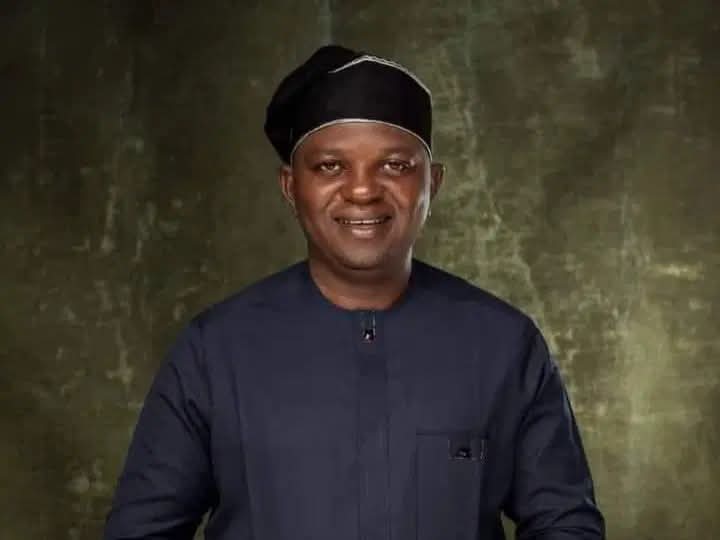
ABUJA — Nigeria’s rivers are under intensifying pressure from population growth, rapid urbanisation, untreated wastewater, agricultural runoff, erosion, sand mining and the impacts of climate change, the Minister of Water Resources and Sanitation, Prof. Joseph Utsev, has warned.
Speaking in Abuja on Monday as the country joined the global observance of World Rivers Day 2026 under the theme “No Forests, No Rivers, No Water, No Life,” Utsev described the nation’s waterways as critical lifelines that support agriculture, domestic and industrial water supply, fisheries, biodiversity, livelihoods and broader national development. Yet he cautioned that these resources face mounting threats that demand an integrated and sustainable response.
“Our rivers are not merely channels through which water flows; they are the lifeblood of our communities and ecosystems,” the minister said. He stressed that forests, wetlands, floodplains and groundwater recharge zones are essential to protecting river sources and regulating flows. Their degradation, he noted, directly endangers both water security and the communities that depend on them.

Utsev said the Federal Ministry of Water Resources and Sanitation is strengthening Integrated Water Resources Management nationwide and working with relevant agencies to protect and restore watersheds and river catchments. He highlighted the need for closer cooperation among the Federal, state and local governments, traditional institutions, communities, the private sector, development partners and civil society, pointing out that upstream activities often produce serious downstream consequences.
The minister linked river health firmly to sanitation, warning that untreated sewage and wastewater entering waterways threaten public health, livelihoods and water supplies. “There can be no meaningful conversation about healthy rivers without addressing sanitation,” he said. He called for an end to open defecation and the indiscriminate dumping of refuse, plastics and harmful effluents into drains, streams and rivers.
Progress under the Federal Government’s “Clean Nigeria: Use the Toilet” campaign was cited as evidence of movement in the right direction. According to the ministry, 179 Local Government Areas have so far been validated as Open Defecation Free, while more than 5,238 public sanitation facilities have been supported across the country. These gains, Utsev said, demonstrate a concrete commitment to keeping human waste out of waterways.
He also urged Nigerians to protect and restore forests and wetlands, promote responsible wastewater management, use water efficiently and strengthen multi-stakeholder collaboration.
The ministry, he added, is improving its capacity to collect, analyse and use data on rainfall, river flows, groundwater and water quality so that evidence-based decisions can guide responses to emerging challenges.
Permanent Secretary Ali Dallah, who also spoke at the briefing, noted that activities around the day’s observance—including public enlightenment, environmental awareness and stakeholder engagement—were designed to encourage practical action. He observed that Nigerian rivers continue to face pollution from domestic, industrial and agricultural sources, indiscriminate waste disposal, deforestation, erosion and uncontrolled development along river corridors.
World Rivers Day is marked annually on the fourth Sunday of September to raise awareness of the ecological, cultural and economic importance of rivers and to promote their conservation. In Nigeria, the 2026 theme underscored the fundamental interdependence of healthy forests, functioning river systems and human survival.
The minister’s message aligns with broader federal efforts to treat water security as a strategic priority. Recent statements from the ministry have framed inadequate access to safe water and sanitation, flooding, drought and climate variability as potential drivers of public-health emergencies, displacement and resource-based tensions. A National Water Compact for 2026–2030 is under development to coordinate interventions around three pillars: Water for People, Water for Food and Water for the Planet.
Utsev appealed to the media to intensify public awareness on sanitation and environmental protection, emphasising that keeping plastics, refuse and other pollutants out of drains, streams and rivers is both an environmental duty and a contribution to public health and community resilience.
“Keeping plastics, refuse and other pollutants out of our drains, streams and rivers is not simply an environmental responsibility; it is a contribution to protecting public health and securing the future of our communities,” he said.
Do you want to advertise with us?
Do you need publicity for a product, service, or event?
Contact us on WhatsApp +2348033617468, +234 816 612 1513, +234 703 010 7174
or Email: validviewnetwork@gmail.com
CLICK TO JOIN OUR WHATSAPP GROUP