

ABEOKUTA, OGUN STATE
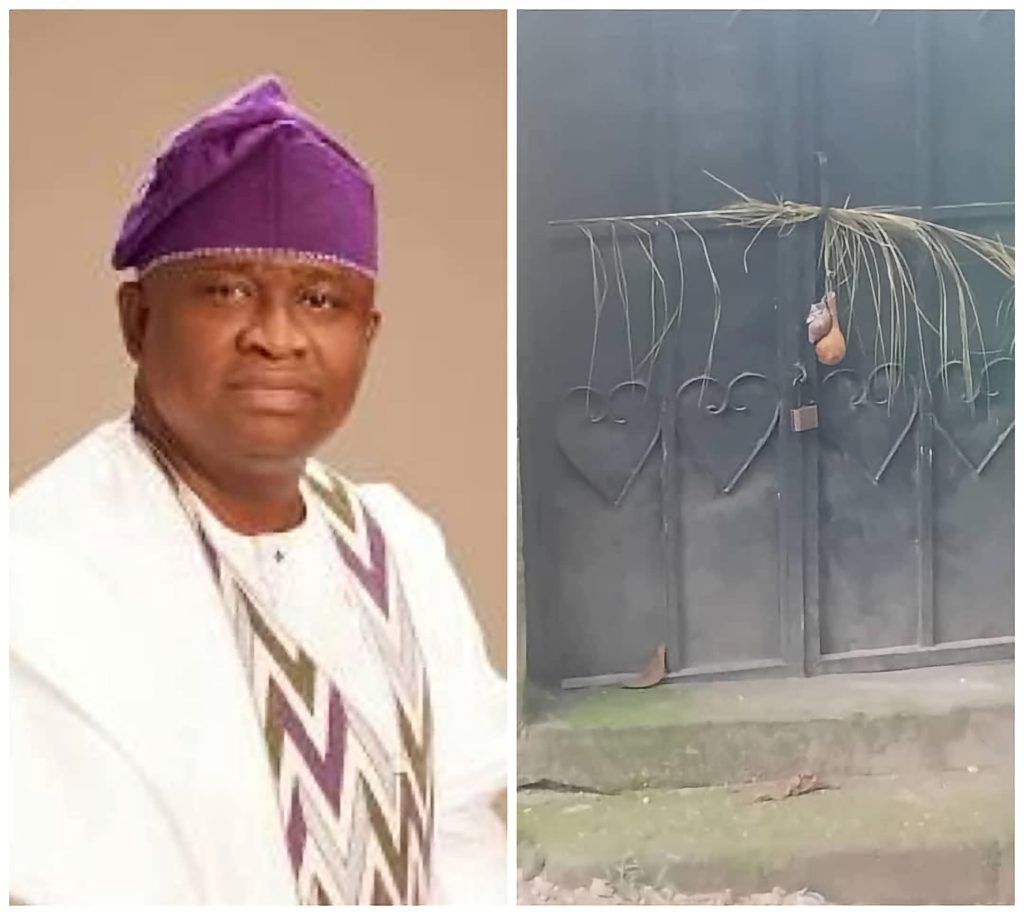
A reported suspension of the Oluwo of Kémta has now been publicly denied by the Kémta Traditional Council of Chiefs, turning what first appeared to be a traditional dispute over Senator Solomon Olamilekan Adeola’s maternal ancestry into something more revealing.
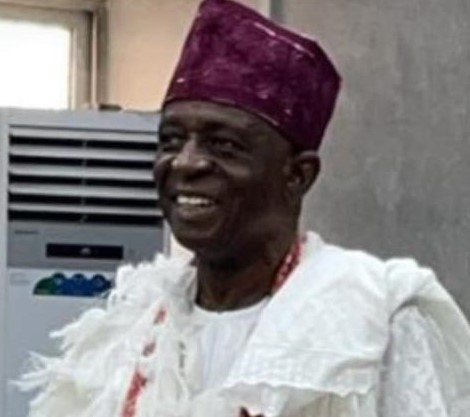
The Council says Chief Abayomi Rotimi has not been suspended. It says he remains the duly recognised and serving Oluwo of Kémta. It says no constituted panel or traditional authority invited him to answer any allegation.
And it says there was no suspension letter served on him. The Council has also rejected reports that the Kémta Ògbóni House was locked.
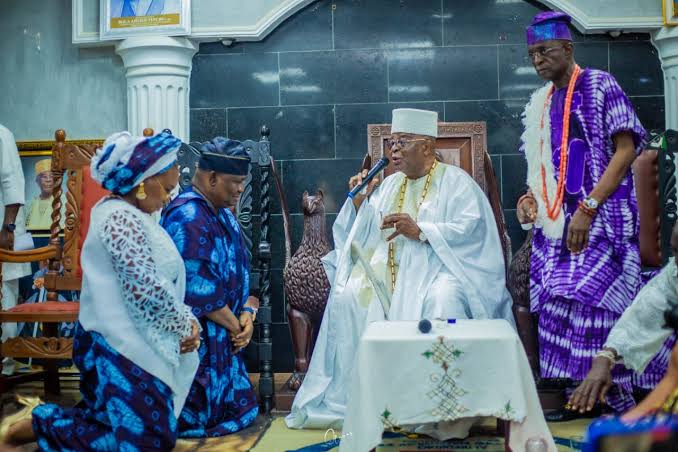
According to the statement issued by the Council Secretary, Chief Sojobi, the house was open for official duties on Saturday, August 15, when Chief Rotimi presided over the installation of Chief Meshioye and his wife, Chief Mrs Meshioye, as Akinmeto and Erelu Akinmeto of Kémta.
The ceremony, the Council said, was peaceful. That clarification does more than correct a disputed report. It changes the nature of the story.
The question is no longer simply whether the Oluwo was suspended. The more important question is why a suspension notice surfaced in the first place, who circulated it and what political interests may have surrounded it.
The Council itself has offered an answer, albeit cautiously. It said preliminary information suggested that the suspension narrative might have been politically motivated and connected to individuals sympathetic to a particular gubernatorial aspirant in Ogun State.
That allegation has not been independently established. But its emergence is significant because the person at the centre of the wider traditional controversy is not an ordinary political actor.
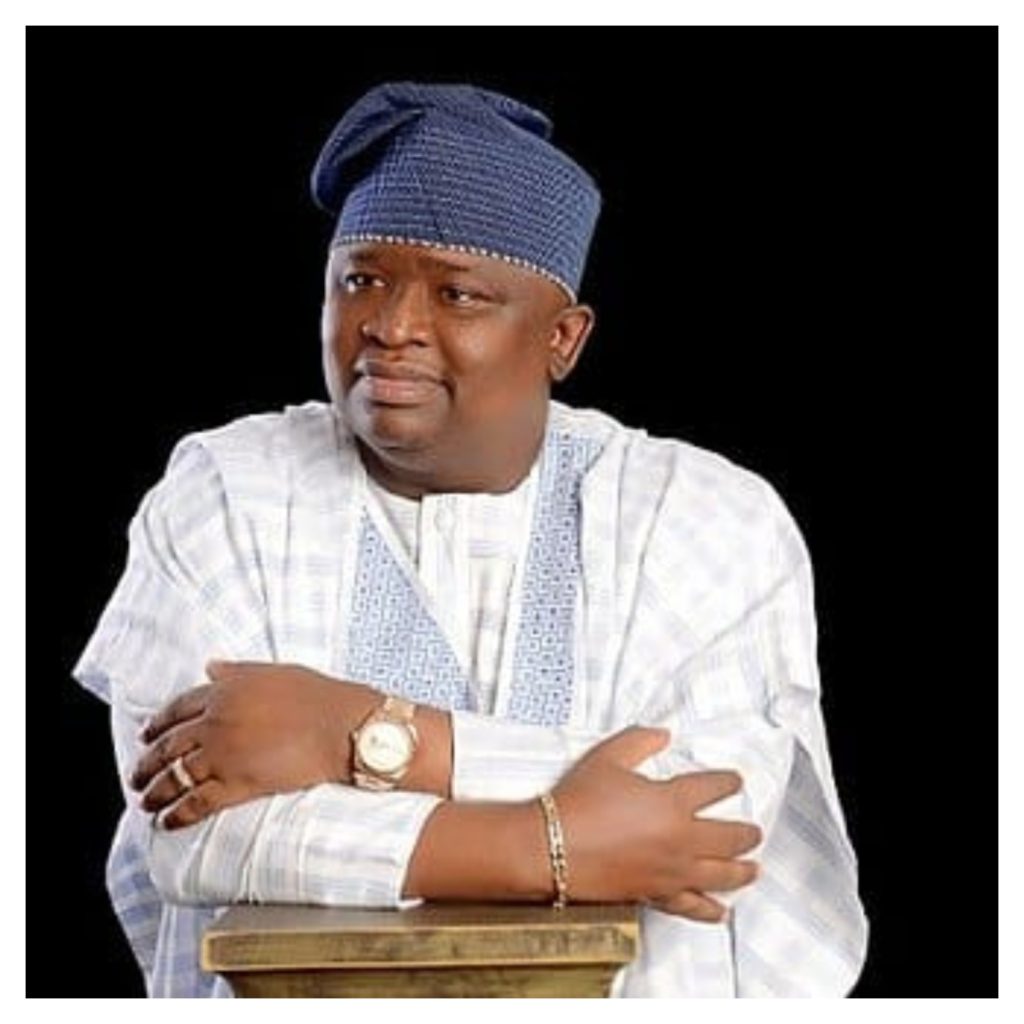
He is YAYI, the APC’s 2027 governorship candidate.
A DISPUTE THAT BEGAN WITH A MOTHER
Senator Solomon Olamilekan Adeola’s connection to Kémta is not a new claim manufactured on the eve of the 2027 election.
The senator has repeatedly described himself as a son of Ogun through both sides of his family. Available biographical records identify his father as Ayinde Adeola Ogunleye of Ago-Ishaga, Pahayi, Ilaro, while his mother was Abeeni Olasunbo Ogunleye, née Akinola, from Kémta, Abeokuta.
A 2024 profile published by ThisDay gave essentially the same account of his parentage. Adeola has also publicly described his maternal connection to Kémta-Odutolu.
That claim was not merely repeated in a political rally. In June, Kémta communities organised a grand homecoming for him and presented him to the Alake of Egbaland as a son of the soil.
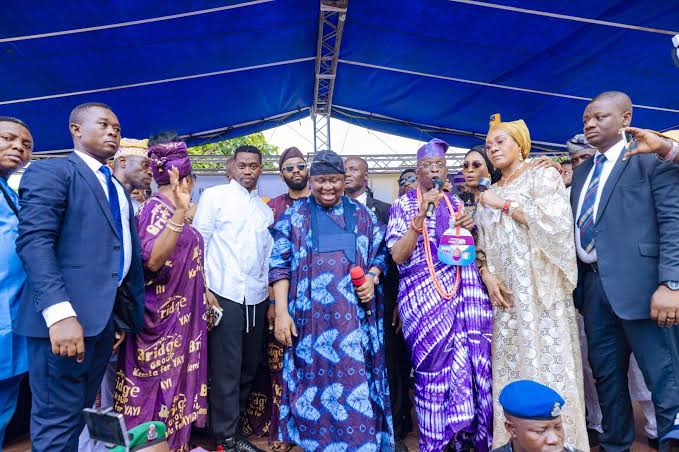
The ceremony was led by the Oluwo of Kémta, Chief Abayomi Rotimi. Reports from the event identified Adeola’s late mother as a native of Kémta-Odutolu in Itoku, Abeokuta.
At the Alake’s palace, the senator was formally presented by representatives of the Kémta townships. He subsequently declared that Egbaland was his home and traced his maternal roots to Kémta-Odutolu.
That history matters enormously now. Because the same traditional institution whose leader reportedly presented him as a son of Kémta is now being dragged into a controversy over the authenticity or political use of that very ancestry.
WHEN TRADITION BECOMES POLITICAL CURRENCY
Yoruba traditional institutions were never designed as decorative accessories to political campaigns. They were instruments of order.
In the historical political organisation of many Yoruba communities, the authority of a ruler existed alongside councils, titled chiefs, lineage heads and institutions that could restrain arbitrary exercise of power.
Among the Egba, the Ògbóni institution historically occupied an important place in governance. It was not simply a ceremonial gathering of old men. The institution was involved in deliberation, adjudication and the administration of communal affairs.
Historical material on Egba political organisation shows the importance of councils of chiefs and the checks they placed around royal authority.
That history provides an important lens through which to view the present controversy.
A traditional council should not become a political clearing house. An Ògbóni House should not become a campaign headquarters. And ancestry should not become something that can be authenticated or rejected according to whichever political faction happens to need the answer.
The same principle applies to the modern Osugbo traditions found in parts of Yorubaland.
The deeper philosophy was institutional balance. Power was distributed. Authority was layered. Claims were not supposed to survive merely because the person making them was powerful.
That is precisely why the latest statement from the Kémta Traditional Council is important. It invokes due process. The Council says the Oluwo was not invited before any constituted panel.
No allegation was formally presented to him. No suspension letter was served. If that account is accurate, then the purported suspension was not merely questionable. It had no demonstrated institutional foundation.
THE AUGUST 15 TEST
There is perhaps no more useful piece of evidence in the Council’s rebuttal than what it says happened on Saturday.
The Ògbóni House, according to the Council, was functioning. Chief Rotimi was there. Two traditional title holders were installed. The ceremony proceeded without disruption.
That account directly contradicts the earlier narrative that the institution had been shut down following the Oluwo’s alleged suspension.
This is why the original allegation should now be treated with extreme caution. A report of a traditional ruler’s suspension is serious. A report that an Ògbóni House has been sealed is even more serious.
Such claims can inflame a community, undermine a traditional institution and create the impression that a legitimate authority has been removed.
If the Council’s account is correct, then whoever circulated the purported notice was not merely spreading political gossip. They were manufacturing an institutional crisis.
The Council has therefore done the right thing by publicly putting its position on record. But the next step should be even more important.
If there was indeed a suspension notice, the public deserves to know where it originated. If there was no suspension, who created the document? Who signed it? Who circulated it? And why?
Those are questions for evidence, not speculation.
YAYI’S IDENTITY HAS ALWAYS BEEN COMPLICATED
The political controversy surrounding Adeola’s ancestry is partly driven by a fact that cannot be erased.
He is a Lagos-born politician whose political career was built overwhelmingly in Lagos. He served in the Lagos State House of Assembly. He represented Alimosho in the House of Representatives. He later served two terms as senator for Lagos West.
Only in 2023 did he successfully return to Ogun politics as the senator representing Ogun West. That history has provided his critics with an obvious line of attack. They call him a Lagos politician trying to become governor of Ogun.
His response is equally straightforward. He says Lagos is where he built his political career. Ogun is where his ancestry lies.
And the distinction is legitimate. A man’s birthplace is not necessarily his ancestral home. A constituency is not necessarily his family compound. And political representation does not rewrite genealogy.
But the reverse is also true. An ancestral connection does not automatically make someone politically acceptable to a community.
That must be earned. And Adeola appears to understand this. His recent political campaign in Ogun has therefore been accompanied by a deliberate effort to establish himself across the state’s different political and traditional constituencies.
FROM YEWA TO KÉMTA
The paternal side of Adeola’s ancestry is tied to Yewa. Published biographical accounts trace his father’s family to Ago-Ishaga, Pahayi, Ilaro, in Yewa South.
His maternal ancestry is separately associated with Kémta-Odutolu in Abeokuta. That makes his political geography unusually interesting.
He is seeking to govern a state in which he can claim ancestral connections to both the Yewa and Egba zones.
And he has increasingly used both.In Yewa, he has cultivated traditional recognition. In Egbaland, he has leaned heavily into his maternal connection. At the Kémta homecoming in June, the symbolism was unmistakable.
The man who wants to govern Ogun was being publicly taken through his maternal community and presented at the palace of the Alake. Adeola called the event a “wake-up call” ahead of 2027, while supporters described it as the public recognition of a son returning home.
That is politics. But it is also lineage. And that is precisely why the present controversy is potentially explosive.
THE ALÁKÉ’S PALACE HAS ALREADY BEEN INVOLVED
The Kémta question cannot be separated from the Alake. The June, 2026 homecoming ended at the palace of Oba Adedotun Aremu Gbadebo.
Adeola was presented to the monarch by his maternal kinsmen from Kémta-Odutolu. He described the Alake as his father and said he had maintained ties with Egbaland for more than two decades. He also told the monarch that, despite representing Ogun West in the National Assembly, he had facilitated projects across Ogun Central.
The political symbolism was difficult to miss. A candidate from Ogun West was presenting himself to the traditional establishment of Ogun Central not as a visitor but as a son returning through his mother’s lineage.
And the timing was 2026. One year before the governorship election. This is why any attempt to weaponise the Kémta traditional institution could have consequences beyond the immediate dispute.
THE GOVERNORS AND THE YAYI QUESTION
Adeola’s political journey through Ogun has also intersected with successive political administrations in ways that reveal how rapidly political alliances can change.
His emergence as the APC’s 2027 governorship candidate was eventually embraced by Governor Dapo Abiodun and supported by a coalition that included former governors Olusegun Osoba, Gbenga Daniel and Ibikunle Amosun.
That is remarkable when viewed against the history of Ogun APC. Political camps that once competed fiercely have now converged around the same candidate.
Amosun, whose political era once produced sharp contests over the direction of Ogun APC, later congratulated Adeola following his emergence as the party’s candidate.
The lesson is obvious. Politics is not genealogy. And political alliances are rarely permanent. The people who resist you today may stand beside you tomorrow.
The people who celebrate your ancestry today may question it tomorrow. That is precisely why institutions must remain stronger than political alliances.
YAYI’S PROJECT POLITICS: WHEN APPROPRIATION POWER BECOMES POLITICAL CAPITAL
There is a legitimate question surrounding Senator Solomon Olamilekan Adeola’s growing project footprint across Ogun. It is not whether the projects exist.
Do you want to advertise with us?
Do you need publicity for a product, service, or event?
Contact us on WhatsApp +2348033617468, +234 816 612 1513, +234 703 010 7174
or Email: validviewnetwork@gmail.com
CLICK TO JOIN OUR WHATSAPP GROUP
The more difficult question is how federal projects are being selected, located and politically presented in a state where the senator is seeking to become governor in 2027. The photographs now attached provide an unusually useful window into that question.
One project board at the Ita-Morin, Erunwon-Ake Palace Roundabout identifies the University College Hospital, Ibadan, as the client. The project is described as the development of climate-adaptive rural federal roads to mitigate the effects of climate change in selected states of the federation.
Yet the project is physically in Ogun State.

The board identifies Senator Adeola, the Ogun West senator, as the person who facilitated it.
Another board at Osiele identifies the Federal College of Agriculture, Ishiagu, as the client. Ishiagu is in Ebonyi State. The project itself is described as the construction of modern markets for agricultural and other economic activities nationwide, with Osiele Market identified as the particular intervention.
Again, the project is in Ogun.
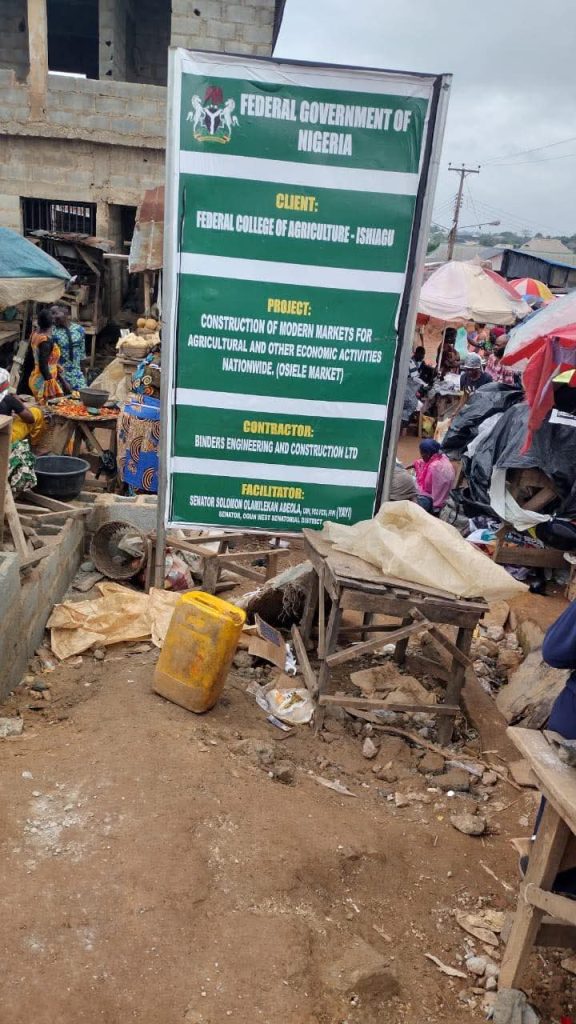
That does not establish that money originally appropriated for Oyo or Ebonyi was illegally diverted to Ogun. It would be irresponsible to make that claim without the underlying budget documents.
But it establishes something that deserves scrutiny. Federal institutions and programmes whose institutional homes lie outside Ogun are appearing on project boards for projects facilitated by an Ogun senator and located in Ogun.
That is where the story becomes interesting.
THE POWER BEHIND THE PROJECTS
Adeola is not an ordinary backbench senator. He chairs the Senate Committee on Appropriation, one of the most consequential committees in the National Assembly.
The committee scrutinises the federal budget after its presentation by the executive, coordinates the work of subcommittees and ultimately presents its report to the Senate.
Adeola has himself emphasised the committee’s role in scrutinising budget proposals. In February, he warned ministries, departments and agencies that failure to defend their estimates could lead to allocations being withdrawn and redirected to other priority projects.
That power matters. It means that when an Ogun project appears in the federal budget, the senator who represents Ogun West and simultaneously chairs the Senate’s Appropriation Committee occupies an unusually influential position in the national budget architecture.
That does not make every Ogun project improper. It does, however, make the question of how those projects arrived in the budget entirely legitimate.
Indeed, supporters of Adeola openly celebrate this advantage. A recent profile praising his performance said his chairmanship of the Appropriation Committee had allowed him to align federal budgetary interventions with local needs and described the position as central to his ability to attract projects to Ogun.
Another assessment critical of his political ambition made the same point from the opposite direction. It argued that his enormous project footprint was inseparable from the exceptional influence attached to his position as Appropriation Committee chairman.
The two sides disagree about whether that influence is good politics. They agree, implicitly, that the influence exists.
THE QUESTION OF PROJECTS “BROUGHT” TO OGUN
This is where the distinction between facilitation and appropriation power becomes important. Adeola’s supporters describe him as a legislator who has successfully attracted federal development to Ogun.
His critics see something more transactional; a powerful committee chairman using the federal budget to create a visible political record in the state where he wants to become governor.
There is evidence that this criticism is not merely social-media chatter. In 2023, an investigation by the International Centre for Investigative Reporting examined the 2022 supplementary budget and reported that National Assembly leaders had inserted projects into a budget originally intended to address flooding and other specified needs.
The investigation identified five projects nominated by Adeola, worth about ₦4 billion, including roads in Ogun West and other interventions. It questioned the appropriateness of the projects because Ogun was not among the 30 states identified as worst affected by the 2022 floods.
That investigation concerned an earlier budget and should not be casually conflated with the projects pictured above.
But it established a pattern worth remembering. National Assembly members can influence the destination of federal spending through the budget process. And Adeola has occupied one of the most powerful seats in that process.
The political question is therefore not whether he is allowed to facilitate projects because he is. The question however is whether the distribution of those projects is being determined primarily by objective national priorities or increasingly by the political interests of a senator preparing to contest for governor.
Only the underlying budget documents can answer that conclusively.
THE BOARDS RAISE A DIFFERENT QUESTION
Look closely at the language on the boards. The UCH Ibadan board does not say that UCH is receiving a road in Ibadan. It identifies UCH as the client, while the actual project is located around Ita-Morin and the Ake Palace Roundabout in Ogun.
The Ishiagu board similarly identifies the Federal College of Agriculture, Ishiagu, as the client, while the actual market project is at Osiele in Ogun.
This is not proof of wrongdoing. Federal agencies routinely serve as implementing or supervising clients for projects outside their immediate locations.
Nor does the mere presence of a federal institution’s name mean the institution was deprived of a project in its home state.
But it creates a documentary trail. And that trail should be followed. What was the original budget line? What ministry, department or agency proposed it? What was the original location? Who nominated the project? When was Ogun substituted or selected? What was the amount appropriated? Was the project contained in the executive proposal or introduced during legislative consideration? Which federal agency is responsible for implementation?
And, most importantly, what does the appropriation document actually say?
Those questions would settle the argument far better than political accusations.
THE 2026 BUDGET HAS ALREADY SHOWN WHY OVERSIGHT MATTERS
The controversy surrounding the Presidential Foreign Intervention Promotion Council makes this even more uncomfortable.
The Presidency now describes the PFIPC as a fictitious body and says the man who presented himself as its Director-General, Adeniyi Adeyemi, forged official documents and operated an elaborate impersonation scheme.
Adeyemi has denied wrongdoing and is facing criminal proceedings. But there is one fact nobody disputes. The 2026 Appropriation Act contained a ₦1.302 billion allocation for the Presidential Economic Advisory Council/Presidential Foreign Intervention Promotion Council.
The Budget Office has since said that no money was released or spent because the statutory conditions for accessing the allocation were never satisfied.
That is an important distinction. Nigeria did not, according to the Budget Office, lose ₦1.3 billion to this alleged fictitious agency. But Parliament did appropriate the money.
And that raises an uncomfortable question about legislative scrutiny.
WHERE WAS THE OVERSIGHT?
This is where Adeola’s position becomes relevant. He chairs the Senate Appropriation Committee. The committee did not create the executive budget by itself. Nor can the chairman be reasonably accused of personally inserting every line appearing in a ₦68 trillion national budget.
There is no evidence that Adeola personally inserted the PFIPC allocation. There is also no evidence presently available that he knew the organisation was fictitious when the budget was considered. Those facts must be stated clearly.
But there is another fact that cannot simply be waved away. The National Assembly passed the appropriation containing the disputed allocation. Adeola presented the Senate Appropriation Committee’s report when the 2026 budget was passed.
The Senate committee had earlier scheduled budget defence sessions with MDAs, with Adeola describing the process as requiring detailed examination and scrutiny.
So the question is not; “Did Yayi personally create the fake agency? “There is no evidence for that. The more legitimate question is: “How did an organisation the Presidency now says did not legally exist get far enough through the federal administrative and legislative machinery to receive a ₦1.3 billion appropriation?”
That is a question for the entire system. It implicates the executive officials whose documents the Budget Office relied upon. It implicates the administrative processes that recognised the body. It implicates the budget preparation machinery.
And it raises questions about the legislative scrutiny applied before the National Assembly approved the appropriation.
The Budget Office has explained that it relied on official government instruments and that the body had already been assigned a budget code and other administrative recognitions before its proposal was processed.
That explanation shifts the issue from a simple story about a “fake agency getting money” to something more serious; a fictitious or disputed institution managed to pass through multiple layers of Nigeria’s state machinery without being stopped.
That is institutional failure. It should not be reduced to a partisan attack on Yayi.
BUT THE OVERSIGHT QUESTION DOES NOT DISAPPEAR
If the legislature is constitutionally expected to scrutinise public expenditure, then the discovery of a supposedly non-existent council inside an enacted budget demands an examination of that scrutiny.
The House of Representatives eventually opened an investigation into the council’s legal status and its inclusion in the budget. That is the right response.
But it should not stop there. The investigation should establish exactly where the proposal originated, who defended it, which officials interacted with it, what documentation accompanied it and which legislative committees examined it.
Only then can Nigerians determine whether this was an administrative failure, a legislative failure, an executive failure or a combination of all three.
Until those facts emerge, attaching personal culpability to Adeola would go beyond the evidence. But absolving the legislative process of responsibility would also be intellectually lazy.
THE POLITICAL PROBLEM IS HARDER TO ESCAPE
There is an irony in all of this. Adeola’s greatest strength as a governorship aspirant is arguably the same institutional power that makes his record vulnerable to scrutiny.
As Appropriation Committee chairman, he can point to roads, markets, schools, health facilities and other federal interventions across Ogun. His supporters see results.
His opponents see a politician converting federal budgetary power into electoral capital.
Neither description should be accepted automatically. The projects should be audited. The budget lines should be traced. The implementing agencies should be identified. The locations should be compared with the original appropriations. The amounts should be published.
And the difference between facilitated, appropriated, implemented and personally funded should be made clear.
That last distinction is particularly important.
A senator does not personally own a federal constituency project simply because his name appears on the signboard. The project belongs to the Nigerian public. The money belongs to the public. The legislative process belongs to the public.
The credit therefore deserves to be shared honestly between the institution, the legislator who facilitated or nominated the intervention, the implementing agency and the taxpayers who ultimately finance it.
THE REAL TEST FOR YAYI
If Adeola wants these projects to constitute evidence that he is ready to govern Ogun, then he should welcome the scrutiny. Let the public see the budget lines. Let the National Assembly documents show when the projects entered the budget. Let the relevant ministries explain why UCH Ibadan appears as the client for a project in Ogun.
Let the authorities explain why the Federal College of Agriculture, Ishiagu, is named as client on a market project in Osiele.
Let the government explain whether those projects were part of nationwide programmes, legislative additions or substitutions from their original locations.
And let the PFIPC investigation establish how a disputed agency acquired a ₦1.3 billion place in the 2026 budget.
That is not anti-Yayi journalism. It is precisely what journalism should do to a man seeking the highest political office in Ogun.Adeola should not be judged merely by the number of signboards bearing his name.
He should be judged by whether the money behind those signboards was allocated transparently, whether the projects met genuine public needs, whether the process was lawful and whether the same institutional power he used to attract projects can be trusted when the interests of the entire state are placed above his own political ambition.
The strongest case for Yayi is therefore not that he can get federal money into Ogun. Many politicians can lobby for projects when they occupy powerful positions.
The stronger case would be that he can use power without allowing personal political advantage to distort public priorities.
That is the standard the 2027 election should demand. And it is a standard that applies to every candidate, not only Yayi.
LET THE RECORDS ANSWER THE KÉMTA QUESTION
There are now two competing accounts surrounding the alleged suspension and closure. The earlier account presented the Oluwo’s purported suspension and the closure of the Ògbóni House as developments connected to disagreements over claims concerning YAYI’s maternal origin.
The Kémta Traditional Council has now rejected that account. It says there was no suspension, no due process leading to one, no suspension letter and no closure of the Ògbóni House.
That denial should not end the matter. It should sharpen the demand for verification. If a suspension notice exists, its origin and issuing authority should be established.
If it was issued by a recognised traditional authority, the basis and customary procedure should be made clear.
If it was not genuine, those responsible for producing or circulating it should also be identified.
The same standard should apply to the dispute over YAYI’s maternal ancestry. Adeola has publicly identified his mother as Abeeni Olasunbo Ogunleye, née Akinola, while published accounts have linked his maternal family to Kémta.
Kémta communities have also publicly received him as a son of the community, and he was presented to the Alake of Egbaland during the June homecoming organised around his maternal connection to Kémta.
Those are matters that can be examined through family records, community history and the testimony of recognised traditional authorities.
If another group disputes the genealogy, its claim should equally be subjected to evidence.
The issue is particularly important because ancestry has acquired political significance ahead of the 2027 Ogun governorship election.
YAYI’s political career was built largely in Lagos, where he served in the Lagos State House of Assembly, the House of Representatives and the Senate.
His subsequent emergence as a major political figure in Ogun has made his family origins, particularly his paternal connection to Yewa and maternal connection to Kémta, part of the political conversation around his candidacy.
That makes the integrity of traditional institutions even more important. The Kémta Traditional Council should not be treated as a political campaign structure, just as the question of YAYI’s ancestry should not be settled through political allegiance.
The facts should come from the families, the historical records, the recognised traditional institutions and the evidence available to the public.
ValidViewNetwork reports that the Kémta Traditional Council has rejected claims that Chief Abayomi Rotimi was suspended as Oluwo of Kémta or that the Ògbóni House was closed because of the alleged suspension.
ValidViewNetwork reports that the Council says Rotimi presided over an installation ceremony at the Ògbóni House on August 15, contradicting the earlier claim that the traditional institution had been shut.
However, the Kémta controversy is only one part of The YAYI Question.

The larger issue is how ancestry, traditional recognition, federal projects and institutional power intersect as Ogun moves towards 2027.
The appropriate response is neither to endorse every claim made in YAYI’s favour nor to accept every allegation against him.
It is to follow the records. Where the evidence supports him, it should be acknowledged. Where questions remain, they should be asked.
And where allegations are made, they should be tested before they become political facts.