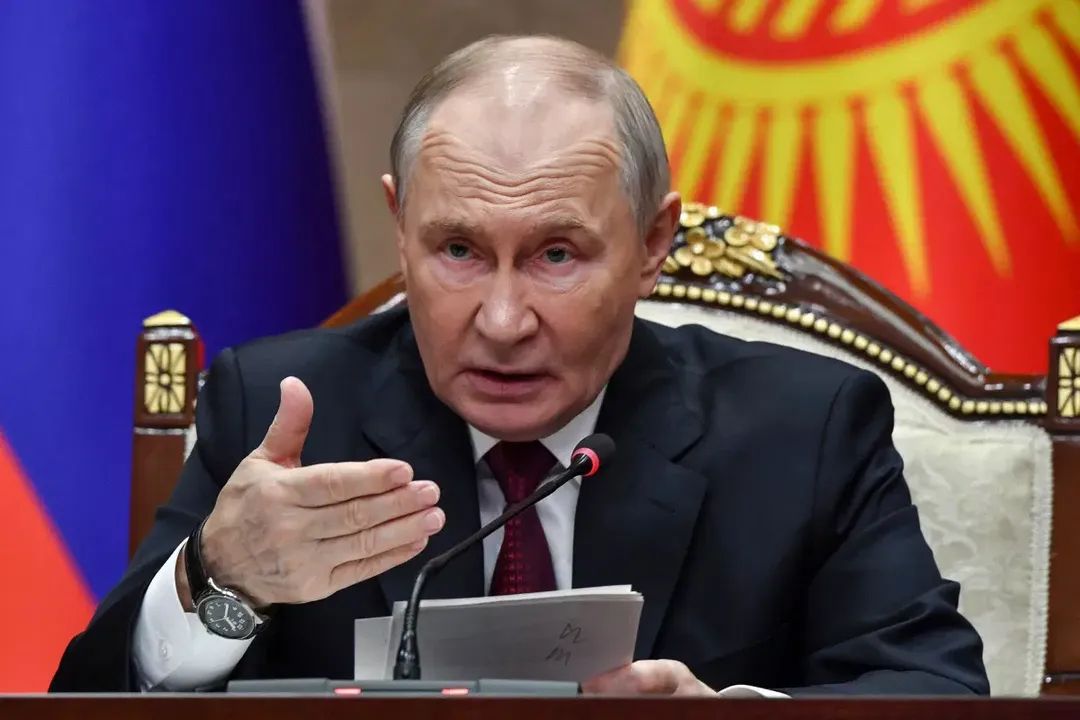
MOSCOW / RIYADH – Russian President Vladimir Putin and Saudi Crown Prince Mohammed bin Salman issued a joint call for the “rapid cessation of hostilities” in the Middle East on Thursday, as a widening regional conflict threatens global energy security and pushes oil prices to their highest levels in years.
In a high-stakes telephone conversation, the two leaders expressed “serious concern” over the deteriorating military-political situation, citing a surge in civilian casualties and the destruction of critical infrastructure. The Kremlin confirmed that both parties are seeking an intensification of diplomatic efforts to achieve a long-term settlement to a war that has increasingly pitted US and Israeli forces against Iranian interests.
The Shadow of Energy Instability
The diplomatic overture comes as the global energy market reels from escalating tensions. On Thursday, Brent crude surged past $107 per barrel, while West Texas Intermediate (WTI) hit $108.36. The spike follows recent threats from US President Donald Trump, who warned of “extremely hard” strikes against Iran within the next three weeks unless Tehran complies with US demands regarding the Strait of Hormuz—a vital maritime chokepoint currently facing a partial blockade.

Putin and the Crown Prince emphasized the “importance of joint work” within the OPEC+ framework. With roughly 20% of the world’s oil shipments currently halted or diverted, the two major producers signaled their intent to maintain production discipline to prevent a total market collapse.
Ukraine’s Surprise Role in Gulf Defense
In a striking geopolitical twist, the call follows a landmark 10-year defense cooperation agreement between Ukraine and Saudi Arabia. Despite its ongoing struggle against Russian forces, Kyiv has leveraged its unparalleled experience in intercepting Iranian-designed Shahed drones to aid Gulf nations.
Ukraine has reportedly proposed a “technology swap,” offering its low-cost drone interceptors and electronic jamming expertise to the Saudi-led Gulf bloc. In exchange, Kyiv seeks access to the Gulf’s stockpiles of high-end air-defense missiles, such as the Patriot system, to replenish its own dwindling supplies.
A Balancing Act for Moscow and Riyadh
For President Putin, the dialogue serves as a vital bridge to the Middle East as Western sanctions continue to isolate Moscow. By maintaining a foot in both the Iranian and Saudi camps, Putin is positioning Russia as a potential mediator—or at least an indispensable power broker—in a region where US influence is being tested by direct military confrontation.
Meanwhile, Saudi Arabia continues its “neutrality” balancing act. While the Kingdom remains a primary security partner for the US, its deepening energy ties with Russia and its new defense dialogues with Ukraine highlight a shift toward a more autonomous, multi-polar foreign policy.
As of Thursday evening, diplomatic channels remain open, but with the US deadline for Iran looming on April 6, the window for the “political and diplomatic efforts” called for by Moscow and Riyadh is rapidly closing.
Do you want to advertise with us?
Do you need publicity for a product, service, or event?
Contact us on WhatsApp +2348033617468, +234 816 612 1513, +234 703 010 7174
or Email: validviewnetwork@gmail.com
CLICK TO JOIN OUR WHATSAPP GROUP