

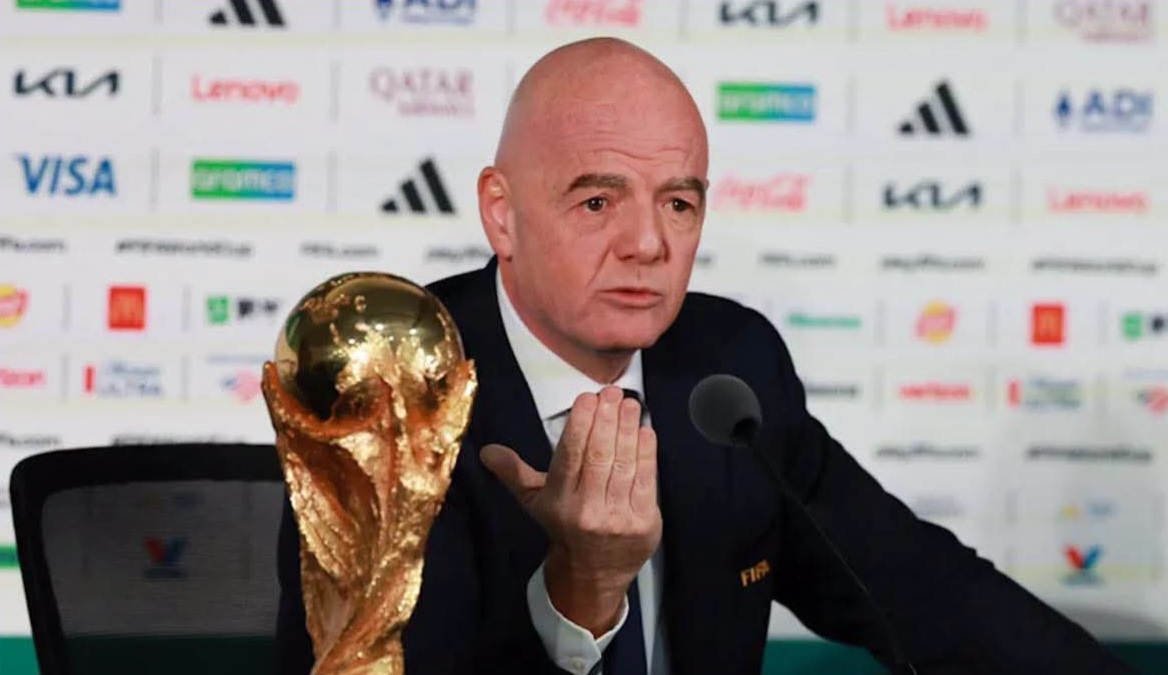
Football’s global governing body is poised to debate a radical structural shift that could see the 2030 World Cup expand to an unprecedented 64 teams.
FIFA President Gianni Infantino confirmed this weekend that the proposal, which would add another 16 nations to the current 48-team format, will be formally reviewed by relevant committees following the conclusion of the 2026 tournament. The ambitious concept, originally championed by the South American football confederation (CONMEBOL) in early 2025, aims to transform the sport’s centenary celebration into the largest tournament in football history.
A Global Vision for Inclusion
Infantino has framed the potential expansion as a necessary evolution to ensure the World Cup remains a truly global event. Arguing that the sport must look beyond traditional powers in Europe and South America, he stressed that universal participation is key to the health of the game.
”Every nation should be allowed to dream of participating in the World Cup,” Infantino said in an interview with Swiss media. He noted that the successful expansion to 48 teams for the 2026 tournament—currently being hosted across the United States, Mexico, and Canada—has demonstrated that competitive standards remain high even with a larger field.
”If you don’t give smaller countries a chance to participate in the World Cup, they’ll lack the incentive to keep improving,” he added.
Successes and Skepticism
The move to 48 teams for 2026 has been hailed by FIFA as a “100 percent success,” bolstered by strong viewership and record-breaking attendance. Proponents of the 64-team model point to the competitive performance of teams from all continents in the current tournament as evidence that the talent pool is deep enough to justify further growth.

However, the proposal faces substantial pushback from high-ranking football officials. Critics, including UEFA President Aleksander Čeferin, have publicly labeled a 64-team tournament a “bad idea,” warning that such a drastic increase could weaken both the World Cup’s overall prestige and the integrity of regional qualifying processes. Other leaders, including the heads of the Asian Football Confederation (AFC) and CONCACAF, have expressed concerns that further expansion could create “chaos” within the global football ecosystem.
A Centenary Celebration
The 2030 tournament is already unique in its logistical footprint. It is set to be co-hosted by Morocco, Portugal, and Spain, with special centenary celebration matches scheduled to take place in Uruguay, Argentina, and Paraguay to mark the 100th anniversary of the inaugural 1930 World Cup in Uruguay.
While the concept of a 64-team tournament remains firmly in the discussion phase, any decision to move forward would require a complete overhaul of current qualification pathways and the tournament’s internal match structure. For now, the global football community remains in a period of intense debate as FIFA weighs the potential for historic growth against warnings of logistical and competitive overreach.
Do you want to advertise with us?
Do you need publicity for a product, service, or event?
Contact us on WhatsApp +2348033617468, +234 816 612 1513, +234 703 010 7174
or Email: validviewnetwork@gmail.com
CLICK TO JOIN OUR WHATSAPP GROUP