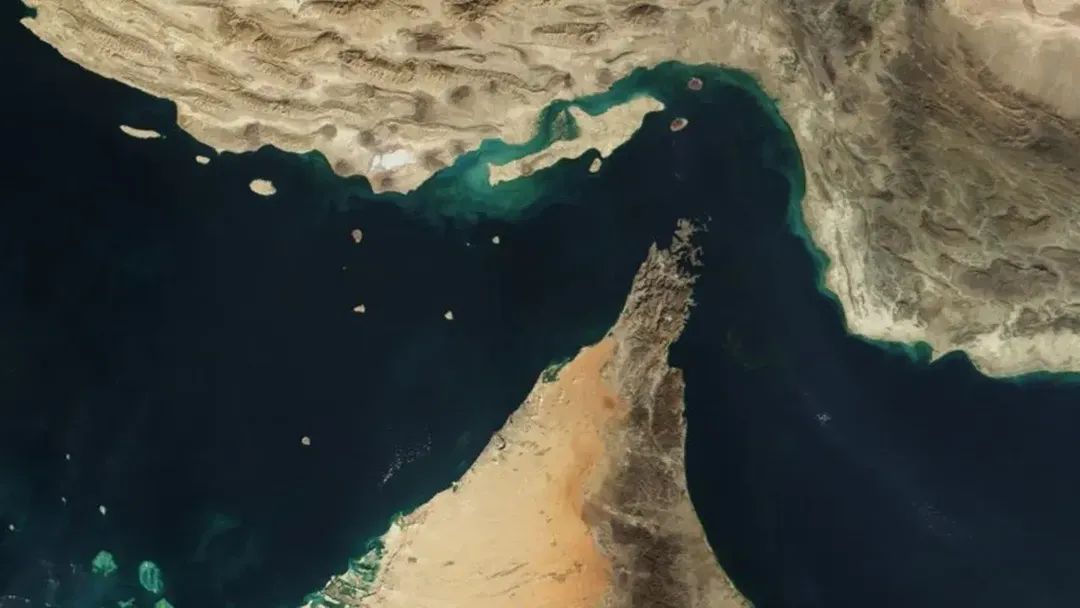
TEHRAN — Iran’s Revolutionary Guards (IRGC) issued a mandatory navigation notice on Thursday, redirecting all maritime traffic in the Strait of Hormuz to “alternative routes” due to the alleged presence of sea mines in the waterway’s primary shipping lanes.
The announcement comes less than 48 hours after a high-stakes, two-week ceasefire was brokered between Tehran and Washington, narrowly averting a massive U.S. military strike. While the truce was intended to reopen the world’s most vital oil artery, the IRGC’s latest directive suggests that “safe passage” remains a complex and heavily controlled operation.
A New Northerly Corridor
According to statements carried by Iranian state media, the new maritime path diverts vessels further north into Iranian territorial waters, specifically channeling traffic between the mainland and Larak Island.
The IRGC Navy published a map highlighting “danger zones” in the traditional international shipping lanes, claiming the move is a defensive necessity to prevent “catastrophic collisions” with naval mines. However, maritime analysts note that this new corridor allows Tehran to maintain absolute oversight—and potentially extract tolls—from vessels previously using international traffic separation schemes.

The 11th-Hour Truce
The reopening follows a period of extreme global economic volatility. Tehran had effectively shuttered the 55-kilometer-wide strait since early March, causing global energy prices to skyrocket and forcing the International Energy Agency (IEA) to issue emergency warnings.
The two-week “cool-down” was finalized on Tuesday night, reportedly just 88 minutes before U.S. President Donald Trump’s deadline. The White House had threatened to “obliterate” Iranian infrastructure, including power plants and bridges, if the blockade was not lifted.
Fragile Peace, High Costs
Despite the ceasefire, the “normalcy” of global trade remains a distant prospect.
- Military Management: Iran’s Foreign Minister, Abbas Araghchi, clarified that passage is currently permitted under “Iranian military management.”
- Risk Assessments: The International Maritime Organization (IMO) stated it is working on a mechanism for safe transit, but shipping giants remain wary. Only a handful of non-hostile vessels have attempted the crossing since the truce began.
- The “Toll” Factor: Reports suggest Iran may be demanding transit fees for ships utilizing the new coastal corridor, a move that could further complicate the Pakistan-mediated peace talks scheduled for this Friday.
As one-fifth of the world’s oil and 30% of seaborne liquefied natural gas (LNG) sit in the balance, the “alternative routes” are being viewed by the international community as both a safety measure and a strategic pivot by Tehran to maintain its grip on the world’s most sensitive chokepoint.
Do you want to advertise with us?
Do you need publicity for a product, service, or event?
Contact us on WhatsApp +2348033617468, +234 816 612 1513, +234 703 010 7174
or Email: validviewnetwork@gmail.com
CLICK TO JOIN OUR WHATSAPP GROUP