

• Latest
  • Trending

Cybercrime Act: Is Nigeria Re-Inventing Decree 4 in the Digital Age?

March 7, 2026

Mali Defence Minister Sadio Camara killed in Cordinated attacks

April 26, 2026

Man Jailed for Spying Spree with Hidden Cameras in Homes and Offices

April 26, 2026

Sawe breaks two‑hour barrier as Assefa smashes women‑only record

April 26, 2026

Plateau Security Operatives Apprehend 2 Kidnappers, Recover N8m Ransom

April 26, 2026

BOUESTI VC Omojola Conferred with NIPSS Integrity and Leadership Award

April 26, 2026

NDLEA SEIZES CAPTAGON AND BOMB PARTS IN MASSIVE NATIONWIDE BLOW!

April 26, 2026

Mali Besieged: Jihadists and Separatists Launch Unprecedented Joint Offensive

April 26, 2026

Bishop Kukah: I Am Not a Hausa Man

April 26, 2026

California Teacher Named as Suspect in Shooting at Trump Gala

April 26, 2026

Aide Explains Ogun APC’s Consensus Choice of Adeola for 2027

April 26, 2026

2027: Opposition Parties Plot To Field Single Candidate Against Tinubu

April 25, 2026

Aiyedatiwa Appoints Acting Rector for RUGIPO

April 25, 2026

Sachet Alcohol: A Price Too High for Our Children?

April 25, 2026

Amotekun, Vigilantes Nab 3 Edo Kidnappers in Ondo Market Chase

April 25, 2026

Obasanjo Chairs Opposition Summit As Atiku, Kwankwaso, Others Arrive Ibadan

April 25, 2026

Death Warrant Signed for 2000 Florida Double Murder

April 25, 2026

Deadly Russian Barrage Shatters Dnipro as Kyiv Strikes Deep into Urals

April 25, 2026

Police Intercept Suspected Child Trafficking Ring, Rescue 13-Year-Old in Ondo

April 25, 2026

The End of the Password? UK Cyber Chiefs Urge Shift to ‘Unbreakable’ Passkeys

April 25, 2026

​ICE Detains Nigerian National in Los Angeles Over Serial Sex Offense Charges

April 25, 2026

Kidnappers Release Lagos Woman After $17,500 Ransom Payment

April 25, 2026

EFCC, UNODC, and Canada Unite Against Terrorist Financing

April 25, 2026

2026 Convention : FUNAAB Alumni Power Global Conversation on Herbal Innovation and Longevity in Landmark Virtual Lecture, April 29

April 25, 2026

Court Blow to Yahaya Bello: BDC Operator Details $300k Cash-to-School-Fees Trail

April 25, 2026

Lekki Unrest: Police Apprehend Nine Suspects After Viral Machete Video

April 25, 2026

Army Recovers Remains of Slain Soldier-Couple in Imo Forest

April 25, 2026

2026 Police Recruitment: Written Exams Set for April 28; PSC Issues Fraud Alert

April 25, 2026

Monarch, Asiwaju Olalekan Gbenga Oso Advocate Free Healthcare For Less Privilege

April 25, 2026

FG Approves Pay Rise, New Welfare Package for Civil Servants

April 25, 2026

EFCC Nabs Cameroonian in Lagos Over Alleged ₦1.5bn Bank Fraud

April 24, 2026
ADVERTISEMENT
  • Home
  • BREAKING NEWS
  • Tech
  • Entertainment
  • Lifestyle
  • Education
    • Sports
ValidView Network - Breaking News, Nigerian News, Nigerian newspapers, Entertainment, Videos, Sports, Business and Politics.
ADVERTISEMENT
  • Home
  • BREAKING NEWS
  • Tech
    • All
    • Apps
    • Mobile

    The End of the Password? UK Cyber Chiefs Urge Shift to ‘Unbreakable’ Passkeys

    Tinubu Hails Lebara’s Entry as “Vote of Confidence” in Nigeria’s Digital Economy

    I have been fired unfairly by Paystack, says co-founder Ezra Olubi

    FG unveils digital ID app to enhance data protection, user control

    A New Era Begins: Traffic Lights to Add Fourth White Signal for Autonomous Vehicles

    Nigerian Girls Triumph at 2025 Technovation Global Summit with AI Safety App

    Trending Tags

    • Nintendo Switch
    • CES 2017
    • Playstation 4 Pro
    • Mark Zuckerberg
  • Entertainment
    • All
    • CELEBRATIONS
    • Gaming
    • History and Culture
    • Movie
    • Music
    • Sports

    Olakunle Churchill and Rosy Meurer Reportedly Part Ways

    Ex-Super Eagles Striker Eneramo Dies After Collapsing During Match

    How Daniel Etim-Effiong’s Father Escaped the Firing Squad

    Rosenior Fighting for Future as Pressure Mounts at Stamford Bridge

    Media Personality Roby Ekpo Narrates Marriage Collapse

    Juju Music Legend Professor Y.K. Ajao Passes On; Sir Shina Peters, AJUMN Mourn

  • Lifestyle
    • All
    • Health

    Sachet Alcohol: A Price Too High for Our Children?

    NAFDAC Raids Lagos Alcohol Syndicates, Seizes ₦350m in Counterfeit Drinks

    Keep Your Binoculars Up and Your Clothes On: Cumbria Nature Festival Issues Hilarious Clarification

    COVID-19 Resurfaces in Nigeria as NCDC Confirms Isolated Case

    Sudanese Youth Pens Heartbreaking Letter After Losing Childhood Sweetheart to ‘Homie’

    Meet Lola Odujinrin,the First African to Fly Solo Around the Globe

    Trending Tags

    • Golden Globes
    • Game of Thrones
    • MotoGP 2017
    • eSports
    • Fashion Week
  • Education
    • Sports
No Result
View All Result
  • Home
  • BREAKING NEWS
  • Tech
    • All
    • Apps
    • Mobile

    The End of the Password? UK Cyber Chiefs Urge Shift to ‘Unbreakable’ Passkeys

    Tinubu Hails Lebara’s Entry as “Vote of Confidence” in Nigeria’s Digital Economy

    I have been fired unfairly by Paystack, says co-founder Ezra Olubi

    FG unveils digital ID app to enhance data protection, user control

    A New Era Begins: Traffic Lights to Add Fourth White Signal for Autonomous Vehicles

    Nigerian Girls Triumph at 2025 Technovation Global Summit with AI Safety App

    Trending Tags

    • Nintendo Switch
    • CES 2017
    • Playstation 4 Pro
    • Mark Zuckerberg
  • Entertainment
    • All
    • CELEBRATIONS
    • Gaming
    • History and Culture
    • Movie
    • Music
    • Sports

    Olakunle Churchill and Rosy Meurer Reportedly Part Ways

    Ex-Super Eagles Striker Eneramo Dies After Collapsing During Match

    How Daniel Etim-Effiong’s Father Escaped the Firing Squad

    Rosenior Fighting for Future as Pressure Mounts at Stamford Bridge

    Media Personality Roby Ekpo Narrates Marriage Collapse

    Juju Music Legend Professor Y.K. Ajao Passes On; Sir Shina Peters, AJUMN Mourn

  • Lifestyle
    • All
    • Health

    Sachet Alcohol: A Price Too High for Our Children?

    NAFDAC Raids Lagos Alcohol Syndicates, Seizes ₦350m in Counterfeit Drinks

    Keep Your Binoculars Up and Your Clothes On: Cumbria Nature Festival Issues Hilarious Clarification

    COVID-19 Resurfaces in Nigeria as NCDC Confirms Isolated Case

    Sudanese Youth Pens Heartbreaking Letter After Losing Childhood Sweetheart to ‘Homie’

    Meet Lola Odujinrin,the First African to Fly Solo Around the Globe

    Trending Tags

    • Golden Globes
    • Game of Thrones
    • MotoGP 2017
    • eSports
    • Fashion Week
  • Education
    • Sports
No Result
View All Result
ValidView Network - Breaking News, Nigerian News, Nigerian newspapers, Entertainment, Videos, Sports, Business and Politics.
No Result
View All Result

Cybercrime Act: Is Nigeria Re-Inventing Decree 4 in the Digital Age?

ValidViewNetwork by ValidViewNetwork
March 7, 2026
in Opinion
0 0
0
Home Opinion
ADVERTISEMENT
490
SHARES
510
VIEWS
Share on FacebookShare on Twitter
ADVERTISEMENT
Spread the love

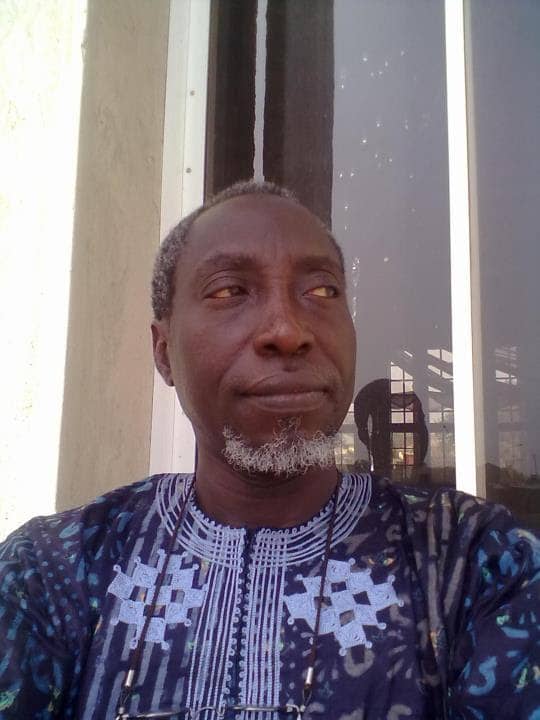
By Lanre Ogundipe

Lanre Ogundipe

“When laws meant to pursue criminals begin to pursue journalists, democracy must ask whether history is quietly repeating itself.”

Nigeria enacted the Cybercrimes (Prohibition, Prevention, etc.) Act to confront a real and growing danger. Cyber fraud syndicates were expanding, identity theft was flourishing, digital extortion was rising, and the country’s financial ecosystem faced increasing threats from criminal networks exploiting the anonymity of the internet. The law was designed as a shield—a necessary instrument to protect Nigeria’s digital economy and national security.

Few disputed the urgency of that mission.

Yet nearly a decade after its passage, an unsettling question is creeping into the national conversation: has a law created to fight cybercrime begun to cast a shadow over democratic expression?

The concern is not abstract. It arises from the widening interpretation of provisions within the Act—particularly those dealing with cyberstalking and offensive communication. Language such as “grossly offensive,” “annoyance,” and “inconvenience” appears within the statute without precise legal boundaries.

In criminal law, vagueness is not a minor drafting flaw. It is an open invitation to discretionary power.

And discretionary power, once unleashed, rarely remains confined to its original purpose.

This is where the ghost of Public Officers (Protection Against False Accusation) Decree No. 4 begins to stir in the national memory.

Decree 4 was one of the most notorious instruments of Nigeria’s military era. It criminalised publications capable of embarrassing government officials—even when those publications were accurate. Journalists were not prosecuted for falsehood; they were prosecuted for discomforting authority.

The decree created an atmosphere of fear across newsrooms. Editors hesitated. Reporters looked over their shoulders. Investigative journalism retreated under the weight of possible imprisonment.

Nigeria’s return to democracy was supposed to bury that chapter permanently.

The Cybercrime Act was never conceived as a modern reincarnation of Decree 4. Its mission was legitimate and necessary. But laws do not become oppressive only by design. They sometimes drift there through interpretation, enforcement patterns, and the slow normalisation of legal tools used beyond their original target.

That drift is what now worries journalists and media practitioners.

The digital revolution has transformed the practice of journalism. News no longer waits for the printing press. Investigations break online. Commentary spreads instantly across social media. Digital platforms have expanded the reach of public debate and made citizens active participants in governance discourse.

But they have also created new legal vulnerabilities.

When a reporter publishes an investigative story online, when a columnist posts commentary on social media, or when a media organisation exposes misconduct through digital platforms, those activities now occur within the legal environment of cyber legislation.

ADVERTISEMENT

If criticism posted online can be interpreted as “annoyance” or “offensive communication,” the implications are obvious.

The first casualty is investigative courage.

Editors begin to ask uncomfortable questions before publishing sensitive reports: Will this trigger legal trouble? Could this be interpreted as cyber harassment? Is the story worth the risk?

Once such questions enter newsroom calculations, the chilling effect begins.

Self-censorship quietly replaces editorial boldness. Stories that should be pursued are quietly abandoned. Corruption investigations stall before they begin. The public loses access to information not because it does not exist, but because publishing it becomes legally hazardous.

Advertisement. Scroll to continue reading.

Democracy weakens not through dramatic repression but through gradual silence.

The Constitution provides a stark counterweight to this trend. Section 39 guarantees the freedom to hold opinions and to receive and impart information without interference. That protection is not decorative. It is foundational. Without a free flow of information, citizens cannot hold institutions accountable.

A democracy cannot function if its journalists must calculate the legal consequences of criticism before publishing the truth.

To be clear, Nigeria must retain strong cybercrime legislation. The country continues to face serious threats from organised digital fraud networks, hacking operations, identity theft rings and cyber-enabled financial crimes. Weakening the legal arsenal against such threats would be reckless.

But the fight against cybercrime must never become a pretext for shrinking democratic space.

The real danger lies not in the existence of the Cybercrime Act but in the gradual expansion of its interpretational boundaries. When laws regulating digital crime begin appearing in disputes involving commentary, criticism or investigative reporting, the line between security enforcement and speech regulation becomes dangerously blurred.

That is the moment when democratic vigilance must awaken.

Nigeria’s experience under military rule offers a clear warning. Decree 4 did not silence the press overnight. Its chilling effect spread gradually, until the fear of prosecution reshaped the behaviour of journalists and editors.

History rarely repeats itself in identical form. But it often returns in altered costume.

If Decree 4 represented the repression of the analogue era, Nigeria must ensure that no law becomes its digital successor.

Preventing such drift requires decisive action.

First, the National Assembly must review ambiguous provisions within the Cybercrime Act. Criminal statutes governing communication must be drafted with precision. Elastic language that allows subjective interpretation must be replaced with clear definitions focused strictly on genuine cyber harassment and criminal abuse.

ADVERTISEMENT

Second, the judiciary must establish firm constitutional boundaries. Courts must distinguish unmistakably between criminal cyber harassment and the legitimate exercise of journalistic and democratic speech.

Third, law enforcement agencies must remain anchored to the law’s original purpose—pursuing cybercriminals, not critics of public authority.

Nigeria’s digital public square has become one of the most vibrant arenas of civic engagement in Africa. Online journalism, social media debate, and digital activism have broadened the democratic conversation beyond traditional institutional walls.

That vibrancy must not be dimmed by legal uncertainty.

Democracy thrives on criticism. It survives on scrutiny. It strengthens when citizens are free to question authority without fear of criminal sanction.

Do you want to share a story with us?
Do you want to advertise with us?
Do you need publicity for a product, service, or event?
Contact us on WhatsApp +2348033617468, +234 816 612 1513, +234 703 010 7174
or Email: validviewnetwork@gmail.com
CLICK TO JOIN OUR WHATSAPP GROUP
ADVERTISEMENT

A law designed to protect cyberspace must never become a shadow over the digital republic.

The Cybercrime Act must remain what it was meant to be: a sword against cyber criminals—not a shield against public accountability.

Anything less risks turning a necessary law into a dangerous precedent.

Ogundipe, Public Affairs Analyst, former President Nigeria and Africa Union of Journalists writes from Abuja.


Previous Post

Ghanaian Socialite Admits Guilt in $100M US Fraud Ring

Next Post

​Is Nigeria’s Cybercrime Act becoming a digital-age Decree 4?

ValidViewNetwork

ValidViewNetwork

Next Post

​Is Nigeria's Cybercrime Act becoming a digital-age Decree 4?

Leave a Reply Cancel reply

Your email address will not be published. Required fields are marked *

Get the latest news from ValidViewNetwork
Loading

SPONSORED ADVERT

SPONSORED ADVERT

As the Lord liveth, you are feeling bushing this 6th month better and stronger than the way you started it in Jesus Mighty Name. Our angels of good news shall locate us this month. Shalom!

  • Home
  • BREAKING NEWS
  • Tech
  • Entertainment
  • Lifestyle
  • Education

© 2022 ValidViewNetwork - Website Developed by HaybeeMultimedia.

No Result
View All Result

© 2022 ValidViewNetwork - Website Developed by HaybeeMultimedia.

Welcome Back!

Login to your account below

Forgotten Password? Sign Up

Create New Account!

Fill the forms below to register

All fields are required. Log In

Retrieve your password

Please enter your username or email address to reset your password.

Log In

Add New Playlist