

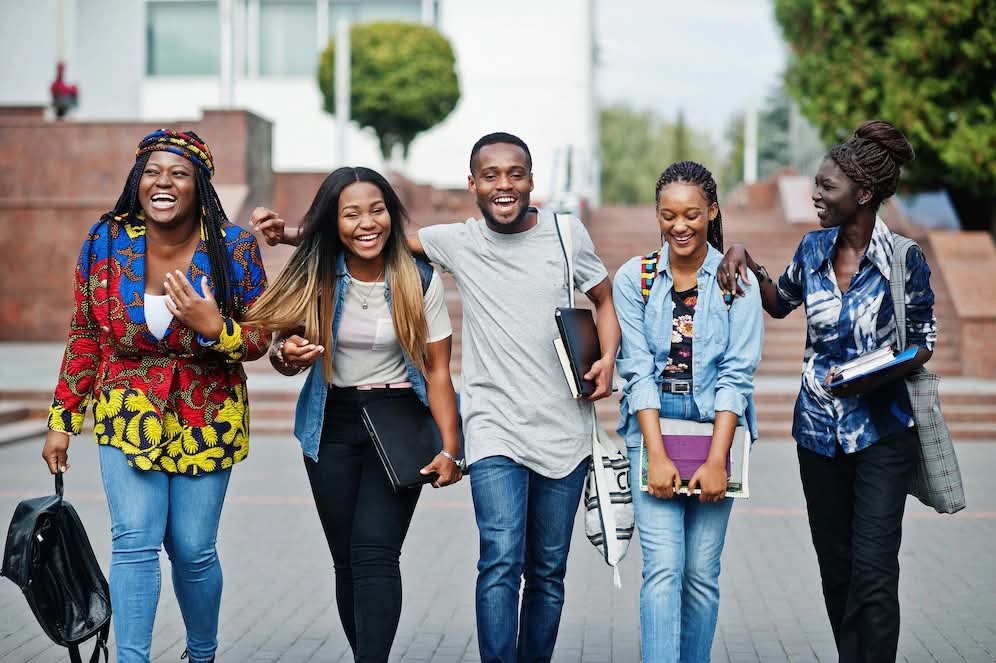
Tuesday, May 12, 2026 — In a historic shift for global academia, the United Nations Educational, Scientific and Cultural Organisation (UNESCO) has revealed that women now outnumber men in higher education worldwide. According to the agency’s first-ever comprehensive report on global tertiary trends, there are now 114 women enrolled for every 100 men as of 2024.
The report highlights a dramatic expansion of the sector, with global student numbers more than doubling from 100 million in 2000 to 269 million in 2024. While gender parity has been achieved in nearly every corner of the globe, sub-Saharan Africa remains the notable exception, continuing to struggle with significant access gaps.
Regional Disparities and Leadership Gaps
Despite the surge in female enrolment, the report cautions that “expansion does not always translate into equality.” Regional disparities remain stark:
- Western Europe & North America: 80% enrolment among youth.
- Latin America & Caribbean: 59% enrolment.
- South & West Asia: 30% enrolment.
- Sub-Saharan Africa: Only 9% enrolment.
UNESCO Director-General Khaled El-Enany noted that while women are dominating undergraduate halls, they remain significantly underrepresented at the doctoral level and in senior academic leadership, where they hold only 25% of top positions globally.
The Rise of International Mobility and AI
The landscape of higher education is also being reshaped by migration and technology. International student mobility has tripled in two decades, reaching 7.3 million students in 2023. While traditional hubs like the U.S., UK, and Australia host half of these students, new destinations such as the United Arab Emirates and Turkey are rapidly gaining market share.

Furthermore, the report addresses the digital frontier, noting that while artificial intelligence is transforming classrooms, institutional policy is lagging. As of 2025, only 20% of universities globally have implemented a formal AI policy.
Funding and Refugees
The report also sheds light on the plight of displaced persons. Enrolment rates for refugees have seen a promising jump from 1% in 2019 to 9% in 2025. However, UNESCO warned that funding remains a critical bottleneck, with government investment averaging just 0.8% of global GDP. With only one-third of countries legally guaranteeing free public higher education, the agency is calling for “innovative funding models” to ensure that the boom in enrolment leads to quality, inclusive outcomes for all.
Do you want to advertise with us?
Do you need publicity for a product, service, or event?
Contact us on WhatsApp +2348033617468, +234 816 612 1513, +234 703 010 7174
or Email: validviewnetwork@gmail.com
CLICK TO JOIN OUR WHATSAPP GROUP