



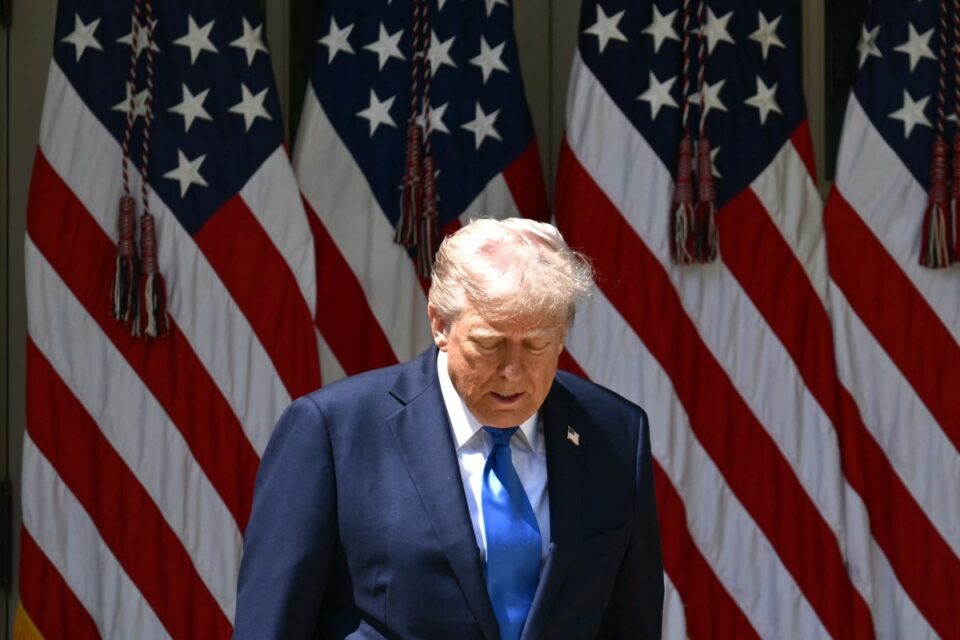
NEW YORK — US President Donald Trump told the United Nations General Assembly on Tuesday that he faces a stark choice over the ongoing conflict with Iran: pursue a negotiated settlement that could allow the Islamic Republic to rebuild, or move decisively to “annihilate” it and “drive them into hell with no chance of survival.”
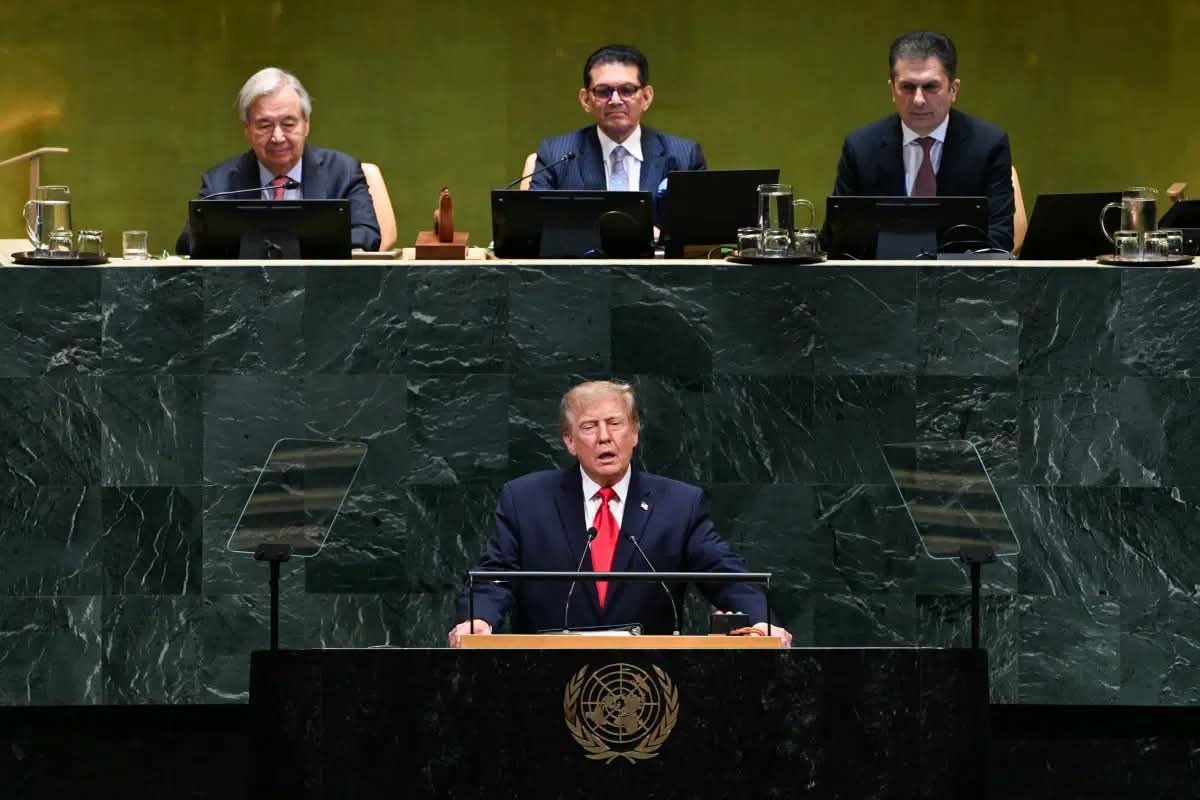
Speaking at the 81st session of the UNGA at United Nations Headquarters, Trump framed the decision in blunt terms. “I have a big decision to make,” he said. “Will a deal be made with Iran that lets them rebuild and create a far greater country than it ever was before? Or do I annihilate the Islamic Republic and do it quickly, never giving them a chance to kill and destroy people and countries again? Do I drive them into hell with no chance of survival and no hope of future greatness or generations?”
He added that he believes an agreement remains possible after the US midterm elections in November. Trump claimed Tehran is “waiting to see how I do in the midterm election,” while noting that he himself is not on the ballot. “What they don’t realise is that I’m not running,” he said. “I am not running. I gave absolutely no credence and will not give credence to the election when it comes to Iran.”
The remarks came nearly seven months into a US-Israeli military campaign against Iran that began in late February 2026. Trump has repeatedly described the operation as necessary to prevent Tehran from obtaining a nuclear weapon, halt attacks on commercial shipping in critical waterways such as the Strait of Hormuz, and curb Iranian support for proxy groups. In his UN address, he defended the campaign and urged other nations to join the United States in enforcing complete economic isolation of Iran until it ends attacks on shipping, abandons nuclear ambitions, and ceases support for terrorism.

Trump thanked the UN Security Council for a recent resolution condemning Iran’s “despicable terrorist attacks on commercial shipping,” describing it as having received more co-sponsors than any previous Security Council measure. He also asserted that the United States acted after giving Iran repeated opportunities for a deal, and that Iranian forces had violated a ceasefire intended for nuclear discussions.
The speech unfolded against a backdrop of continued regional tension and economic ripple effects from the conflict, including pressure on global energy markets. Iranian President Masoud Pezeshkian and Foreign Minister Abbas Araghchi are among a scaled-down Iranian delegation attending the UN gathering. US officials have indicated that President Trump remains open to a meeting with Iranian representatives “if the conditions are right,” though no such encounter has been scheduled and questions persist about the authority of the visiting diplomats relative to Tehran’s leadership.
Trump’s address also touched on broader themes, including progress he claimed on peace efforts elsewhere, US actions in the Western Hemisphere, and the importance of ensuring Iran never acquires a nuclear weapon. The appearance marked his second UNGA speech since returning to office, following a more confrontational address the previous year in which he criticised the organisation and warned other countries about migration and climate policies.
Diplomacy continues on the sidelines, with Trump scheduled to meet multiple world leaders, including Gulf Cooperation Council representatives, in discussions expected to focus in part on the Iran conflict and regional security. The midterms, now roughly six weeks away, appear central to the timeline Trump sketched for a potential breakthrough—or further escalation.
Do you want to advertise with us?
Do you need publicity for a product, service, or event?
Contact us on WhatsApp +2348033617468, +234 816 612 1513, +234 703 010 7174
or Email: validviewnetwork@gmail.com
CLICK TO JOIN OUR WHATSAPP GROUP