


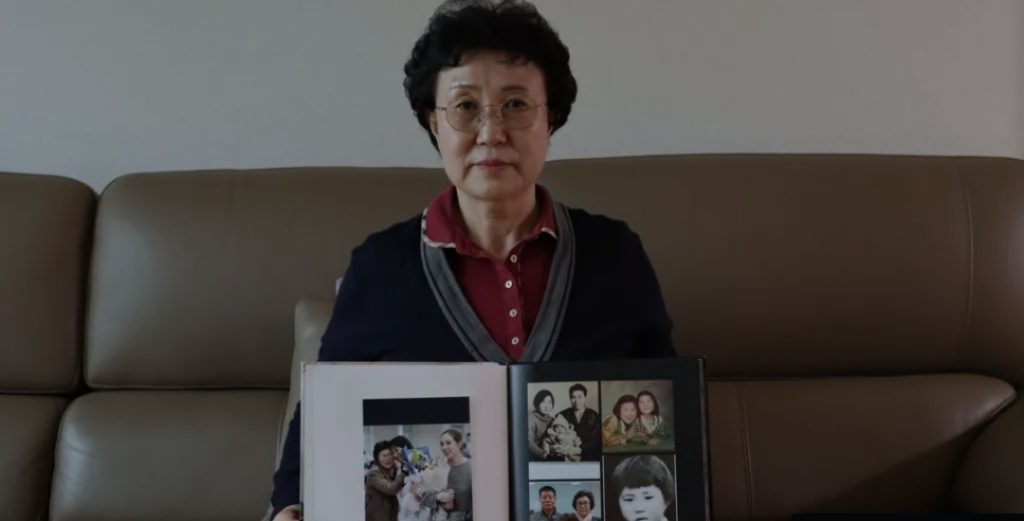
SEOUL, South Korea – A South Korean woman, Han Tae-soon, has been reunited with her daughter, Kyung-ha, 44 years after she was allegedly kidnapped and illegally sent for adoption in the United States. This poignant reunion in 2019 has brought to light a dark chapter in South Korea’s history of overseas adoptions, prompting a lawsuit against the government and a broader national reckoning with past human rights violations.
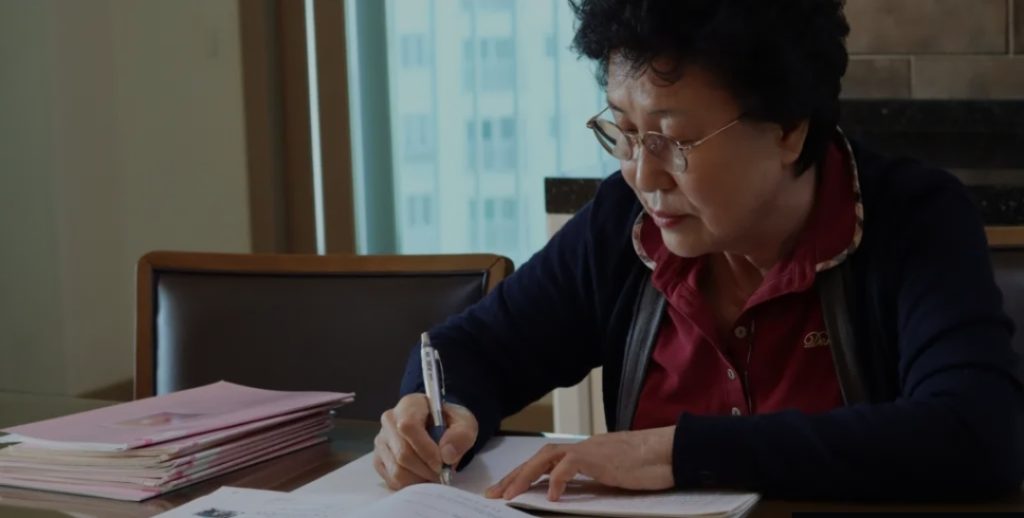
Han Tae-soon’s last memory of her daughter as a child was in May 1975, when six-year-old Kyung-ha told her she was going to play with friends near their Seoul home. “When I came back, she was gone,” Ms. Han, now 71, recounted. For decades, Ms. Han and her husband tirelessly searched, visiting police stations and orphanages, putting up flyers, and making television appeals. “I spent 44 years ruining my body and mind searching for [my daughter],” she stated, lamenting the lack of apology or accountability from anyone during that time.
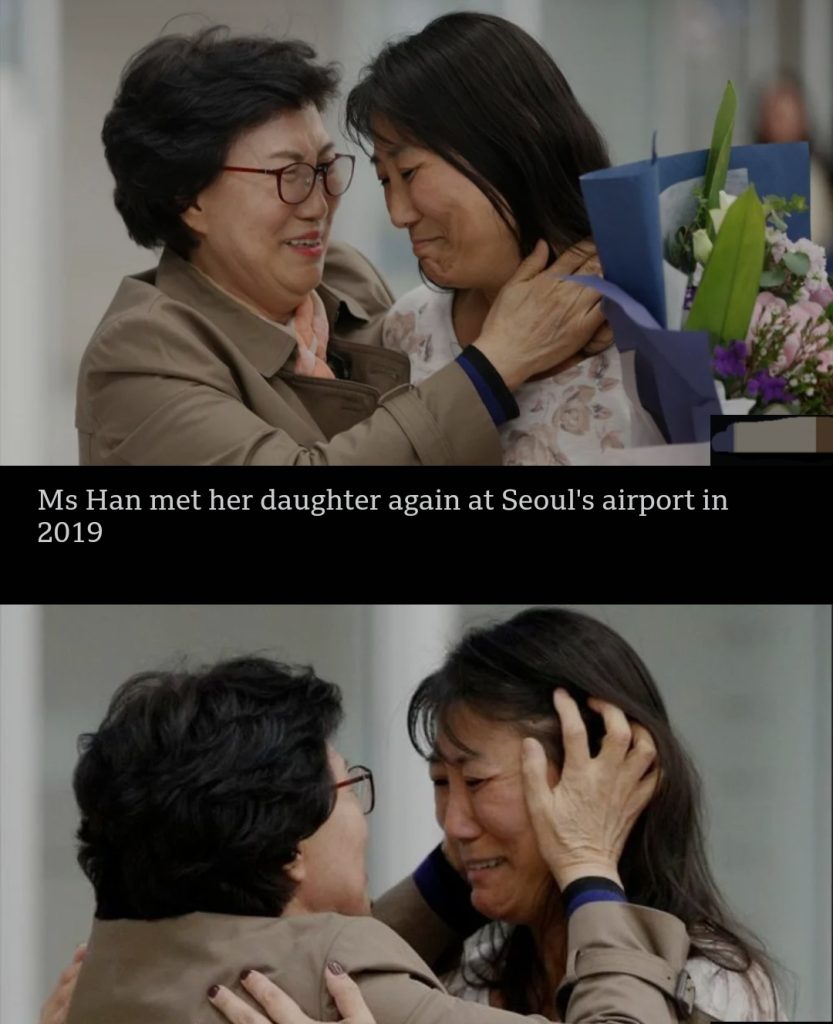
The breakthrough came in 2019 when Ms. Han registered with 325 Kamra, a group that uses DNA matching to connect Korean adoptees with their birth families. A match was found with Laurie Bender, a nurse in California. Their tearful reunion at Seoul’s airport saw Ms. Han confirm her daughter’s identity by running her fingers through her hair, a testament to her decades as a hairdresser. “I’m so sorry,” were Ms. Han’s first words to her daughter, expressing deep guilt over Kyung-ha’s inability to find her way home as a child.
Kyung-ha, now known as Laurie Bender, later pieced together her harrowing childhood experience. At six, she was approached by a woman claiming to know her mother, told her mother “didn’t need” her, and was taken to a train station.

Abandoned at the final stop, she was picked up by police, placed in an orphanage, and subsequently flown to the US for adoption by a Virginia couple. It was later discovered that she had been given false papers stating she was an abandoned orphan with unknown parents. “It’s like you’ve been living a fake life and everything you know is not true,” Ms. Bender previously commented on her discovery.
Ms. Han is now suing the South Korean government, alleging its failure to prevent her daughter’s illegal adoption. Her case is one of two landmark lawsuits, making her the first biological parent of an overseas adoptee to seek damages from the government. A man adopted in the US filed the first adoptee lawsuit in 2019.
The South Korean government has acknowledged the deep emotional pain of separated families, stating it “deeply sympathises” and views Ms. Han’s case with “deep regret,” promising “necessary actions” based on the trial’s outcome.
A History of “Mass Export” of Children
Kyung-ha’s story is not an isolated incident. South Korea’s overseas adoption program, which began in the 1950s in the aftermath of the Korean War, has seen an estimated 170,000 to 200,000 children adopted abroad, predominantly in Western countries. Initially framed as a humanitarian effort, the program was managed entirely by private adoption agencies. These agencies, operating with significant autonomy under government oversight, saw the number of children sent abroad surge, peaking in the 1980s with over 8,800 children sent overseas in 1985 alone.
A landmark inquiry in March found that successive South Korean governments committed human rights violations through their lack of oversight, allowing private agencies to “mass export” children for profit on an industrial scale. The inquiry described the “mass transportation of children like cargo,” noting instances of neglect during long flights, including the death of a lactose-intolerant child fed milk in transit in 1974.
Critics have long questioned the necessity of such a large-scale overseas adoption program, especially as South Korea experienced rapid economic growth. Reports from that era described the situation as “out of control” and “almost like a trade in children.” The truth and reconciliation report revealed that foreign adoption agencies set quotas for children, which Korean agencies readily fulfilled, turning it into a profitable business with hidden “donations” demanded from adoptive families.
Disturbing allegations have surfaced regarding the unscrupulous means of obtaining children. Some parents, like Ms. Han, claim their children were kidnapped. During the 1970s and 1980s, thousands of homeless or unattended children were reportedly rounded up as part of a national campaign to “clean up the streets” and placed in orphanages or welfare centers.
Other parents were allegedly told their babies had died when they were, in fact, alive and taken to adoption agencies. The inquiry also found that agencies often failed to obtain proper consent from birth mothers and deliberately falsified adoption records to meet demand. Children found without identity documents were often made to appear as abandoned orphans, and in some cases, children were swapped to avoid refunding fees or to expedite adoptions. This widespread falsification has created immense challenges for adoptees seeking to trace their biological families.
Accountability and Future Reforms
While some key players involved in the adoption agencies deny wrongdoing, experts emphasize that responsibility lies with both the private agencies and the state. Dr. Lee Kyung-eun, an international law scholar at Seoul National University, stated, “Adoption agencies exploited the system, and the government turned a blind eye – allowing illegal practices to take root.” Shin Pil-sik, a researcher on transnational adoption at Seokyeong University, metaphorically described the government as “the captain, and the agencies rowed the boat,” allowing both sides to deflect accountability.
Past investigations have shown that successive Korean governments actively shaped adoption policy, setting quotas and even rewriting laws to remove safeguards and facilitate quick adoptions for foreign families. A 1984 government document revealed that the adoption policy’s goals included not only child welfare but also “the promotion of future national strength and people-to-people diplomacy.”
In response to growing scrutiny, South Korea has taken steps to reform its adoption system. In 2012, laws were revised to tighten screening of potential adoptive parents and improve the tracking of birth parent data. Further reforms, set to take effect in July, aim to minimize overseas adoptions and transition all adoption handling to the government, moving away from private agencies. Overseas adoptions have already seen a significant decline, with only 79 children adopted abroad in 2023.
Despite these reforms and the government’s expressed regret, adoptees and birth parents like Ms. Han continue to grapple with profound trauma. Ms. Han and Kyung-ha, though reunited, face challenges in maintaining a close connection due to geographical distance and language barriers. Ms. Han diligently practices English, but the emotional chasm remains. “Even though I have found my daughter, it doesn’t feel like I’ve truly found her,” Ms. Han lamented. “My entire life has been ruined… no amount of money will ever make up for what I’ve lost.” The ongoing legal battles and personal struggles underscore the deep and lasting impact of South Korea’s controversial overseas adoption history.
Do you want to advertise with us?
Do you need publicity for a product, service, or event?
Contact us on WhatsApp +2348033617468, +234 816 612 1513, +234 703 010 7174
or Email: validviewnetwork@gmail.com
CLICK TO JOIN OUR WHATSAPP GROUP