



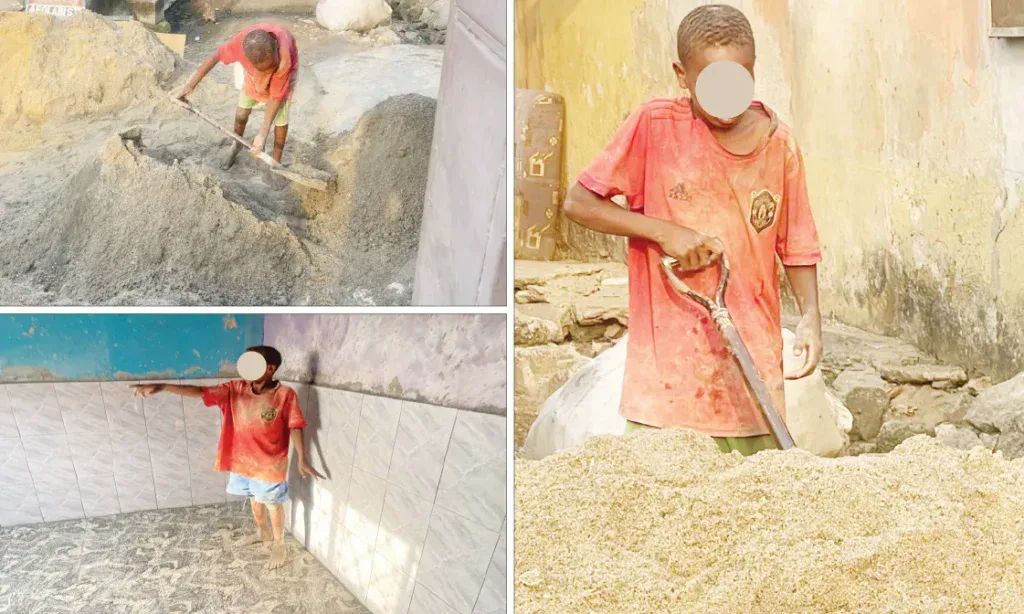
Dawn breaks over Ilasamaja, a bustling, low-income neighborhood in Lagos, but for 10-year-old Ojo Ibukun, the morning holds no promise of a classroom. While peers prepare for school, Ibukun grips a heavy shovel, wrestling with a thick mortar mixture at an unfinished building site. His daily reality—carrying cement, mixing concrete, and sleeping on a bare piece of cardboard in an empty room—epitomizes a grim intersection of poverty, regional migration, and unregulated informal apprenticeship.
From Ifangni to Lagos
Ibukun’s journey began in Ifangni, southeastern Benin Republic. Brought across the border by his boss and fellow townsman, tiler Kilamuwaye Alexandre, the boy was meant to learn a trade. Under the ECOWAS protocol for free movement, crossing the border is seamless for citizens seeking economic opportunities. However, the line separating a legitimate cultural apprenticeship from exploitative child labor quickly blurs when young children are thrust into hazardous construction environments.
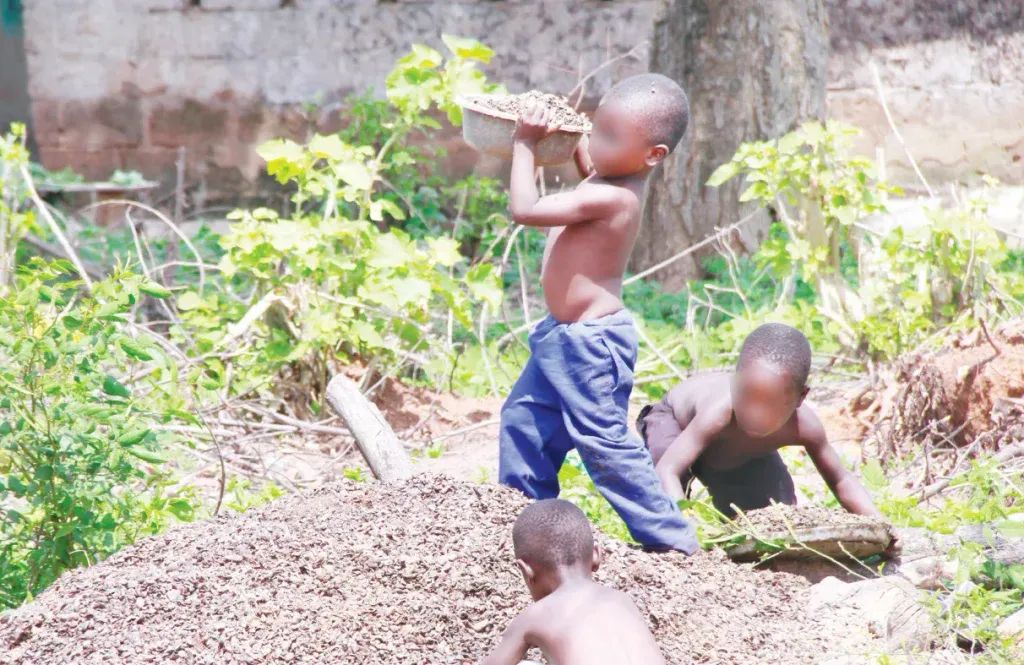
While Alexandre maintains that the arrangement stems from family circumstances and a young boy’s preference for a trade over formal schooling, child rights advocates argue that consent does not excuse vulnerability. Ibukun’s life is defined by heavy labor, lack of formal education, and an absence of basic welfare protections, transforming a supposed apprenticeship into a daily struggle for survival.

A Wider Regional Crisis
Ibukun’s story is far from isolated. Across Nigeria’s borders and bustling urban centers, thousands of children from neighboring West African nations fall through the cracks of informal labor networks.
- Scale of the Issue: Nigeria’s 2022 National Child Labour Survey revealed that roughly 24.7 million children aged five to 17 are engaged in child labor, with over 14.3 million exposed to hazardous conditions.
- The Construction Sector: Industrial sites, mining operations, and commercial agriculture remain major hotspots where young hands replace adult labor due to economic desperation.
- Policy and Enforcement: Although Nigeria enacted the Child Rights Act in 2003 and recently validated its third National Child Labour Policy and Action Plan (2026–2030) alongside the International Labour Organization (ILO), enforcement across decentralized informal businesses remains a formidable hurdle.
Seeking Sustainable Solutions
Experts emphasize that simply removing a child from a workplace fails to address the root causes of child labor. True progress requires robust social protection frameworks, accessible and affordable education, and economic support for struggling households so families are not forced to rely on children for survival.
Until regional authorities bridge the gap between open-border economic migration and stringent child protection, children like Ibukun will continue to trade their classrooms for concrete floors, raising urgent questions about the future of the region’s workforce.
Do you want to advertise with us?
Do you need publicity for a product, service, or event?
Contact us on WhatsApp +2348033617468, +234 816 612 1513, +234 703 010 7174
or Email: validviewnetwork@gmail.com
CLICK TO JOIN OUR WHATSAPP GROUP