

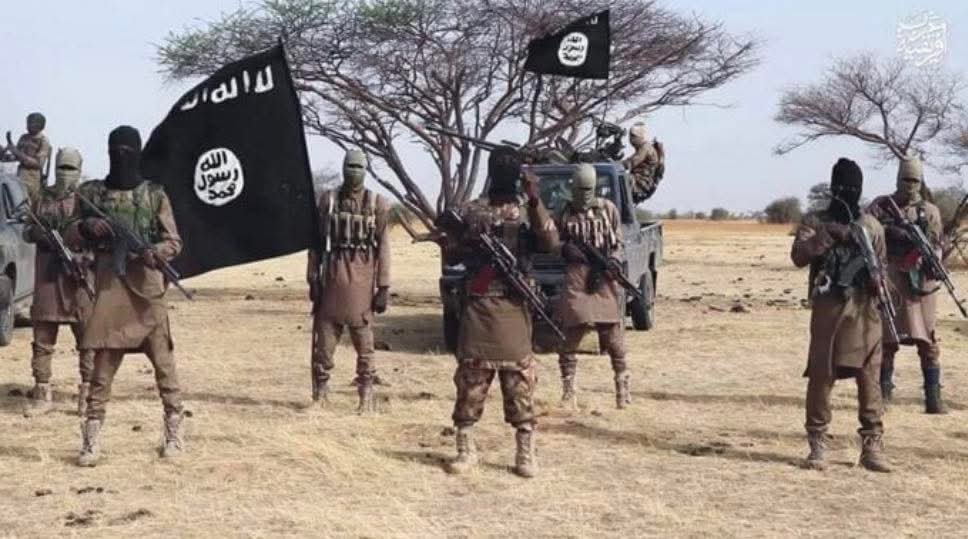
A groundbreaking study has validated the presence of a key logistics hub operated by Islamic State West Africa Province (ISWAP) in Nigeria’s Sokoto State, shedding light on Friday’s US airstrikes against ISIS-linked militants in the northwest—far from the group’s usual northeast strongholds.
The research, titled “Kachallas and Kinship: Understanding Jihadi Expansion and Diffusion in Nigeria”, authored by James Barnett and Umar Musa for the Combating Terrorism Centre (CTC) at West Point, maps out how Sahel-based jihadists have infiltrated northwestern Nigeria over the past five years. Published recently, it draws on fieldwork, UN reports, and local intelligence to expose networks blending banditry with global terror affiliates.
ISWAP, ISIS’s primary arm in West Africa, has long dominated the Lake Chad Basin and Borno State in Nigeria’s northeast. Yet Sokoto, bordering Niger, has emerged as a transit point. The study cites UN experts confirming an ISWAP hub in Sokoto that coordinates with the Islamic State Sahel Province (ISSP), funneling arms, fighters, and funds across borders.

Local militants known as “Lakurawa”—a Hausa term for gunmen from Sahel nations—have raided Sokoto communities near the Niger border since late 2017. They gained infamy with savage attacks in late 2024, including mass killings and abductions. While often labeled a standalone bandit cell, the CTC analysis reveals deeper ties: early Lakurawa leaders pledged allegiance to al-Qaeda’s Jama’a Nusrat ul-Islam wa al-Muslimin (JNIM) around 2017-2018, but many have since defected to ISSP.
“ISSP militants operate in Sokoto and northern Kebbi under the Lakurawa guise,” the study states, noting their strict operational secrecy. These fighters avoid revealing affiliations to locals, sowing confusion that shields them from targeted crackdowns—benefiting whether they fly ISSP, ISWAP, or JNIM flags.
This expansion ties into northwest Nigeria’s bandit crisis, where heavily armed gangs dominate Zamfara, Sokoto, Katsina, Kaduna, Niger, and Kebbi—mostly Muslim-majority zones. “Muslim civilians form a sizable portion, if not the majority, of both perpetrators and victims,” researchers note, challenging narratives that frame banditry solely as ethnic or farmer-herder clashes.
US Airstrikes Spark Debate on Threat Scope
Early Friday, US Africa Command (AFRICOM) conducted precision strikes in Sokoto at Nigeria’s request, targeting “ISIS terrorists” in a remote area. AFRICOM’s X post described it as a “collective self-defense” operation, with no civilian casualties reported. Nigeria’s Foreign Ministry spokesperson, Kimiebi Ebienfa, confirmed the appeal, adding that “more strikes are expected” as terrorists persist in threatening national security.
The strikes raise questions: Why Sokoto, not ISWAP’s core turf? Recent web searches and reports from Reuters, BBC Africa, and Premium Times corroborate the study’s findings. A December 2025 UN Security Council update (via reliefweb.int) details ISSP-ISWAP smuggling routes through Sokoto, including weapons from Libya. The International Crisis Group warned in November 2025 of “jihadist-bandit mergers” fueling 2024’s violence spike, with over 1,500 deaths in northwest attacks per ACLED data.
Nigerien forces reported clashing with Lakurawa in border zones as recently as December 20, 2025 (per Africanews), while Nigerian troops neutralized 47 bandits in Sokoto last week (Vanguard Nigeria). Analysts like Kabir Adamu of Beacon Security highlight Sokoto’s porous borders as ideal for logistics, blending with Fulani herder networks.
Implications for Nigeria’s Security
As jihadists exploit banditry’s chaos, the study urges better intelligence fusion between anti-terror and anti-bandit operations. “Kinship ties among Fulani kachallas (gun leaders) enable diffusion,” it explains, with groups like JNIM possibly masquerading as Lakurawa in Kebbi and Niger.
President Bola Tinubu’s administration faces mounting pressure. With US support now extending northwest, experts predict intensified aerial campaigns, but ground troop surges remain critical to dismantle hubs.
This revelation underscores a shifting terror landscape: ISWAP’s reach now spans Nigeria, demanding a unified response beyond regional divides.
Do you want to advertise with us?
Do you need publicity for a product, service, or event?
Contact us on WhatsApp +2348033617468, +234 816 612 1513, +234 703 010 7174
or Email: validviewnetwork@gmail.com
CLICK TO JOIN OUR WHATSAPP GROUP