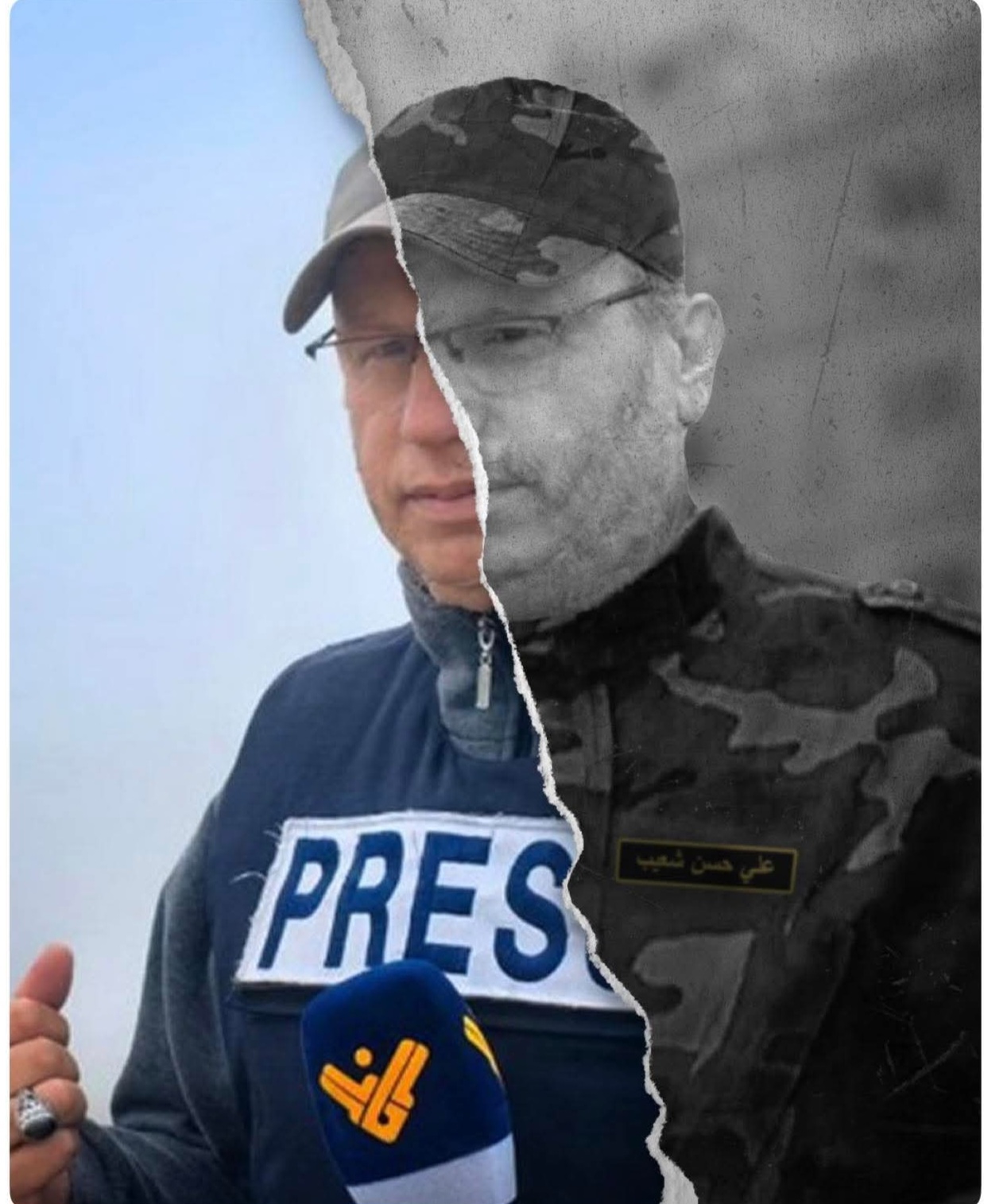
BEIRUT – A targeted Israeli airstrike struck a clearly marked media vehicle on the Jezzine highway in southern Lebanon yesterday, killing three media workers and sparking an international outcry over the safety of journalists in the escalating conflict.
The strike claimed the lives of Ali Shoaib (referred to by the IDF as Ali Hassan Shaib), a veteran correspondent for Hezbollah-affiliated Al-Manar TV; Fatima Ftouni, a reporter for the pro-Hezbollah Al-Mayadeen TV; and her brother, freelance photojournalist Mohamad Ftouni.
Allegations Without Evidence
Shortly after the attack, the Israel Defense Forces (IDF) issued a statement on X (formerly Twitter) claiming that Shoaib was an active member of Hezbollah’s elite Radwan Force intelligence unit. The military alleged that Shoaib utilized his journalistic credentials as a “cover” to gather intelligence on Israeli troop positions and facilitate military operations.
However, the IDF has yet to make any evidence public to substantiate the claim that Shoaib had transitioned from a media worker to an active combatant. International law protects journalists as civilians, a status they only lose if they take a direct part in hostilities.
A Pattern of Targeting
The Committee to Protect Journalists (CPJ) expressed grave concern over the incident, noting a “disturbing pattern” of the Israeli military labeling media workers as terrorists after targeting them.

”Journalists are not legitimate targets, regardless of the outlet they work for,” said Sara Qudah, CPJ Regional Director. “We have seen this trend in Gaza and now Lebanon—accusations of combatant status without the provision of credible evidence.”
Fatima Ftouni had reportedly finished a live broadcast shortly before the strike. Witnesses from Al-Araby TV who arrived at the scene reported that Ftouni initially survived the first strike on the car but was killed by a subsequent strike as she attempted to flee.
Official Condemnation
Lebanese President Joseph Aoun denounced the killings as a “flagrant crime” and a violation of international treaties designed to protect the press during wartime. The Lebanese Ministry of Information described the attack as a deliberate attempt to silence reporting on the border region.
Shoaib had covered southern Lebanon for nearly three decades and was a well-known figure in the region. While his employer, Al-Manar, is sanctioned by several Western nations for its links to Hezbollah, human rights groups maintain that employment by a partisan outlet does not strip an individual of their civilian protections under the Geneva Conventions.
The deaths bring the total number of journalists killed in Lebanon since the start of the year to five, as the border region remains one of the deadliest zones for media workers globally.
Do you want to advertise with us?
Do you need publicity for a product, service, or event?
Contact us on WhatsApp +2348033617468, +234 816 612 1513, +234 703 010 7174
or Email: validviewnetwork@gmail.com
CLICK TO JOIN OUR WHATSAPP GROUP