


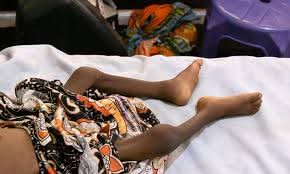
ABUJA — The international medical humanitarian body, Médecins Sans Frontières (MSF), has issued a harrowing update on Nigeria’s deepening health emergency, revealing that 2025 saw the highest number of malnutrition admissions in the organization’s recent history in the country.
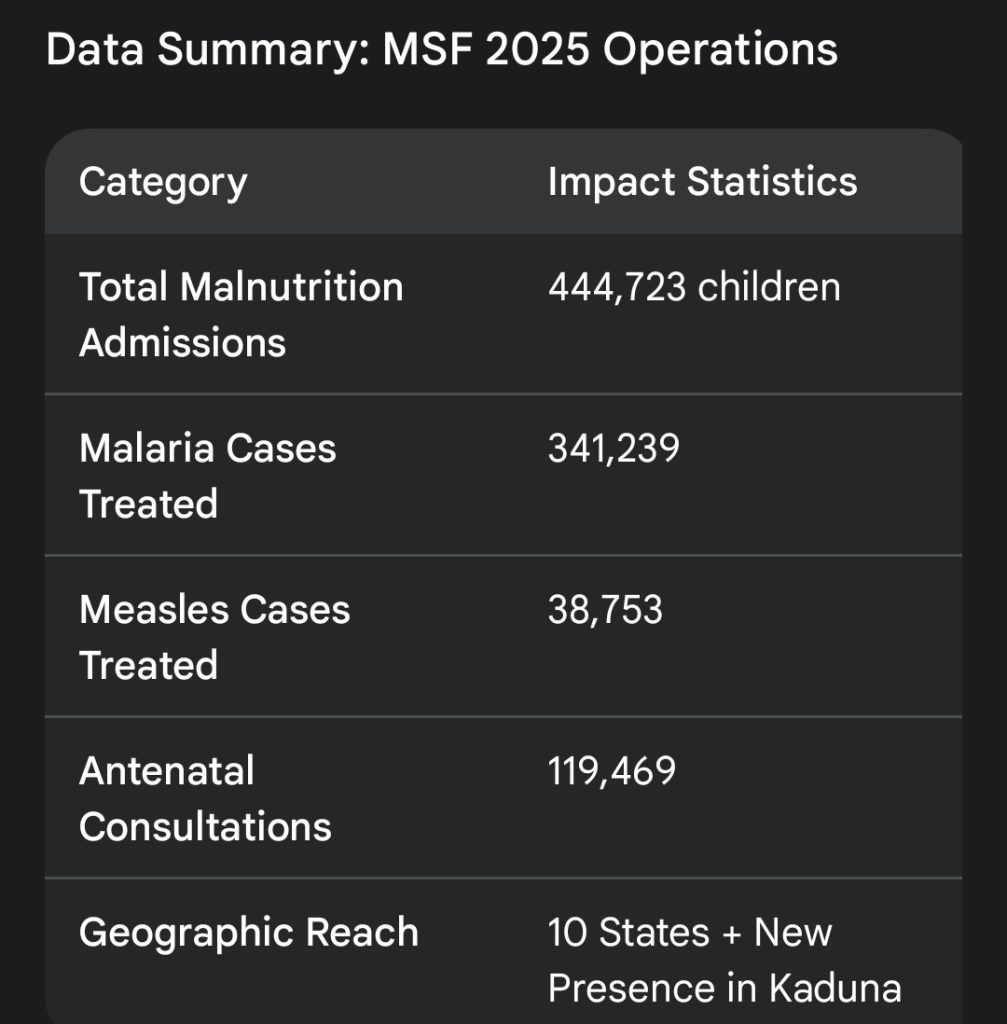
According to the 2025 Country Activity Report released on Wednesday, MSF teams treated more than 440,000 children for malnutrition across 10 states. The figures represent a staggering 20% increase in severe acute malnutrition cases compared to the previous year, signaling a “perfect storm” of economic hardship, insecurity, and climate shocks.
A Crisis of Scale
Dr. Ahmed Aldikhari, MSF Country Representative for Nigeria, described the data as a “harrowing story” of survival. Out of the 440,000 children reached, 353,989 were managed through outpatient programs, while 90,723—nearly a quarter—suffered from such severe complications that they required urgent stabilization in inpatient centers.
The crisis is most acute in the northern belt, particularly in states like Bauchi, Borno, Katsina, and Zamfara, where conflict and displacement have severed the link between families and their farmlands.
”Malnutrition is both a cause and a consequence,” Dr. Aldikhari noted. “It weakens the immune system, making children easy targets for preventable killers like malaria and measles.”
Epidemic Pressures
The report also highlighted a surge in infectious diseases that continue to stalk vulnerable populations. In 2025 alone, MSF medical teams treated:
- 341,239 patients for malaria.
- 38,753 children for measles.
- 6,123 cases of diphtheria.
- 985 meningitis patients.
Humanitarian workers warn that these numbers are likely under-reported due to the “porous borders” and insecurity in rural areas, which prevent many families from reaching health facilities until it is too late.
Maternal Mortality: The Silent Struggle
While the government has reported a 17% drop in maternal deaths in high-burden local government areas through recent reforms, MSF’s data underscores the persistent gaps in rural healthcare. The organization assisted in 33,590 deliveries and conducted over 119,000 antenatal consultations in 2025, often dealing with life-threatening complications like obstructed labor and eclampsia.

”Women in conflict-affected communities still face impossible barriers—long distances, high costs, and a lack of emergency obstetric care,” the report stated.
The Funding Gap
The alarm comes at a time when international humanitarian funding is being slashed. UNICEF recently estimated that 3 million children in Nigeria will require life-saving treatment for “severe wasting” in 2026, yet the resources to meet this need are dwindling.
MSF is calling for an urgent “all-hands-on-deck” approach, urging the Nigerian government and international donors to prioritize primary healthcare, strengthen vaccination coverage, and address the soaring food inflation that has put basic nutrition out of reach for millions.
Do you want to advertise with us?
Do you need publicity for a product, service, or event?
Contact us on WhatsApp +2348033617468, +234 816 612 1513, +234 703 010 7174
or Email: validviewnetwork@gmail.com
CLICK TO JOIN OUR WHATSAPP GROUP



