

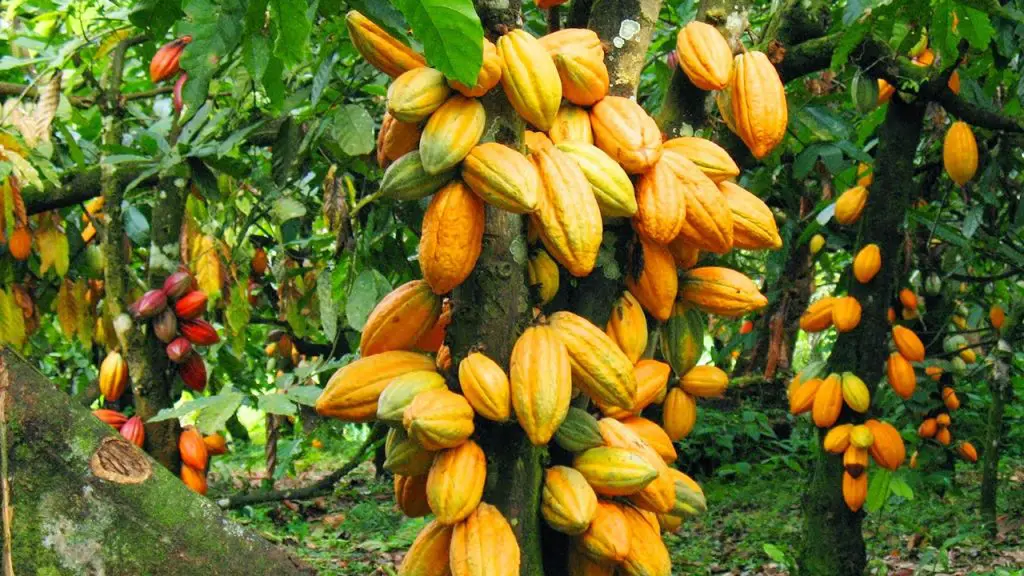
ADO-EKITI – In a strategic move to reclaim its historical glory as a powerhouse in Nigeria’s cocoa value chain, the Ekiti State Government has unveiled a comprehensive 10-year roadmap aimed at producing 10 million cocoa seedlings.
The initiative, announced by the Commissioner for Agriculture and Food Security, Mr. Ebenezer Boluwade, seeks to reverse decades of declining output caused by aging plantations and outdated farming techniques. Under this ambitious plan, the state will raise one million high-yield, climate-resilient seedlings annually, providing a sustainable pipeline for both legacy farmers and a new generation of “agri-preneurs.”
High-Yield Varieties and Subsidies
To ensure the success of the rollout, the state government has approved a 50% subsidy on seedlings and essential agrochemicals. These improved varieties, sourced through partnerships with the Cocoa Research Institute of Nigeria (CRIN), boast a short gestation period—maturing in just three years compared to the traditional five to seven years.
”Our goal is to return Ekiti to the golden era of the 1970s,” Boluwade stated during a recent broadcast in Ado-Ekiti. “By decentralizing the distribution of these subsidized seedlings, we are ensuring that every farmer, regardless of location, has the tools to succeed.”
Strategic Partnerships and Sustainability
The revival plan is not merely about quantity but quality and ethical standards. Ekiti is collaborating with the TRACE Project (Transitioning to Sustainable African Cocoa) to align local production with global best practices. This partnership focuses on:
1.Traceability: Ensuring beans are not sourced from deforested areas.

2.Ethical Labor: Implementing strict monitors against child labor to meet European Union Deforestation Regulation (EUDR) standards.
3.Modernization: Training over 15,000 farmers in climate-smart agronomy and expert fermentation processes.
Value Addition and Economic Impact
Beyond the farms, the state is leveraging the Special Agro-Industrial Processing Zones (SAPZ) programme, backed by the African Development Bank (AfDB). This infrastructure is designed to attract private investors to set up processing plants within Ekiti, moving the state from an exporter of raw beans to a hub for finished cocoa products.
Economic analysts suggest that if the 10 million seedling target is met, Ekiti could secure a position among the top three cocoa-producing states in Nigeria, significantly boosting its Internally Generated Revenue (IGR) and creating thousands of rural jobs.
With global cocoa prices reaching record highs, Ekiti’s 10-year gamble appears timed to turn the “brown gold” of the past into a green future for its citizens.
Do you want to advertise with us?
Do you need publicity for a product, service, or event?
Contact us on WhatsApp +2348033617468, +234 816 612 1513, +234 703 010 7174
or Email: validviewnetwork@gmail.com
CLICK TO JOIN OUR WHATSAPP GROUP