



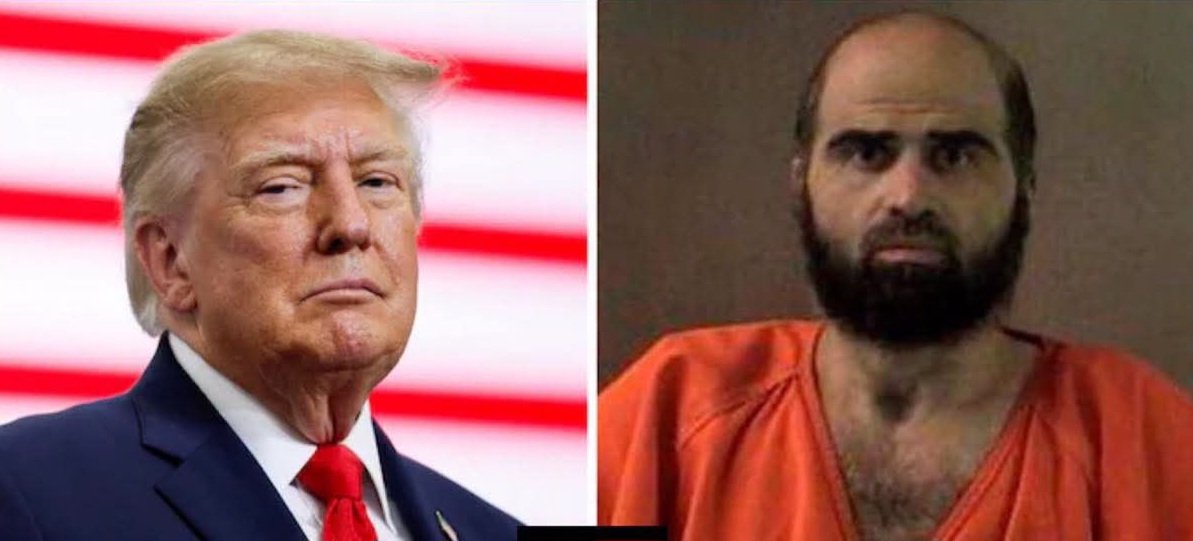
President Donald Trump on Thursday reversed plans to livestream the firing-squad execution of Nidal Malik Hasan, the former U.S. Army major who killed 13 people and wounded 32 others in the 2009 Fort Hood shooting, following bipartisan criticism and concerns that the broadcast could be exploited by extremists.
In a Truth Social post, Trump said Hasan “will die, as scheduled, by firing squad, but this event will not be streamed.” He acknowledged that publicly airing the execution “might have been a strong deterrent for the World to witness how America deals with Terrorists and SCUM like Hasan,” but added that “many very good and well meaning people would rather not watch him die, through streaming, or through any other visual device.” Immediate family members of the victims will still be permitted to attend in person if they choose.
The execution is scheduled for 1 p.m. Central Time on December 3 at Fort Hood, Texas—the same installation where Hasan opened fire on unarmed soldiers at a processing center on November 5, 2009. It would mark the first U.S. military execution since 1961 and the first by firing squad since World War II. Trump approved the death sentence on October 2 after Hasan exhausted his military appeals; the Supreme Court declined to review the case in 2025. Acting Army Secretary Adam Telle formally set the date under Army regulations that require the execution to occur between 60 and 150 days after presidential approval.
Defense Secretary Pete Hegseth had announced earlier this month that the execution would be “public,” telling a conservative broadcaster that “people need to understand that there are serious consequences for these types of things.” Pentagon officials later confirmed plans to livestream it. The proposal drew swift backlash from both Republicans and Democrats, religious leaders, retired military officers, and some victims’ relatives, who warned it could serve as a propaganda tool for terrorist groups, conflict with Army regulations limiting witnesses, or create an unseemly spectacle. Hasan has been paralyzed from the waist down since being shot by police during the attack.
A Washington Post-ABC News-Ipsos poll released around the time of Trump’s decision found that 80 percent of Americans opposed livestreaming the execution. Vice President JD Vance had publicly expressed doubts and said he would not watch it. Pentagon spokesman Sean Parnell said Trump and Hegseth discussed the matter and are “completely aligned” on the final decision.

John Galligan, a lawyer who has represented Hasan on certain civil matters, called the original livestream idea “a dumb decision” that violated Army regulations. He noted Hasan’s paralysis and said the episode had already stained the military justice system. It remained unclear whether Hasan had been informed of the change. Legal experts have noted that Hasan could still seek habeas corpus review in civilian federal court, which could potentially delay the proceedings, though any such challenge would face a narrow path.
Hasan, a former Army psychiatrist, was convicted in a 2013 court-martial of multiple counts of premeditated murder and attempted murder. He has been held at the U.S. Disciplinary Barracks at Fort Leavenworth, Kansas. The case has long been a flashpoint in debates over military justice, domestic terrorism, and the death penalty. Trump’s reversal leaves the execution itself on track while abandoning the highly unusual plan to broadcast it live.
Do you want to advertise with us?
Do you need publicity for a product, service, or event?
Contact us on WhatsApp +2348033617468, +234 816 612 1513, +234 703 010 7174
or Email: validviewnetwork@gmail.com
CLICK TO JOIN OUR WHATSAPP GROUP