


PROTESTS SPREAD ACROSS FRANCE
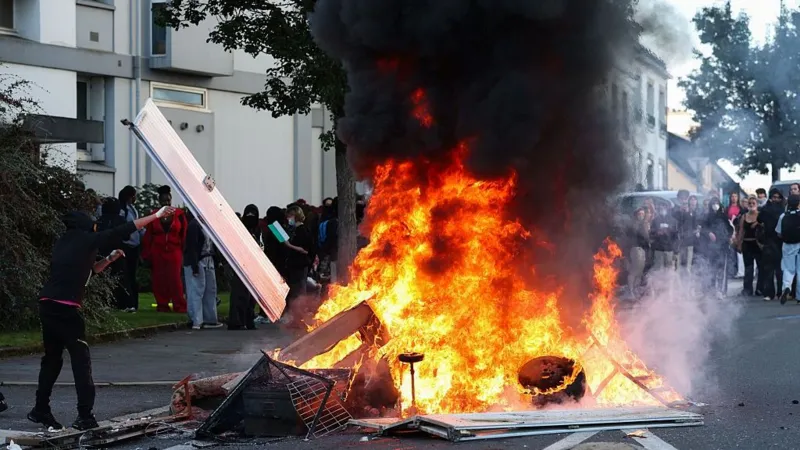
Riot police have clashed with high school students as demonstrations over education conditions spread across France, with fires, arrests and disruption reported in several cities.
The protests began in the Paris region last week before spreading to cities including Strasbourg, Marseille, Montpellier, Nantes, Rennes and Toulouse.
ValidViewNetwork gathered that 735 of France’s 3,700 schools had been affected “one way or another” by Friday’s unrest. Interior Minister Laurent Nuñez said 1,747 people were arrested on Friday.
Reuters, in a separate report published on October 3, put the number of arrests since Monday at about 5,000, most of them teenagers, showing that arrest figures have continued to change as authorities update their tally.
ValidViewNetwork reports that the demonstrations are rooted in complaints about overcrowded classrooms, shortages of teachers and other staff, deteriorating school buildings and concerns about education funding.
WHAT THE STUDENTS ARE PROTESTING
Students have complained about classrooms that are overcrowded, inadequate school facilities and frequent teacher shortages.Some have also criticised long school days and conditions during periods of extreme heat.
Reuters reported that students in poorer parts of the Paris region complained about a shortage of teachers, nurses and social workers, while a teachers’ union survey found that two-thirds of schools in Seine-Saint-Denis had unfilled teaching positions.
Students have also raised concerns about France’s university admissions system and wider inequalities in access to education. At some schools, students have blocked entrances, forcing lessons to be cancelled or moved online.
RIOT POLICE DEPLOYED
The protests have increasingly produced confrontations between demonstrators and police.
In Strasbourg, police used tear gas as clashes developed around a school and later near the University of Strasbourg.
In Marseille, fireworks were directed towards police lines, while rubbish bins were set on fire in Rennes.
In Pantin, northeast of Paris, demonstrators reportedly burned fences and other objects and threw firecrackers at riot police before fleeing.
The BBC also reported that a police officer was chased and beaten during protests in Belfort.
A 17-year-old was arrested on suspicion of attempted homicide following the incident. BBC Verify authenticated videos showing the officer being pursued and attacked.
MORE THAN 700 SCHOOLS AFFECTED
The scale of the disruption has expanded rapidly. French Education Minister Édouard Geffray said 735 schools had been affected in some way by Friday’s unrest, while the education ministry said 65 members of staff had been injured, including 40 school principals.
Reuters reported that more than 1,200 high schools had been affected during the week and around 400 schools were closed on Friday.
The disruption has included school blockades, fires and damage to buildings. In Nantes, the regional government estimated damage to Nelson Mandela High School at more than €2 million after fire damaged its entrance and parts of the building.
GOVERNMENT SAYS VIOLENCE HAS CHANGED THE NATURE OF PROTESTS
French officials have distinguished between the students’ education demands and acts of violence committed during the demonstrations.
Justice Minister Gérald Darmanin said the movement had shifted from high-school demonstrations into a public-order disturbance.
Interior Minister Laurent Nuñez said authorities were dealing with what he described as “riot and urban violence”.
Education Minister Geffray also said some teachers had told him that people involved in confrontations were not their students.
Government officials have also alleged that the protests have been joined or exploited by groups outside the student movement. Those claims are disputed by opposition figures and other participants in the demonstrations.
STUDENTS AND TEACHERS ACCUSE AUTHORITIES OF NEGLECT
Students and teachers say the unrest reflects problems that have existed in French schools for years.
Reuters reported complaints about overcrowded classrooms, unfilled teaching positions and poorly maintained buildings, particularly in disadvantaged areas around Paris.
Teachers’ unions have backed many of the students’ demands and have called for a nationwide teachers’ strike on Tuesday.
Sandra Champain-Seller, a teacher quoted by Reuters, said the violence was regrettable but argued that long-standing grievances had contributed to the anger among students.Some parents have also joined students at demonstrations.

Others have expressed concern about children being exposed to violent confrontations.
POLICE TACTICS UNDER INVESTIGATION
The conduct of police during the protests has also become part of the controversy.Rights groups and some protesters have accused police of using excessive force, including tear gas, batons and non-lethal projectile weapons.
French authorities have opened investigations into allegations of police violence.One investigation concerns a teenager who was reportedly injured during a police response.
The allegations remain subject to investigation and have not established wrongdoing by individual officers. At the same time, authorities have reported attacks on police officers and other public officials during the demonstrations.
Do you want to advertise with us?
Do you need publicity for a product, service, or event?
Contact us on WhatsApp +2348033617468, +234 816 612 1513, +234 703 010 7174
or Email: validviewnetwork@gmail.com
CLICK TO JOIN OUR WHATSAPP GROUP
EDUCATION FUNDING AT THE CENTRE OF DISPUTE
The protests come after the government presented its draft 2027 budget. The proposal would increase education spending by 1.7% to €65.53 billion, excluding teacher pensions. Reuters reported that the increase is below the rate of inflation.
The students and teachers protesting argue that the proposed resources do not address the problems they experience in schools.
The government, however, points to the substantial amount already allocated to education and has defended its broader budget priorities.
POLITICAL DISPUTE EMERGES
The unrest has also become part of France’s wider political debate, coming months before the country’s next presidential election.
French intelligence agencies reportedly told a government crisis meeting that politicians from the hard-left France Unbowed party had helped initiate the protest movement.
Senior France Unbowed lawmakers rejected the allegation and accused the government of politicising the demonstrations. That dispute remains separate from the students’ documented complaints about school conditions.
ValidViewNetwork reports that the protests therefore involve several overlapping issues, including education funding, school infrastructure, staffing shortages, police conduct and the handling of public demonstrations.
MORE PROTESTS EXPECTED
The movement is expected to continue, with student organisations and unions calling for further mobilisation.
Teachers’ unions have also announced industrial action.
For the government, the immediate challenge is to restore normal operations in schools while responding to the education concerns that triggered the demonstrations.
For protesters, the central demand remains improved learning conditions and greater resources for schools.
ValidViewNetwork reports that the continuing protests will test the French government’s ability to address the underlying education grievances while maintaining public order and protecting students, teachers, police officers and other members of the public.



