

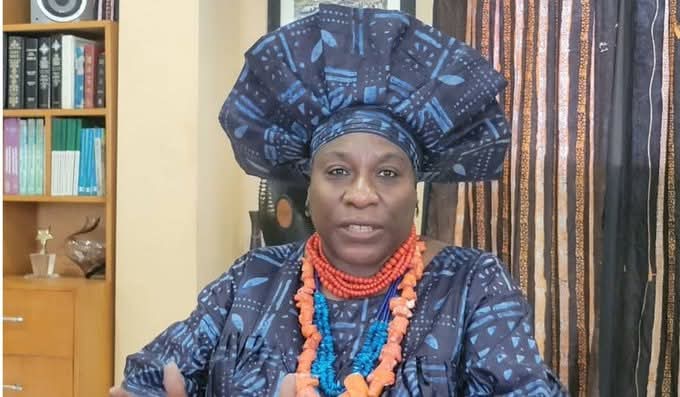
Political analysis loses its compass when it spends too much time staring into the rear-view mirror. This flaw anchors recent commentary questioning whether Senator Prof. Iyabo Obasanjo still commands the loyalty of Ogun Central. While the 2011 electoral verdict that ended her tenure remains a matter of historical record, framing 2027 as a mere rematch of a contest fought fifteen years ago ignores how dramatically political landscapes shift. The electorate heading to the polls in January 2027 will not vote on old grudges; they will vote on contemporary realities, local visibility, and a distinct contrast in leadership.
The central critique of Obasanjo’s political comeback relies heavily on her prolonged absence from frontline electoral office. Yet, arguing that political relevance has an expiration date misunderstands what she did during those years. Obasanjo transitioned from conventional politics into rigorous academia, ultimately achieving the rank of professor in the United States. Rather than desperately clinging to political office, she expanded her international exposure, built profound professional expertise, and enriched her intellectual credentials. Far from being a liability, this trajectory means she returns to the public sphere not as a standard career politician, but as a heavily accomplished public intellectual equipped with a national and international profile.
Critiques also underestimate the changing dynamics within Ogun Central itself. The political environment of 2011—marked by severe internal fractures within the Peoples Democratic Party—has given way to an entirely different structural reality. The incumbent senator, Shuaib Afolabi Salisu, occupies the seat today, meaning the upcoming election is a referendum on his stewardship rather than a replay of past party implosions. On the ground across the six local government areas of Ogun Central, a curious silence often surrounds the incumbent. While absence from media headlines does not automatically equal weakness, persistent questions regarding grassroots visibility leave an opening for a challenger who is actively pounding the pavement.
Obasanjo has addressed this gap through a deliberate, grassroots-driven strategy. Operating through the emerging Iyaniwura structure, her campaign has bypassed exclusive elite circuits to engage voters directly across polling units, wards, and local government areas. Politics is ultimately won where people live, and this meticulous network-building demonstrates an understanding that an established surname alone cannot carry an election. While her famous pedigree provides immediate recognition, it is her physical presence, community consultations, and active dialogue with traditional and political stakeholders that are actively constructing a new political memory.

Incumbency carries the distinct burden of defending an existing record, whereas a challenger sells possibility. By actively contrasting her academic and legislative background with the current representation in Ogun Central, Obasanjo is forcing voters to weigh past potential against present performance. Defections and minor structural shifts are inevitable in any fluid campaign ecosystem, but they pale in significance compared to sustained grassroots momentum.
January 2027 will ultimately settle the debate at the ballot box. If her opponents rely entirely on the narrative of a fifteen-year absence, they risk missing the ground-up resurrection of a formidable political machine. Should Obasanjo successfully convert her expanding grassroots visibility into votes, her return will prove that political relevance is never permanently extinguished—and that the future belongs to those who show up where it matters most.
Do you want to advertise with us?
Do you need publicity for a product, service, or event?
Contact us on WhatsApp +2348033617468, +234 816 612 1513, +234 703 010 7174
or Email: validviewnetwork@gmail.com
CLICK TO JOIN OUR WHATSAPP GROUP