

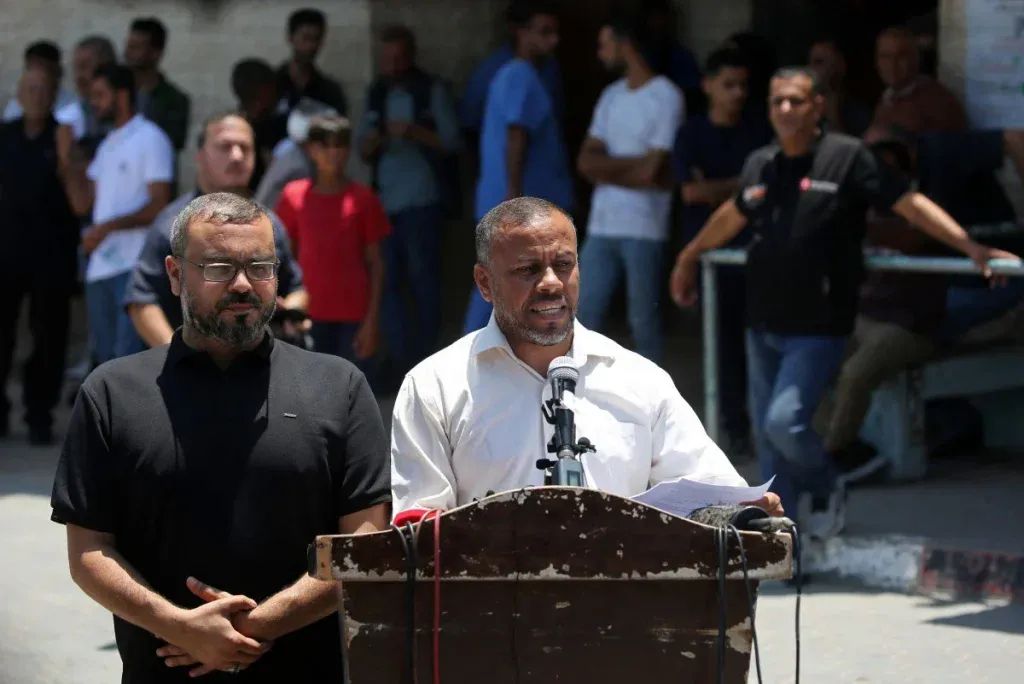
In a significant political development, the Palestinian Islamist movement Hamas announced on Monday, July 6, 2026, that it is dissolving the governing committee that has controlled the Gaza Strip for nearly two decades. The move is intended to facilitate a transition toward civilian administration under a non-factional technocratic body.
A Path to Technocratic Governance
The decision, confirmed by Hamas media official Ismail al-Thawabta, follows the resignation of Mohammed al-Farra, the head of the group’s emergency committee. By dissolving the committee, Hamas aims to clear the way for the National Committee for the Administration of Gaza (NCAG) to assume responsibility for the territory.
The NCAG, led by Palestinian civil engineer and technocrat Dr. Ali Shaath, was established under a framework brokered during the October 2025 ceasefire agreement. It is designed to oversee the rehabilitation of civil institutions and the restoration of essential public services in the war-devastated territory.

Stalled Negotiations and Challenges
The transition comes as international mediators—including Egypt, Qatar, and Türkiye—struggle to move beyond the first phase of the ceasefire agreement established by U.S. President Donald Trump. While the first phase saw the release of hostages and detainees, the second phase has remained stalled for months.
Key hurdles to the transition include:
- Disarmament: The central point of contention remains the disarmament of Hamas. The group has repeatedly stated it will not surrender its arsenal until a stable, recognized Palestinian administration is fully functional and the security threat from Israeli-backed militias is addressed.
- Access Issues: Despite the NCAG’s formation in early 2026, its members have remained based outside of Gaza due to objections from Israel, which has rejected both a return of Hamas to power and an immediate, direct takeover by the Ramallah-based Palestinian Authority.
- Expanding Military Presence: Recent UN reports indicate that Israeli forces have continued to expand their areas of control within Gaza, further complicating the humanitarian situation and impeding the delivery of essential services.
Political Implications
Hamas spokespeople, including Hazem Qassem, have framed the dissolution as a strategic step to “remove any pretexts for the occupation” and to streamline the transition to a governance model that is acceptable to international partners. The move has reportedly been welcomed by other Palestinian factions, who view it as a necessary measure to enable the NCAG to fulfill its mandate and begin the long-term reconstruction of Gaza.
Status of Gaza Ceasefire Negotiations
This report from WION provides additional context on the ongoing difficulties surrounding the Gaza ceasefire negotiations and the broader regional impact as of late June 2026.
Do you want to advertise with us?
Do you need publicity for a product, service, or event?
Contact us on WhatsApp +2348033617468, +234 816 612 1513, +234 703 010 7174
or Email: validviewnetwork@gmail.com
CLICK TO JOIN OUR WHATSAPP GROUP