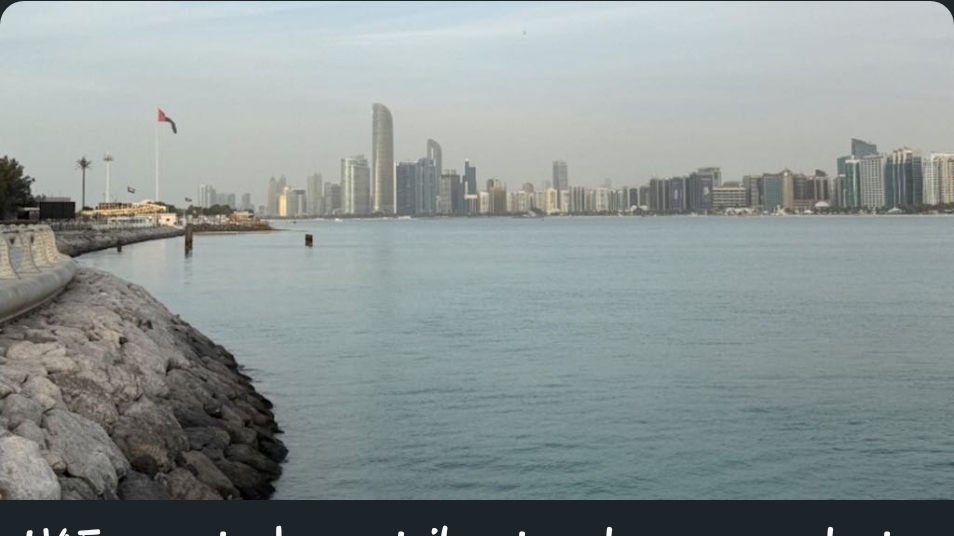
ABUJA — Global energy markets and geopolitical fault lines were severely jolted on Sunday after a hostile drone strike infiltrated deep into the United Arab Emirates (UAE), triggering a fire at an electrical installation right outside the inner security perimeter of the Barakah Nuclear Power Plant.
The high-stakes assault on the multi-billion-dollar facility—the Arab world’s first commercial nuclear power station—comes at a highly volatile moment, as high-level diplomatic efforts to resolve the ongoing United States-Israeli war with Iran remain deadlocked.
The Abu Dhabi Media Office and the UAE Ministry of Defence confirmed that three unmanned aerial vehicles (UAVs) violated Emirati airspace, originating from the country’s “western border direction.” While state air defence systems successfully intercepted and neutralized two of the oncoming incoming drones, a third managed to penetrate the defensive grid, directly striking an electrical generator outside the main reactor boundary in the remote Al Dhafra region.
Radiation Levels Safe, IAEA Demands Restraint
Emirati nuclear regulators moved quickly to prevent international panic, confirming that the facility’s core infrastructure weathered the attack entirely unscathed.
”No injuries were reported, and there was no impact on radiological safety levels,” the Abu Dhabi Media Office announced in an emergency brief. The Federal Authority for Nuclear Regulation (FANR) further clarified that the fire failed to compromise the safety or readiness of the plant’s primary systems.
Confirming the status of the facility, the International Atomic Energy Agency (IAEA) revealed that emergency diesel back-up systems were immediately deployed to sustain power to “Unit 3” of the plant. Expressing grave systemic concern, IAEA Director-General Rafael Grossi heavily condemned the assault, warning that any military activity directly threatening nuclear infrastructure is completely unacceptable, while forcefully appealing for “maximum military restraint.”
An operational representative from the Korea Electric Power Corporation (KEPCO), which co-manages the heavily fortified station, added that reactor units were briefly throttled down or halted entirely as a textbook precautionary measure to ensure structural integrity.
Dangerous Escalation in Regional Proxy War
While Abu Dhabi has launched a comprehensive intelligence probe into the exact source of the launch and has not yet explicitly laid blame, the UAE Foreign Ministry issued a blistering denunciation, labeling the operation a “dangerous escalation and an unacceptable act of aggression.” The ministry formally stated that the Gulf nation reserves its full, legitimate, and sovereign diplomatic and military rights to respond to any hostility threatening its territorial integrity.
The strike marks a critical flashpoint in the regional war, which originally erupted on February 28 following massive, unprovoked U.S. and Israeli airstrikes against the Islamic Republic of Iran. Since the outbreak of hostilities 11 weeks ago, Tehran has launched an estimated 3,000 ballistic missiles and combat drones across the Gulf, systematically targeting states like the UAE that host major American military bases in a bid to drastically drive up the economic cost of the war for Washington and its regional allies.
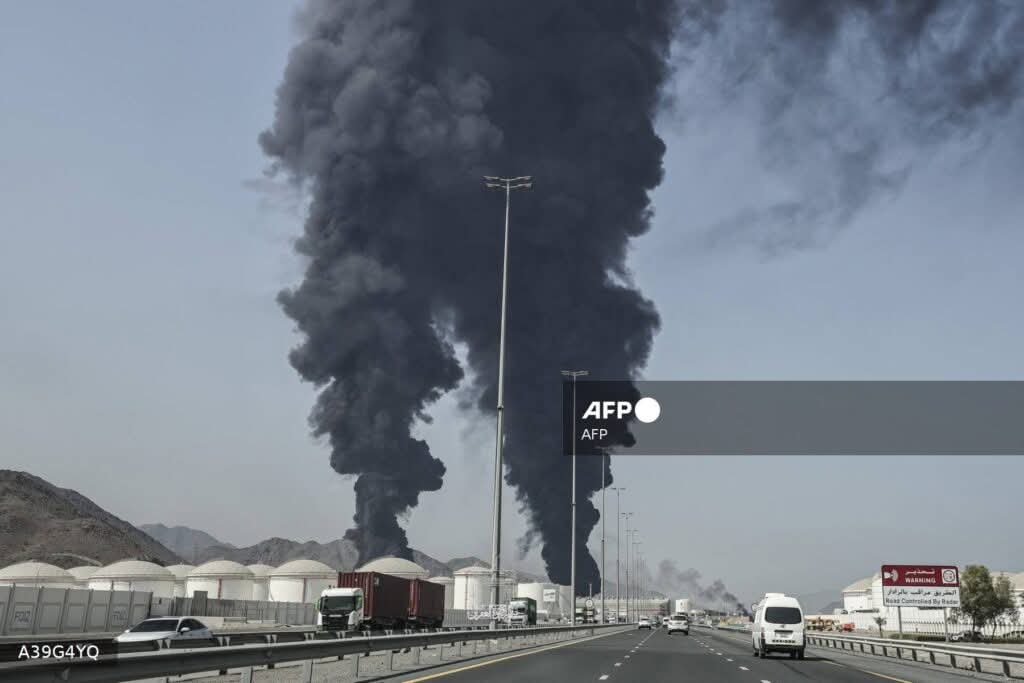
Tensions had temporarily boiled over earlier this month when U.S. President Donald Trump deployed an aggressive naval task force to forcefully reopen the Strait of Hormuz—the world’s most vital maritime oil and gas chokepoint, which Iran has effectively held under blockade. Though Trump abruptly suspended the naval mission within 48 hours, the military posture sparked a retaliatory surge of Iranian drone incursions across the Arabian peninsula.
Diplomatic Deadlock Hardens
The drone strike comes five weeks into a highly fragile, international ceasefire that has completely failed to halt sporadic kinetic exchanges. Diplomatic insiders report that peace negotiations managed by international mediators have hit an absolute brick wall due to diametric demands from both warring coalitions.

The White House has adamantly demanded that Tehran completely dismantle its nuclear enrichment programme and immediately relinquish its military blockade of the Strait of Hormuz. Conversely, the Iranian Foreign Ministry, represented by spokesperson Esmaeil Baqaei, has refused to budge, demanding billions of dollars in sovereign compensation for war damage, a total lift of the counter-blockade on Iranian shipping ports, and a permanent cessation of Israeli military operations across both Iran and southern Lebanon, where heavy clashes against Iran-backed Hezbollah forces continue to rage despite a newly signed 45-day truce extension.
Do you want to advertise with us?
Do you need publicity for a product, service, or event?
Contact us on WhatsApp +2348033617468, +234 816 612 1513, +234 703 010 7174
or Email: validviewnetwork@gmail.com
CLICK TO JOIN OUR WHATSAPP GROUP
As the war enters its third month with thousands of casualties documented across multiple fronts, senior military commanders in Tehran have issued stiff warnings. General Abolfazl Shekarchi, a senior spokesperson for the Iranian Armed Forces, cautioned on Sunday that if the U.S. resumes direct bombardment, it will face “aggressive and surprise scenarios” capable of sinking western forces into a permanent, self-made quagmire.