

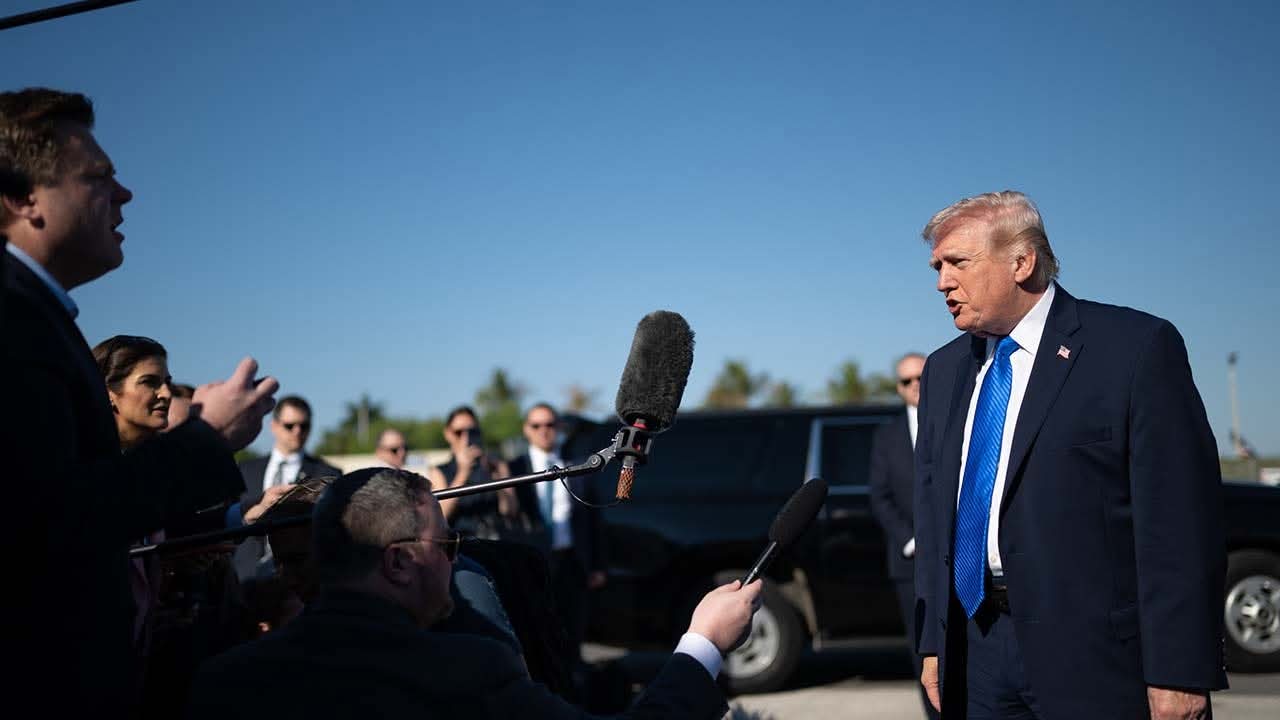
WASHINGTON —In a groundbreaking move, United States President Donald J. Trump on Wednesday became the first sitting president in American history to attend a Supreme Court oral argument session, thrusting himself into the heart of a fiercely divisive legal battle over birthright citizenship.
Trump’s presence at the Supreme Court in Washington DC coincided with arguments in Trump v. CASA Inc., a consolidated case challenging his January 20, 2026, executive order. The order directs federal agencies to deny automatic citizenship to children born on US soil to undocumented immigrants or those on temporary visas, directly targeting the 14th Amendment’s citizenship clause: “All persons born or naturalized in the United States, and subject to the jurisdiction thereof, are citizens.”
No sitting president has ever attended Supreme Court arguments since the court’s founding in 1789, according to SCOTUSblog and historical records from the US National Archives. Trump’s attendance—seated in the public gallery alongside White House counsel and key advisors—intensified the courtroom drama, with legal observers noting it as an unprecedented bid to signal resolve amid a polarized nation.
The case stems from lawsuits filed by immigrant rights groups like CASA and the ACLU immediately after the order’s issuance. Lower courts, including a federal district judge in Texas and the Ninth Circuit Court of Appeals, issued nationwide injunctions blocking enforcement, citing precedents like the 1898 ruling in United States v. Wong Kim Ark, which affirmed birthright citizenship (jus soli) for children of non-citizens.
Supporters of Trump’s order, including Republican lawmakers and border security advocates, argue it closes a “loophole” exploited by “birth tourism” and chain migration, potentially affecting up to 300,000 annual births per Census Bureau estimates. Critics, including Democrats and civil liberties groups, decry it as an assault on constitutional bedrock, warning of family separations and a “second-class citizen” underclass.
Outside the court, protests erupted on both sides. Pro-Trump demonstrators waved “America First” signs, while counter-protesters chanted “No human is illegal.” Senate Minority Leader Chuck Schumer called Trump’s appearance “a blatant attempt to intimidate the justices,” while House Speaker Mike Johnson hailed it as “leadership in action.”

The nine justices appeared divided during the two-hour session. Conservative justices like Clarence Thomas and Samuel Alito probed lawyers on the order’s narrow scope—excluding children of legal permanent residents or citizens—while liberal justices Sonia Sotomayor and Ketanji Brown Jackson questioned its fidelity to 150 years of precedent. A decision is expected by late June, ahead of the 2026 midterms, potentially reshaping immigration policy for millions.
Trump, speaking briefly to reporters post-hearing, framed the moment as “fighting for American sovereignty.” His attendance echoes his first-term clashes with the court but marks a new level of personal involvement, drawing comparisons to President Franklin D. Roosevelt’s failed 1937 court-packing scheme.
As the US grapples with record border encounters—over 2.5 million in fiscal 2025 per Customs and Border Protection—this ruling could redefine citizenship in the world’s largest economy, with ripple effects on global migration patterns.
Do you want to advertise with us?
Do you need publicity for a product, service, or event?
Contact us on WhatsApp +2348033617468, +234 816 612 1513, +234 703 010 7174
or Email: validviewnetwork@gmail.com
CLICK TO JOIN OUR WHATSAPP GROUP