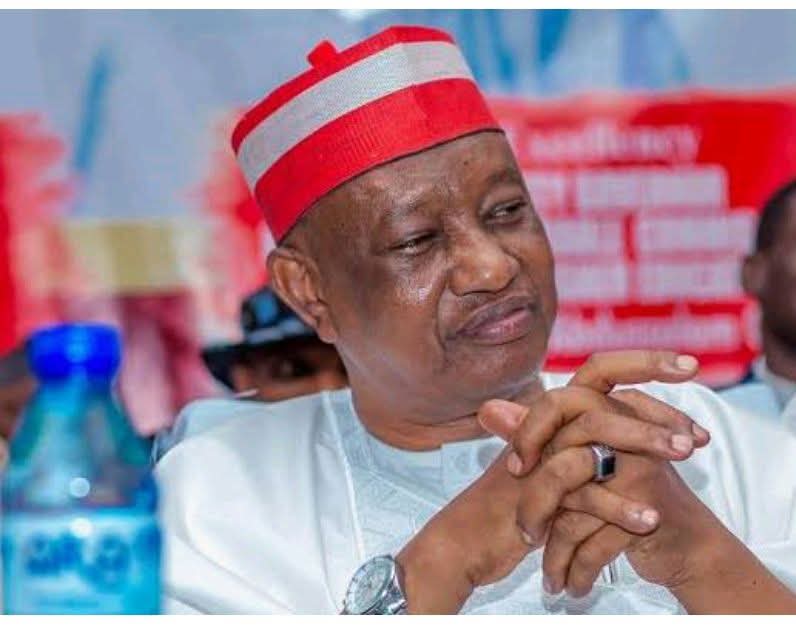
The political future of Kano State Deputy Governor Aminu Abdulsalam now hangs by a thread after the Kano State House of Assembly formally served him an impeachment notice, plunging Government House into fresh turmoil. Lawmakers moved against the embattled deputy on Thursday, invoking Section 188 of the 1999 Constitution (as amended) and accusing him of gross misconduct, abuse of office and breach of public trust in the discharge of his duties.
At plenary, 38 of the 40-member Assembly reportedly endorsed the notice, signalling a strong legislative consensus to see the process through. The Majority Leader, Lawan Hussaini, who moved the motion, anchored the impeachment bid on a petition from the Executive detailing alleged financial irregularities linked to Abdulsalam’s tenure as Commissioner for Local Government Affairs between 2023 and 2024, before he became deputy governor.
According to the petition read on the floor, Abdulsalam is accused of diverting hundreds of millions of naira allegedly creamed off local government funds under various guises over several months. The allegations include purported kickbacks totalling about ₦462 million between June 2023 and January 2024, as well as a further ₦726 million allegedly collected from councils between February and July 2024 for “special assignments” that lawmakers say did not follow due process.
He is also alleged to have facilitated the improper release of about ₦440 million to a private pharmaceutical firm, North Med Pharmaceutical Limited, in contravention of public procurement laws and state financial regulations. The Assembly insists that these claims, if established, amount to gross misconduct and a fundamental breach of public trust, and therefore meet the constitutional threshold for impeachment proceedings.
However, beneath the dense legal language and financial figures, many political observers in Kano and beyond see a deeper, more familiar struggle at play. Abdulsalam has remained one of the most prominent holdouts from the New Nigeria People’s Party (NNPP) in the state after his principal, Governor Abba Kabir Yusuf, dramatically dumped the NNPP and began aligning with the All Progressives Congress (APC) in January.
Governor Yusuf formally resigned from the NNPP in late January 2026, citing deepening internal crises and insisting that his decision to realign politically was taken in the “best interest” of Kano people. His defection, brokered at the highest levels of national politics, has reshaped the power map in Kano, handing him significant leverage within the APC and weakening the old NNPP structure built around Rabiu Musa Kwankwaso and the Kwankwasiyya movement.
Abdulsalam, by contrast, has refused to follow his boss into the APC and has publicly maintained his NNPP identity, a stance that has widened fault lines within the state’s governing elite. Capitol-watchers in Kano note that tensions between the governor’s camp and NNPP loyalists have been simmering for weeks, with the deputy governor increasingly seen as out of step with the new political direction of Government House.
For many pundits, therefore, the impeachment push appears to be as much about political realignment as it is about accountability. They argue that the timing—coming barely weeks after Yusuf’s defection—and the speed with which the Assembly is moving suggest a calculated effort to edge out a deputy who has refused to defect and consolidate the governor’s new alliance within the APC ahead of future electoral battles.

Whatever the motivations, Abdulsalam now faces a gruelling constitutional battle that could end his tenure as Kano’s number two citizen barely halfway into the administration’s term. Once formally served, he is expected to respond to the allegations, after which the Assembly may constitute a panel to investigate the claims and recommend whether he should be removed from office in line with Section 188.
In a state where political tempers have run high since the last election cycle and where shifts in party platforms often redraw loyalties overnight, the unfolding saga carries wider implications for the balance of power in Kano. It will test both the resilience of Nigeria’s impeachment framework and the uneasy marriage of law and politics, as Abdulsalam fights not just to save his seat, but to resist being swept aside by the tide of defection now reshaping the state’s political landscape.
Do you want to advertise with us?
Do you need publicity for a product, service, or event?
Contact us on WhatsApp +2348033617468, +234 816 612 1513, +234 703 010 7174
or Email: validviewnetwork@gmail.com
CLICK TO JOIN OUR WHATSAPP GROUP