

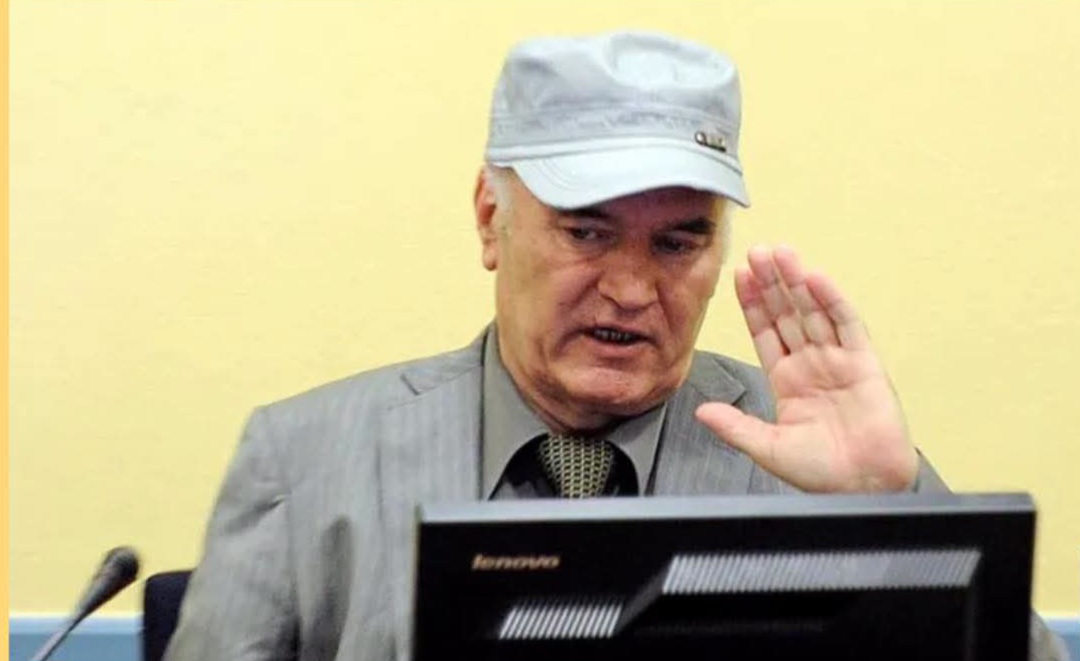
Ratko Mladić, the ruthless military commander who orchestrated the Srebrenica genocide and the brutal 44-month siege of Sarajevo during the breakup of Yugoslavia, has died at the age of 84.
Mladić passed away at a hospital within the United Nations detention facility in The Hague while serving a life sentence for genocide, war crimes, and crimes against humanity. His death closes the final chapter on the prosecution of the primary architects of the devastating 1992–1995 Balkan conflicts.
Dubbed the “Butcher of Bosnia” by his victims and opponents, Mladić commanded the Bosnian Serb army during a war that claimed over 100,000 lives and displaced millions. Under his direct orders, forces subjected the Bosnian capital of Sarajevo to a relentless campaign of sniper fire and heavy artillery, killing more than 10,000 civilians.
His military career reached its darkest nadir in July 1995 with the capture of Srebrenica. Declared a UN “safe area,” the enclave was overrun as Dutch peacekeepers stood by helplessly. Mladić’s troops systematically separated more than 8,000 Bosniak men and boys, executing them and burying their remains in mass graves in what remains Europe’s worst mass atrocity since World War II.
After the war, Mladić evaded international justice for 16 years, living in open defiance while shielded by nationalist networks and elements of the Serbian security apparatus. He was finally captured in 2011 at a relative’s farmhouse in rural Serbia and transferred to The Hague.

Throughout his protracted trial and subsequent appeal, Mladić maintained a posture of unrepentant defiance, rejecting the legitimacy of the UN tribunal. A trial chamber handed down a life sentence in 2017, which was formally upheld by UN appeals judges in 2021.
In his final months, amid rapidly failing health following multiple strokes, international judges rejected petitions for his compassionate release, ruling that he was receiving comprehensive medical care. Serbian authorities and his defense team had pushed aggressively for his repatriation to die at home, a plea sharply contrasted by survivors and victims’ associations who viewed his death behind bars as a necessary, if delayed, measure of accountability.
Do you want to advertise with us?
Do you need publicity for a product, service, or event?
Contact us on WhatsApp +2348033617468, +234 816 612 1513, +234 703 010 7174
or Email: validviewnetwork@gmail.com
CLICK TO JOIN OUR WHATSAPP GROUP