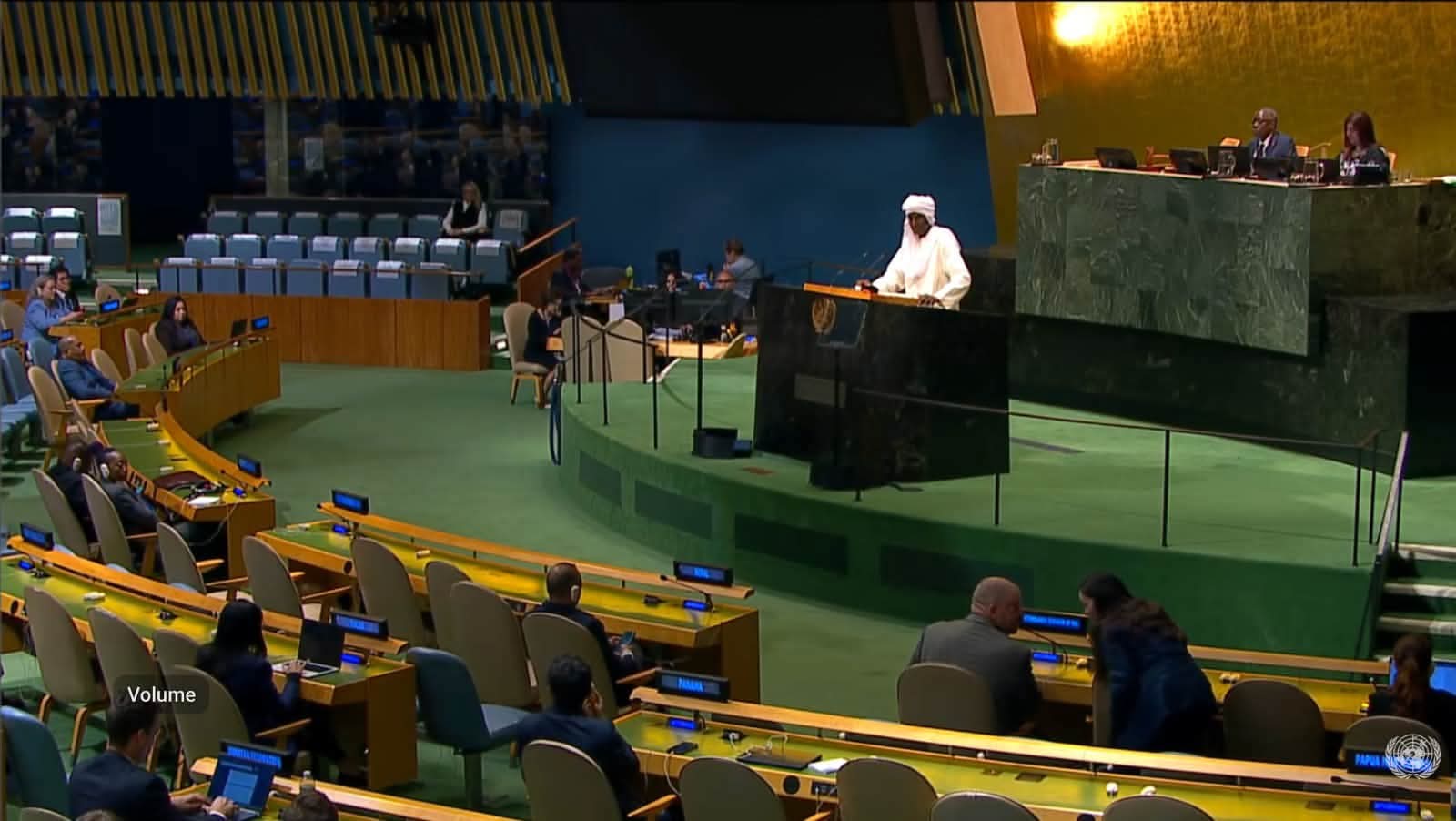
NEW YORK — In one of the most confrontational African addresses of the 81st United Nations General Assembly, Niger’s Prime Minister Ali Mahaman Lamine Zeine delivered a forceful defence of national control over natural resources, denounced what he called a “cynical machinery of recolonisation” in the Sahel, and issued a stark warning against external interference.
Speaking on 25 September 2026 on behalf of President Abdourahamane Tiani and the National Council for the Safeguard of the Homeland, Zeine framed the region’s insecurity not primarily as terrorism or religious conflict, but as a struggle over African resources. “Our Sahel is at war. It is in a war of liberation against a conspiracy aimed at recolonizing it,” he told the assembly. What some label terrorism, he argued, is “a cynical engineering of recolonisation, dressed in the trappings of extremism,” driven by covetousness for Niger’s uranium, the gold of Mali and Burkina Faso, lithium, gas, oil and other riches that “still make the former colonial powers salivate.”
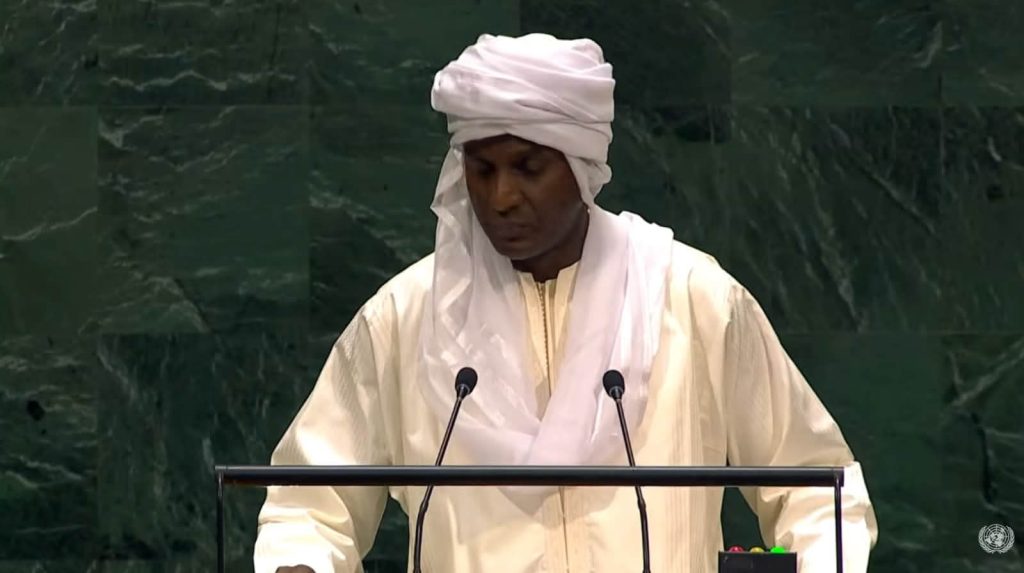
He singled out France, accusing it of conducting a “perfidious attempt to destabilise the central Sahel… with the active complicity of Ukraine.”
Zeine claimed armed proxies had been positioned near Niger’s northeastern frontier with the intention of attacking military positions and oil installations. “The Sahel sees. The Sahel hears. The Sahel remembers, and the Sahel understands things very well,” he declared.
“They are about to attack our military positions and our oil installations. But inshallah they will find what they deserve if they do so.” The remarks, delivered from the UN podium, marked a rare public and direct accusation linking the two countries to regional destabilisation.
Central to the speech was Niger’s assertion of full control over its uranium. “For more than half a century, Niger’s uranium has lit the cities of Europe while our cities have remained in darkness. That injustice is now over,” Zeine said.
He stated that the government recovered control of the Société des Mines de l’Aïr (SOMAIR) in June 2025 and that the uranium currently produced and stockpiled “belongs exclusively to Niger… It does not belong to anyone, and we will sell it to all those who wish to buy.” After foreign operators departed and equipment was allegedly sabotaged, Niger invested approximately 30 billion CFA francs to restart production using only Nigerien workers and experts. “Not a single foreigner was involved in that,” he added. The nationalisation has been contested by French state-backed miner Orano, which has pursued legal avenues, but Niamey has insisted the resource will be marketed transparently in line with non-proliferation obligations.

Zeine portrayed the Alliance of Sahel States (AES) — uniting Niger, Mali and Burkina Faso — as an irreversible project of sovereignty. “A profound, lasting, irrepressible and irreversible change, Inshallah,” he said. The confederation now fields a unified force of 5,000 troops, expandable toward higher targets, operates its own investment and development bank financed by member resources, issues a biometric passport, runs joint media outlets, and has established a confederal parliament whose first sessions took place in Niamey in late August 2026. “Our resources belong to our peoples. Our future will no longer be decided elsewhere,” he declared.
Domestic financing featured prominently. The government, Zeine said, is funding agriculture and basic social services through voluntary contributions from Nigeriens themselves, supplemented by revenues from minerals and oil that previously escaped state control. These resources are directed toward security, farming, electrification, water, sanitation, education and healthcare. He claimed that for the first time in decades Niger has faced neither food shortages nor the need for foreign food assistance, and that grain imports are targeted for a 50 per cent reduction by the end of 2027. Economic growth reached 7 per cent in 2025, driven largely by oil and agriculture, while inflation turned negative.
On partnerships, Zeine was explicit. He named Togo, Türkiye, Morocco, the Russian Federation and the People’s Republic of China as “true friends,” expressing “full gratitude.” Algeria received particular recognition as “a kindred and neighbouring country” for substantial investment in Niger’s resources, defence support, and cooperation in health, education, energy, water and agriculture. Mali and Burkina Faso were presented as the core of the AES family. The speech also reaffirmed support for a two-state solution in Palestine and Israel, called for protection of civilians in Gaza and unrestricted humanitarian access, and demanded that Africa’s exclusion from permanent UN Security Council membership end through concrete action on the Ezulwini Consensus rather than “sterile debates.”
Zeine closed with an uncompromising statement of principle: “Niger intends to fully exercise its sovereignty over its natural resources and will never again accept any restriction imposed from outside on its sovereign right to freely choose its partners. That right is inalienable and it is non-negotiable.”
The address stood apart from many contemporary African speeches at the UNGA by focusing less on appeals for external assistance and more on resource control, self-financing and a realignment of partnerships. Whether one accepts Niger’s characterisation of the Sahel conflict or its allegations against France and Ukraine, the speech signalled a clear determination by the military-led government to set the terms of its international relationships and the disposition of its mineral wealth.
Do you want to advertise with us?
Do you need publicity for a product, service, or event?
Contact us on WhatsApp +2348033617468, +234 816 612 1513, +234 703 010 7174
or Email: validviewnetwork@gmail.com
CLICK TO JOIN OUR WHATSAPP GROUP