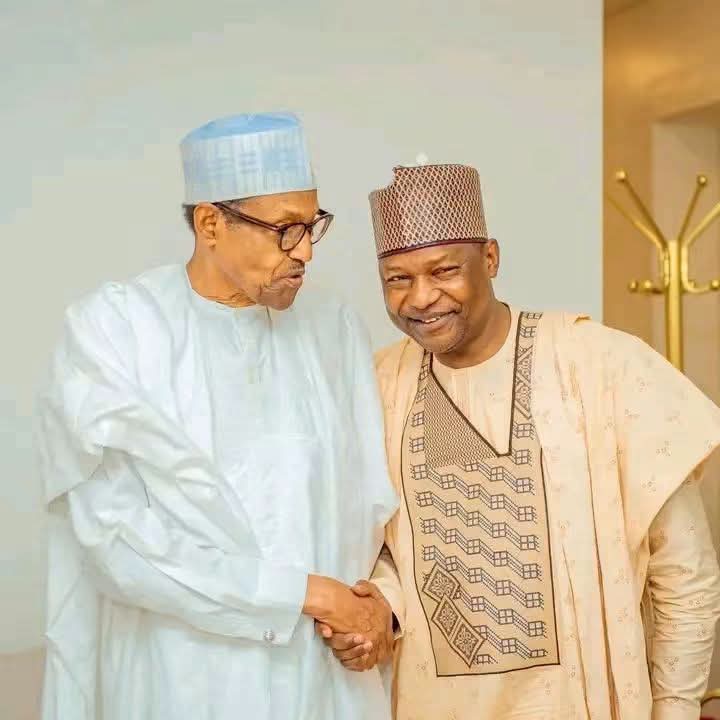
The Office of former Attorney-General of the Federation and Minister of Justice Abubakar Malami, SAN, has welcomed Nigeria’s decisive victory in the long-running international arbitration over the Mambilla Hydroelectric Power Project, while firmly rejecting serious findings of corruption levelled against him by the tribunal.
An International Chamber of Commerce (ICC) tribunal in Paris, in its final award delivered around 16-17 September 2026, dismissed claims by Sunrise Power and Transmission Company Limited that sought hundreds of millions of dollars—and in related proceedings, potential exposure running into billions—linked to the stalled 3,050-megawatt project in Taraba State. The panel ordered Sunrise and its promoter, Leno Adesanya, to reimburse Nigeria for 75 per cent of its legal fees and expenses (approximately $11.8 million) plus interest, while rejecting demands tied to a disputed $200 million settlement and a further $200 million default sum.
President Bola Tinubu and current Attorney-General Lateef Fagbemi have hailed the outcome as clearing a major legal obstacle that had delayed financing and progress on one of Nigeria’s largest hydroelectric schemes for nearly two decades. Malami’s office described the result as one every patriotic Nigerian should celebrate, regardless of political affiliation, noting that it shields the country from substantial financial exposure.
Yet the 616-page award has generated intense public debate because of critical observations about Malami’s role in settlement talks during his tenure. Media reports highlight findings that a settlement agreement and subsequent addendum were not binding on Nigeria—lacking presidential approval—and were tainted by corruption contrary to public policy. The tribunal reportedly concluded that Malami maintained an inappropriate relationship with Adesanya and that a corrupt arrangement existed under which the former Attorney-General was allegedly promised a share of money Sunrise would receive.
Malami’s office stressed that the proceedings were commercial arbitration between parties to a contractual dispute, not a criminal prosecution. Malami was neither a party to the case nor given the opportunity to present his own side. The award, it said, does not amount to a criminal conviction. “Those matters should not be ignored, trivialised or answered by speculation,” the statement noted. “Equally, findings of that gravity should be considered against the complete evidentiary and documentary record, rather than through selected passages circulating in the media.”
A fuller response addressing each finding will follow once the complete award and underlying records have been carefully examined. In the meantime, the office placed several points of historical and documentary context before the public.
A dispute that long predated Malami
The Mambilla controversy did not begin under Malami. Sunrise became involved in the proposed project around 2003. Competing contractual claims and litigation stretched across multiple administrations. Years before Malami took office, then Attorney-General Michael Aondoakaa had reviewed the matter and recommended an amicable resolution in Nigeria’s interest. In November 2012, the Federal Government entered a General Project Execution Agreement involving Sunrise and Sinohydro as part of efforts to resolve the impasse and move the project forward.
Malami, the statement said, neither created the dispute, introduced Sunrise, nor originated the government’s settlement efforts. He inherited a longstanding controversy that had already passed through successive administrations, Attorneys-General, ministries and contractual arrangements.
Governmental and presidential processes guided his involvement
Upon assuming office, Malami did not independently initiate intervention. In April 2016, the Chief of Staff to President Muhammadu Buhari communicated a presidential directive on resolving outstanding disputes and competing interests around the project. As the Federation’s chief legal officer, Malami was required to advise on legal exposure and possible solutions.
The Ministry of Justice was not the executing agency or the original contract-awarding ministry; its role was primarily advisory.
By 2019, the unresolved Sunrise arbitration was viewed as an obstacle to financing discussions involving China Exim Bank. Records refer to discussions that September involving President Buhari and a special representative of Chinese President Xi Jinping on resolving the arbitration.
Settlement talks formed part of a broader governmental effort to clear legal hurdles to a major national power project.
Why a $200 million figure was on the table
Sunrise was asserting claims running into billions of dollars. During negotiations in London in November 2019, the company initially proposed $500 million as full and final settlement. Federal Government representatives countered with $100 million. A $200 million figure emerged from the talks.
The calculation at the time, according to Malami’s office, was whether an asserted multi-billion-dollar exposure, continuing litigation, financing difficulties and project delays could be ended through a substantially smaller negotiated sum. Whether every negotiated term ultimately served that objective is a separate question that must be examined on the evidence.
President Buhari’s clear refusal
President Buhari did not approve payment of the $200 million. On 20 April 2020, he indicated that the Federal Government did not have the funds. Malami communicated that position to Sunrise two days later. Subsequent efforts to obtain approval, including a January 2021 request on which the President wrote “Not approved,” also failed.

After the refusal, Malami did not order payment. When Sunrise claimed Nigeria was in default and sought to rely on enhanced financial consequences under the settlement arrangements, Malami instructed counsel representing the Federal Government to resist enforcement and protect Nigeria’s legal position. That subsequent conduct, the office argued, forms part of the same evidentiary record and cannot be excised from any fair assessment.
Rejection of the corruption allegation
Malami categorically rejects any suggestion that his official actions were undertaken pursuant to a corrupt agreement or in exchange for personal financial benefit. One central factual question, the statement said, is whether any money or other financial benefit from Sunrise, Adesanya or any connected entity was ever received by him. The settlement money itself was never paid by the Federal Government.
Reports indicate that Adesanya claimed to possess audio or video recordings relevant to his allegations, but those recordings were not produced before the tribunal. Where allegations of this seriousness are made, the existence, non-production, authenticity and contents of any such materials are matters of obvious evidentiary importance.
Arbitration finding versus criminal conviction
None of this diminishes the seriousness of the tribunal’s reported findings, which require a thorough documentary response. Accuracy, however, demands recognition of the nature of the proceedings. An international commercial arbitral tribunal determined contractual claims submitted to it. It was not a Nigerian criminal court, and Malami was not on trial. He was neither a party nor given the chance to state his case.
If allegations of criminal wrongdoing are to be pursued, they must proceed through the appropriate lawful processes with the evidentiary and procedural protections that apply.
Nigeria’s victory remains the central outcome
The Federal Republic of Nigeria ultimately defeated Sunrise’s enormous claims. Defence lawyers engaged during Malami’s tenure and investigations by the Economic and Financial Crimes Commission, conducted on his instructions, formed part of the effort that strengthened the country’s case. The Presidency has publicly confirmed the tribunal’s rejection of the claims and the award of substantial costs in Nigeria’s favour.
Malami, as a former Attorney-General, remains gratified whenever Nigeria’s legal interests and public finances are successfully protected, irrespective of the administration under which the result is secured. The Mambilla controversy spanned several governments, Attorneys-General, ministries, international contractors, presidential decisions, contractual arrangements and years of litigation and arbitration. Its history cannot accurately be reduced to a single headline or attributed entirely to one public officer.
Do you want to advertise with us?
Do you need publicity for a product, service, or event?
Contact us on WhatsApp +2348033617468, +234 816 612 1513, +234 703 010 7174
or Email: validviewnetwork@gmail.com
CLICK TO JOIN OUR WHATSAPP GROUP
The office called on journalists, commentators and political actors to distinguish established facts from allegation and interpretation; to distinguish an arbitral finding from a criminal conviction; and, particularly as the country approaches the 2027 electoral cycle, to allow the complete documentary record rather than partisan considerations to shape public understanding.
A more comprehensive response addressing the tribunal’s individual findings will be issued after careful study of the full award and relevant records.