


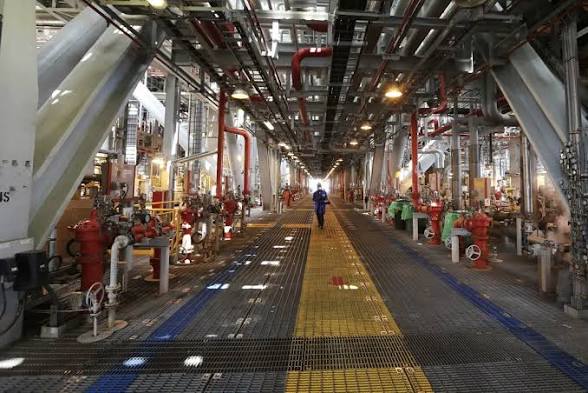
Nigeria has spent years asking the same question; why are oil companies leaving while the country sits on enormous petroleum reserves?
The Federal Government has now offered investors a more aggressive answer.
Under a new deep offshore fiscal framework approved by President Bola Tinubu, qualifying new projects can restart the profit oil sharing scale at 70:30 in favour of contractors, even where existing production in the same contract area has already moved to a higher government share.
The government says the measure is designed to unlock investment and revive projects that have remained commercially stranded.
At first glance, giving contractors 70 per cent of profit oil sounds like Nigeria is giving away its oil.
That is the wrong way to understand the policy. The more important question is what Nigeria would receive from a field that never gets developed versus a field that becomes commercially viable.
The government is betting on the latter. The Nigerian Upstream Petroleum Regulatory Commission says 22 offshore projects could attract between $30 billion and $50 billion in investment between 2026 and 2030.
That is the opportunity.The danger is equally obvious.

Why Nigeria is offering so much
Nigeria’s oil industry has spent years fighting underinvestment, regulatory uncertainty, insecurity, oil theft, delays and a fiscal system investors often considered unattractive.
The Petroleum Industry Act of 2021 was supposed to change that by creating a clearer regulatory framework and new fiscal arrangements.
Nigeria has since pursued licensing rounds, tax reforms and investment incentives to bring capital back into upstream production. The 2025 licensing round alone offered 50 blocks and was projected to attract about $10 billion.
There are already signs that the strategy can produce results. ExxonMobil and its partners announced a $1 billion investment in the Usan offshore project in July, with production expected to increase by about 40,000 barrels per day.
So this is not simply government throwing incentives into the air. There is a real investment problem to solve. But there is also a history Nigeria must not forget.
For decades, the country has struggled with opaque petroleum arrangements, delayed projects, environmental damage, oil theft, questionable transactions and disputes over who receives the real value from its natural resources.

That is why the 70:30 ratio cannot be judged in isolation. The critical questions are whether contracts are transparent, whether companies actually invest the promised capital, whether production increases, whether government receives all its legitimate taxes and royalties, and whether communities benefit.
The PIA also provides mechanisms around host communities and environmental obligations, while newer production-sharing agreements include work commitments and decommissioning and remediation requirements.
Those safeguards matter. Because Nigeria does not have a shortage of oil. Nigeria has historically had a shortage of value extracted from its oil.
And what does all this mean for the man on the street?
This is where the story becomes less technical. The ordinary Nigerian does not wake up asking about profit oil. He wants electricity. He wants cheaper transport. He wants a functioning hospital. He wants jobs. He wants roads that do not destroy his vehicle. He wants government revenue to mean something beyond figures announced in Abuja.
If the new incentive brings billions of dollars into Nigeria, increases production and generates additional government revenue, the policy could eventually strengthen the naira economy, create jobs and provide more resources for public services.
But there is no automatic pipeline from 70:30 profit oil to cheaper bread. That connection has to be created through competent regulation, transparent revenue collection and responsible public spending.
And that is where experts’ central concern becomes important; investors do not merely chase generous fiscal terms. They want certainty over the entire life of a project.
Do you want to advertise with us?
Do you need publicity for a product, service, or event?
Contact us on WhatsApp +2348033617468, +234 816 612 1513, +234 703 010 7174
or Email: validviewnetwork@gmail.com
CLICK TO JOIN OUR WHATSAPP GROUP
A favourable contract cannot compensate indefinitely for regulatory instability, delays, infrastructure weaknesses or policy reversals.
ValidViewNetwork reports that Nigeria is therefore making a calculated gamble. Give investors enough incentive to spend billions developing difficult offshore fields, then ensure that the resulting production, taxes, royalties and economic activity generate more value for the country than leaving those resources underground.
That is potentially smart economics. But Nigeria has tried attractive oil arrangements before. This time, the difference must be transparency, enforcement and accountability.
Otherwise, Nigeria will once again have succeeded in attracting investors while failing to make its citizens feel rich from the wealth beneath their feet.



