

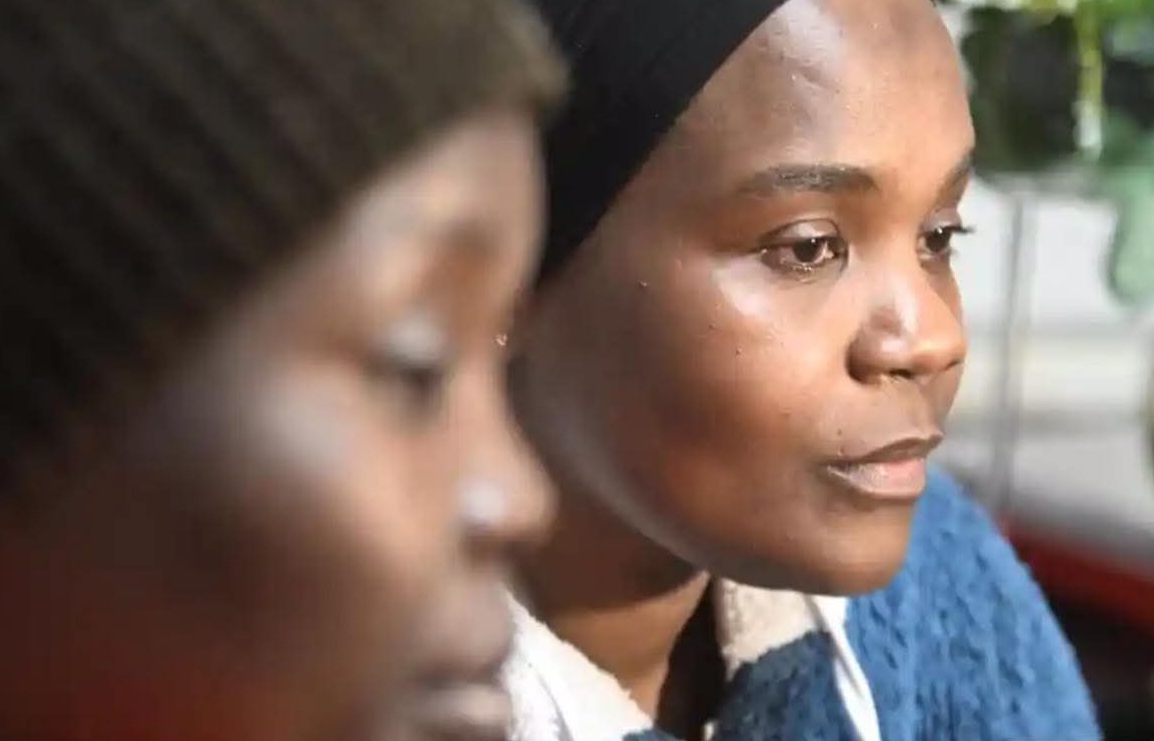
BELFAST — For four agonizing hours, Sumayah Nakazibwe and Stella Ariokot could do nothing but watch the smoke seep under their front door. Outside their home near Crumlin Road in North Belfast, the street had been transformed into a war zone. A hostile, masked mob was setting fire to cars, dragging wheelie bins into the road to fuel makeshift barricades, and pelted windows with heavy masonry.
The two Ugandan women, who moved to Northern Ireland to work as care providers, found themselves barricaded inside as a wave of violent anti-immigration riots swept across the city. The unrest erupted following a knife attack earlier in the week, weaponized online by far-right agitators despite explicit pleas for calm from the victim’s own family.
’It Was So, So Terrifying’
What began as a march quickly devolved into targeted devastation. “It started with people marching—young boys, aged about nine to 20,” Nakazibwe recalled, her voice still shaking from the ordeal. “They were all in black and wearing masks.”
From their window, the women watched the group ignite a bus’s tires. Within minutes, the violence turned down their own street—a diverse, tight-knit pocket of North Belfast where Romanian, Nigerian, British, and Irish families have lived side by side for years.
As petrol bombs ignited cars and flames spread to adjacent properties, dense, toxic smoke began filling their home. With emergency services stretched to the limit by dozens of arson attacks across Belfast, it took firefighters more than thirty minutes to navigate the chaos and reach the scene.
The terror peaked when rioters began smashing the front windows with bricks. The sheer panic caused Nakazibwe to collapse.

”When they started throwing stones onto our windows, she passed out,” Ariokot said. “I had to stay on the line talking to the ambulance people, and they were directing me what to do, but thank God she woke up.”
Uniforms as Body Armor
Trapped inside the burning neighborhood, the women were told by emergency dispatchers that the streets were too volatile for a standard evacuation. In a striking indictment of the evening’s lawlessness, first responders advised the women to put on their healthcare uniforms. The hope was that the visual cue of a medical professional might act as a shield if rioters successfully breached the front door.
”Someone rioting doesn’t know the person they’re targeting might be caring for their mother or grandmother,” Nakazibwe noted bitterly. “Meanwhile, I’d left my own mother back home.”
The women were ultimately saved by the intervention of their church leader, Pastor Jack McKee of the New Life City Church. Hearing that members of his congregation were trapped, McKee drove directly into the riot. He discovered a scene he described as “horrendous,” with four fire engines blocked by a crowd of roughly twenty masked men holding bricks.
McKee approached the mob and pleaded for a ten-minute window to evacuate the women safely. In a rare moment of compliance, some of the men dropped their bricks, allowing McKee to rush the traumatized women into his vehicle under the cover of active fire hoses.
A Community Divided
The aftermath of Tuesday night’s riots has left Belfast reeling. Families from Sudan, Romania, and Ukraine have been forced to flee their homes, leaving behind blackened brickwork and shattered glass.
Political leaders, including Northern Ireland First Minister Michelle O’Neill and UK Prime Minister Keir Starmer, have fiercely condemned the violence, labeling the attacks as “disgusting cowardice.”
For Nakazibwe and Ariokot, who have temporarily relocated to a safe house, the psychological scars run deep. A neighborhood they once viewed as a peaceful sanctuary now feels unrecognizable.
”I understand there are good people out there; the people who are actually rioting do not represent the whole community,” Nakazibwe said, though she admitted the trauma has made her reconsider her future in the country. “To me, it was a very peaceful place until yesterday. It is just too much. I felt like maybe I’m just giving up… like maybe it’s high time I go home.”
Do you want to advertise with us?
Do you need publicity for a product, service, or event?
Contact us on WhatsApp +2348033617468, +234 816 612 1513, +234 703 010 7174
or Email: validviewnetwork@gmail.com
CLICK TO JOIN OUR WHATSAPP GROUP