

By Magnus Onyibe
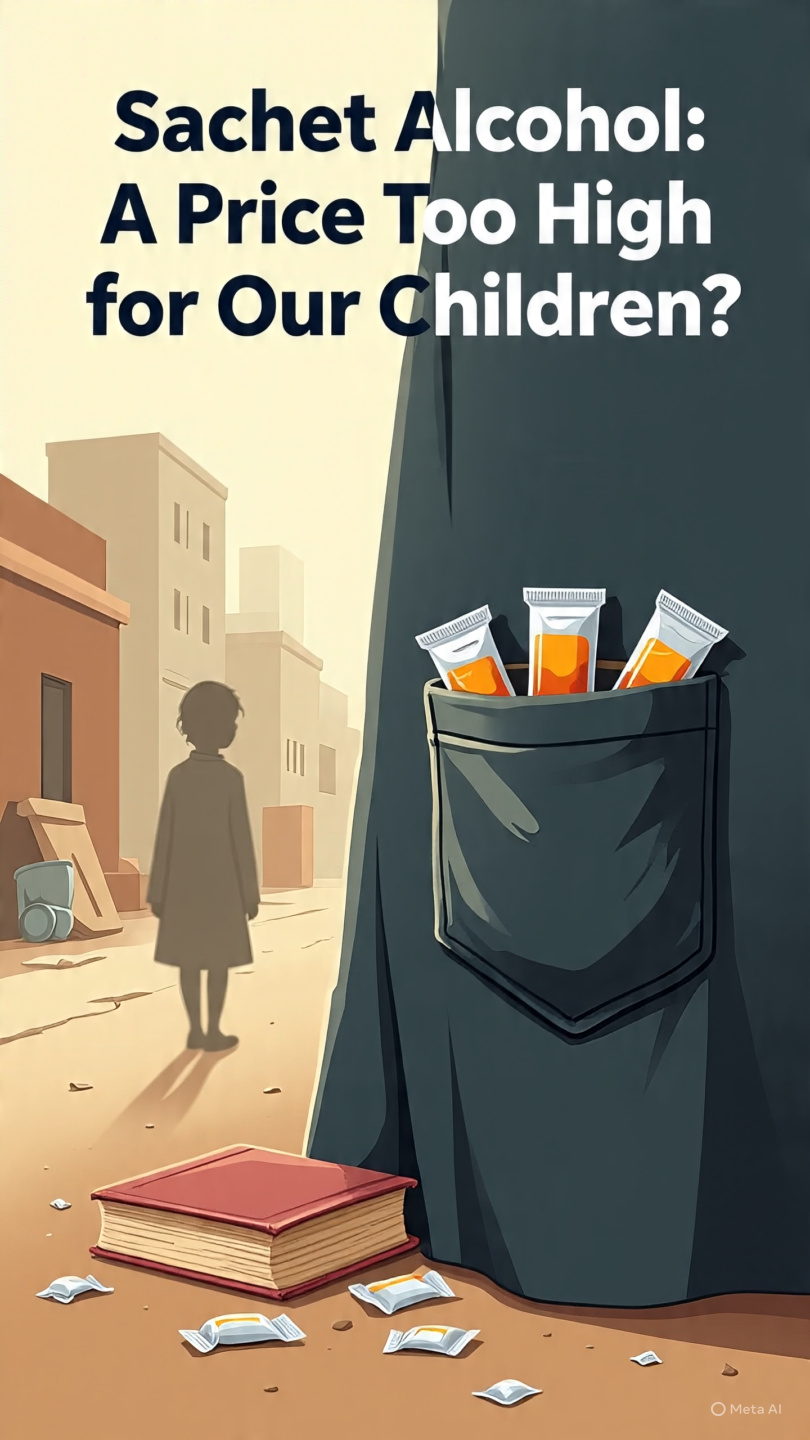
The National Agency for Food and Drug Administration and Control (NAFDAC) recently took a definitive stand by banning the production and sale of alcohol in sachets and small bottles (below 200ml). While critics label this regulatory overreach, the reality is far more sobering: this is a long-overdue intervention to shield Nigeria’s youth from a spiraling crisis of addiction.
Profit vs. Public Health
Effective as of early 2026, the ban targets products that are uniquely dangerous due to their high concentration, low price point, and ease of concealment. Despite multiple extensions, manufacturers continue to resist, citing potential job losses and economic strain. However, beneath these corporate concerns lies a troubling hierarchy where profit is prioritized over the safety of the most vulnerable.
Industry players argue for “stricter age enforcement” and “better labeling” instead of an outright ban. Yet, in a landscape where regulatory resources are already stretched thin, such measures are often performative. Relying on enforcement alone in a country battling widespread substance abuse is, at best, optimistic and, at worst, a stall tactic.

The Ease of Access
The marketing genius behind sachet products is “affordability.” For essential goods like milk, detergent, or water, mini-packaging is a lifeline for low-income households. But alcohol is not an essential commodity. By applying the “pure water” model to hard liquor, manufacturers have inadvertently (or intentionally) created a product perfectly suited for school bags and pockets.
The social costs are already visible:
- Crime Link: Direct correlations exist between cheap alcohol abuse and the rise of urban unrest and “Area Boy” syndrome.
- Enforcement Fatigue: A police force already battling domestic terrorism cannot be expected to monitor every street corner for minors with 50ml sachets.
- Gateway Effect: As the NDLEA tightens its grip on illicit drugs like Tramadol, cheap alcohol has become the next “low-hanging fruit” for teenagers.
The Path to Innovation
This ban should not be viewed as an execution order for the spirits industry, but as a mandate for innovation. Globally, the beverage industry is pivoting toward:
- Premiumization: Focusing on higher-quality, larger-volume glass bottling for adult consumers.
- Non-Alcoholic Variants: Tapping into the massive “zero-alcohol” and Halal markets, particularly in Northern Nigeria.
- Ethical Diversification: Shifting capital from fighting regulations to investing in community-focused initiatives.
A Moral Imperative
We cannot continue to sacrifice the next generation on the altar of GDP. When a product’s primary competitive advantage is its ability to be hidden from parents and teachers, that product has no place in a healthy society.
If manufacturers are serious about their role in Nigeria’s future, they must stop “giving oxygen” to outdated business models. The choice is simple: we either protect our children or we protect our margins. We cannot do both.
Magnus Onyibe is a public policy analyst and former commissioner in Delta State. He writes from Abuja.
Do you want to advertise with us?
Do you need publicity for a product, service, or event?
Contact us on WhatsApp +2348033617468, +234 816 612 1513, +234 703 010 7174
or Email: validviewnetwork@gmail.com
CLICK TO JOIN OUR WHATSAPP GROUP