

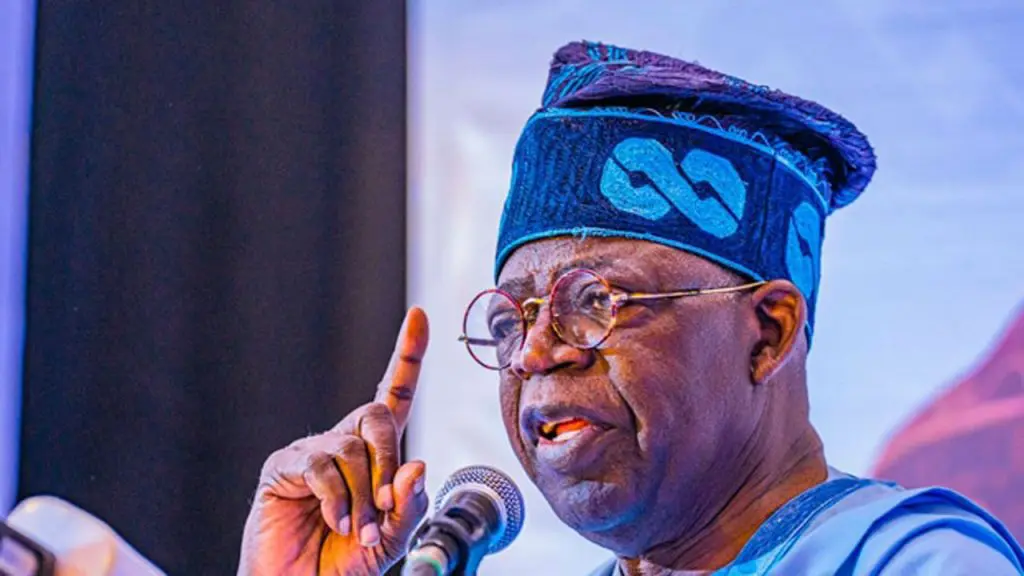
ABUJA — President Bola Ahmed Tinubu has formally requested the National Assembly’s approval to secure a $516.2 million syndicated loan from Deutsche Bank AG to accelerate the construction of the ambitious 1,068km Sokoto–Badagry Superhighway.
The executive communication, read during Wednesday’s plenary, outlines a strategic financing model designed to bridge the infrastructure deficit while minimizing sovereign risk. The loan is to be backed by a partial risk guarantee from the Islamic Corporation for the Insurance of Investment and Export Credit (ICIEC), the insurance arm of the Islamic Development Bank (IsDB).
A Legacy “Superhighway”

The Sokoto–Badagry road is one of the four “legacy projects” under the Renewed Hope Agenda, alongside the Lagos–Calabar Coastal Highway. Conceived originally in the 1980s during the Shagari administration, the project lay dormant for decades until the current administration’s push for a “1,000km highway plan” to link the North-West and South-West.
The superhighway is designed as a 20-centimetre thick concrete-paved road, stretching from Illela in Sokoto State—on the border with Niger Republic—through Kebbi, Niger, Kwara, Oyo, and Ogun states, before terminating in Badagry, Lagos.
Financing Structure
In the letter to the Senate, President Tinubu explained that the $516 million facility would be sourced through a syndicated arrangement led by Deutsche Bank. The involvement of the ICIEC is pivotal; as a Shariah-compliant insurer, the ICIEC provides credit enhancement that protects lenders against non-commercial risks, effectively lowering the cost of borrowing for the Nigerian government.
”This financing is a critical component of our commitment to delivering durable, economically transformative infrastructure,” the President noted. The funds are earmarked specifically for the ongoing construction phases, which recently saw the commencement of pavement work on the Ogun State corridor.
Economic and Security Stakes
Proponents of the project, including the Minister of Works, Dave Umahi, argue that the highway will do more than just facilitate transport. The corridor is expected to unlock agricultural potential by providing access to several dams and vast arable lands in the North-West, supporting all-year-round farming.
Additionally, the federal government has announced that the highway will feature modern security infrastructure, including street lighting and a Closed-Circuit Television (CCTV) surveillance system, to combat banditry and ensure the safety of commuters along the vast interstate stretches.
National Debt Concerns
The request comes amid a broader debate in the Senate regarding Nigeria’s rising external debt profile. While the Senate recently approved a larger $6 billion borrowing plan for the 2025–2026 fiscal cycle, lawmakers have emphasized the need for strict oversight. Senator Adetokunbo Abiru (Lagos East) previously noted that such loans are typically long-term and concessional, often ranging from 20 to 35 years, making them more sustainable for capital development than commercial short-term debt.
The Senate has referred the President’s request to the Committee on Local and Foreign Debt for further legislative action, with a report expected within the next two weeks.
Do you want to advertise with us?
Do you need publicity for a product, service, or event?
Contact us on WhatsApp +2348033617468, +234 816 612 1513, +234 703 010 7174
or Email: validviewnetwork@gmail.com
CLICK TO JOIN OUR WHATSAPP GROUP