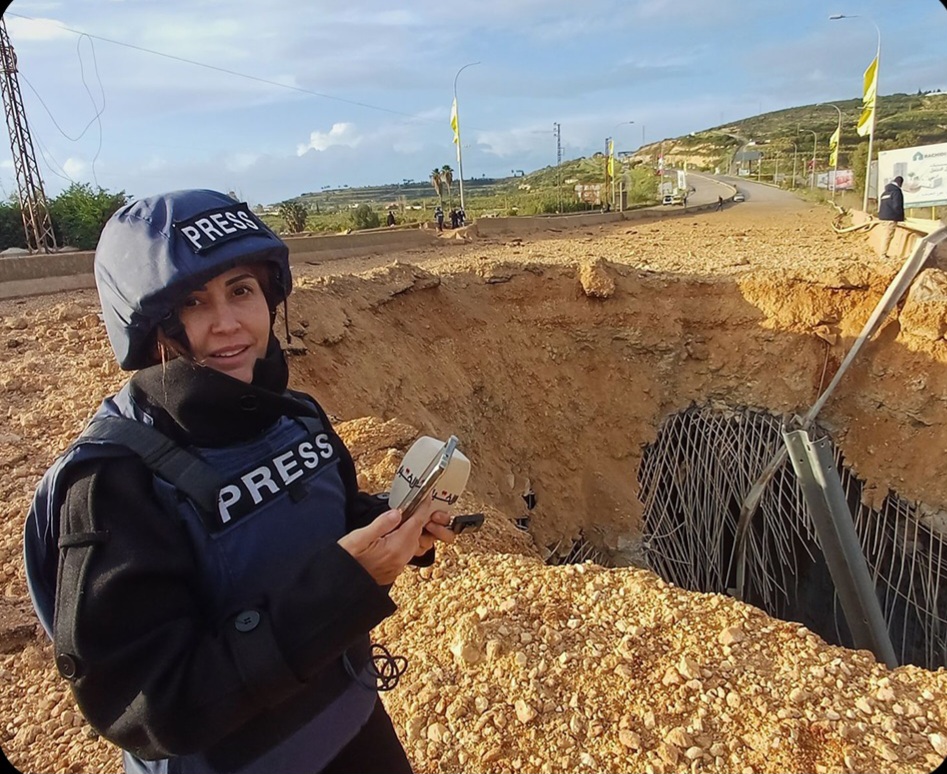
BEIRUT — A fragile ceasefire between Israel and Hezbollah teetered on the brink of collapse Wednesday after an Israeli airstrike in southern Lebanon killed a prominent journalist, prompting Lebanese officials to level accusations of “systemic” war crimes against the Israeli military.
Amal Khalil, a veteran correspondent for the Beirut-based Al Akhbar newspaper, was killed while reporting in the town of Tayri. A second media worker, freelance photojournalist Zeinab Faraj, sustained serious injuries in the same blast. The incident marks the fourth time since March that media personnel have been killed by Israeli fire in Lebanese territory.
Claims of Targeted Attacks
Lebanese Prime Minister Nawaf Salam issued a scathing condemnation via social media, asserting that the strike was not an accidental byproduct of combat but part of an established methodology.
”Targeting journalists and obstructing the access of rescue teams… constitute described war crimes,” Salam stated. He further alleged that Israeli forces opened “hostile gunfire” on Red Cross volunteers as they attempted to evacuate the wounded Faraj from the rubble.
The Committee to Protect Journalists (CPJ) echoed these concerns, holding Israeli forces directly responsible for the endangerment of media workers. According to CPJ data, Israel was responsible for nearly two-thirds of all journalist fatalities globally in 2025, a statistic that has fueled international calls for an independent UN investigation.

The Israeli Response
The Israel Defense Forces (IDF) acknowledged the strike but denied intentionally targeting civilians or journalists. In a formal statement, the military claimed its forces identified two vehicles departing a “military structure” used by Hezbollah.
The IDF maintained that the individuals in the vehicles acted in a “threatening manner” toward ground troops, prompting an aerial response. Military spokespersons insisted that they did not hinder emergency services and that the specific circumstances of Khalil’s death are currently under internal review.
A Ceasefire Under Pressure
The bloodshed comes at a critical diplomatic juncture. A 10-day ceasefire, brokered by U.S. President Donald Trump, took effect last Friday following months of escalating cross-border violence.
Despite the violence in Tayri, high-level diplomatic efforts continue. A second round of direct negotiations between Israeli and Lebanese officials is scheduled to take place in Washington on Thursday. These talks are viewed as a “last-ditch effort” to convert the temporary pause in hostilities into a long-term security arrangement.
However, the killing of a journalist from Al Akhbar—a publication often aligned with Hezbollah—threatens to galvanize domestic Lebanese opposition to the truce. As rescue teams continue to clear debris in southern Lebanon, the international community remains focused on Washington, where the future of the region’s stability now rests.
Do you want to advertise with us?
Do you need publicity for a product, service, or event?
Contact us on WhatsApp +2348033617468, +234 816 612 1513, +234 703 010 7174
or Email: validviewnetwork@gmail.com
CLICK TO JOIN OUR WHATSAPP GROUP