BEIJING — For over a decade, President Xi Jinping has directed a systemic overhaul of the Chinese economy with a singular, overriding objective: total energy security. Today, as a historic oil crisis triggered by the conflict between the United States, Israel, and Iran sends global markets into a tailspin, China’s “Promethean” gamble on self-sufficiency is facing its ultimate test—and, by most accounts, it is passing.
While nations across Asia scramble to secure dwindling fuel supplies, the world’s largest energy importer remains remarkably composed. Beijing is currently buoyed by massive strategic petroleum reserves, an industrial sector increasingly decoupled from foreign oil, and a domestic transportation fleet that is rapidly transitioning to electricity.
A Decade of Defensive Planning
Since the early 1990s, Chinese leadership has viewed its dependence on Middle Eastern oil—and the vulnerable maritime chokepoints like the Strait of Malacca—as a strategic “Achilles’ heel.” Under Xi, this concern evolved into a “worst-case scenario” doctrine.
To mitigate these risks, Beijing has pursued a multi-pronged strategy:
- Infrastructure Diversification: The construction of massive overland pipelines from Russia, Central Asia, and Myanmar to bypass naval blockades.
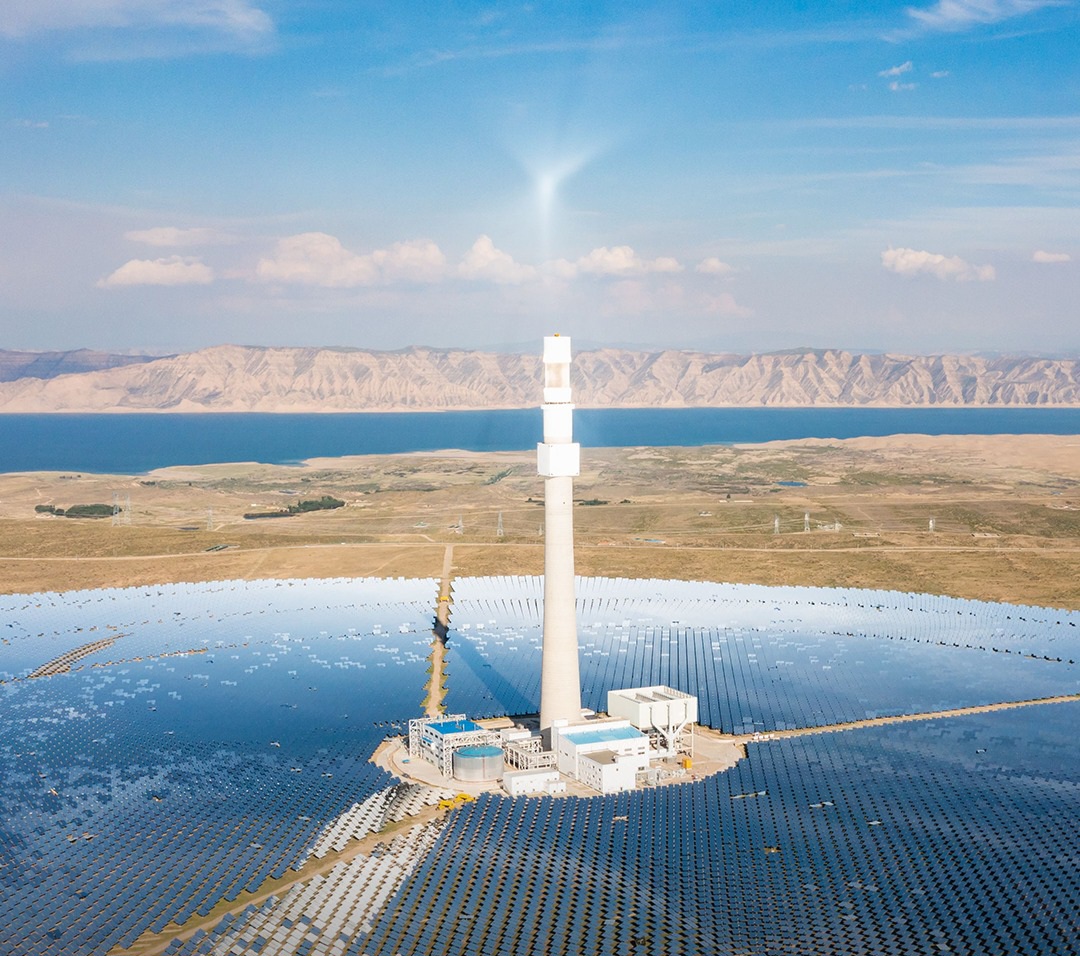
- Renewable Supremacy: The installation of wind and solar capacity at a scale that dwarfs the rest of the world combined.
- The “Electrostate” Pivot: Dominating the global supply chain for lithium batteries and electric vehicles (EVs), which now account for over 50% of new car sales in the country.
”This is a moment of vindication for Beijing,” says Erica Downs, a senior research scholar at Columbia University’s Center on Global Energy Policy. “They made a strategic call years ago to prioritize security over short-term market efficiency, and that bet is now paying off.”
Weathering the Storm
Despite the closure of the Strait of Hormuz in March—a passage that typically carries nearly half of China’s imported oil—the domestic impact has been largely contained. While surging jet fuel prices and transport costs have nudged factory-gate inflation upward, the “fortress” remains intact.
Data from Kpler indicates that China entered this crisis sitting on an estimated 1.3 billion barrels of crude—enough to sustain the country for three months without a single new drop of imported oil. Furthermore, the Rhodium Group reports that the rise of EVs has already permanently slashed China’s oil demand by over one million barrels per day.
The Great Divergence
The current crisis highlights a widening chasm between the world’s two largest economies. While the United States has faced internal political friction over its transition to green energy, China has doubled down. Chinese analysts suggest the country now imports only about 15% of its total energy needs, even as it remains a major consumer of coal to “backstop” its renewable grid.

”Twenty years ago, we worried about energy security,” notes Lin Boqiang of Xiamen University. “Now, we have a workable solution. When oil prices spike, our electric vehicles and renewables simply become more competitive.”
A Visionary Export
Beyond its own borders, Beijing is leveraging its stability to project an image of “visionary leadership” in a world “rife with chaos.” In the first quarter of 2026, Chinese exports of green technologies—including wind turbines and lithium batteries—surged by as much as 78%.
As global disruptions force every nation to rethink their energy dependencies, China isn’t just surviving the oil shock; it is positioning itself as the primary architect and supplier of the post-oil world. For Xi Jinping, the “energy fortress” is no longer just a defensive shield—it is a cornerstone of China’s bid for global economic leadership.
Do you want to advertise with us?
Do you need publicity for a product, service, or event?
Contact us on WhatsApp +2348033617468, +234 816 612 1513, +234 703 010 7174
or Email: validviewnetwork@gmail.com
CLICK TO JOIN OUR WHATSAPP GROUP