

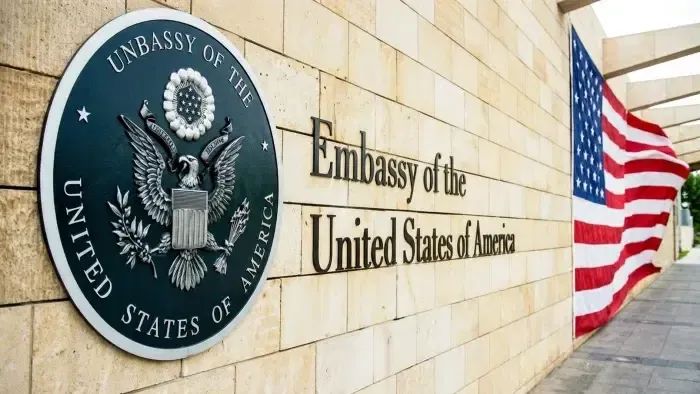
ABUJA — The United States Department of State has escalated its security concerns in Nigeria, authorizing the voluntary departure of non-emergency government personnel and their families from the Embassy in Abuja. The move, announced in an updated travel advisory on April 8, 2026, comes as Washington cites a “deteriorating security situation” across several regions of the country.
While the national advisory remains at Level 3 (Reconsider Travel), the State Department has significantly expanded its list of high-risk areas. Five additional states—Plateau, Jigawa, Kwara, Niger, and Taraba—have been elevated to Level 4 (Do Not Travel), the highest risk category, bringing the total number of flagged states to 23.
Escalating Threats
The advisory paints a grim picture of the current security landscape, warning of persistent threats from terrorism, banditry, and kidnapping. For the nine states now under the Level 4 category, the U.S. warned that community violence and roadside banditry are widespread, and security operations to counter these threats could occur without prior notice.
“The security situation in these states is unstable and uncertain due to civil unrest,” the advisory noted. It further highlighted that U.S. citizens are often targeted due to perceptions of wealth, particularly in areas where government control is limited.
Regional Risk Breakdown
The advisory categorizes the 23 high-risk states based on specific threats:

- Terrorism & Kidnapping (Highest Risk): Borno, Jigawa, Kogi, Kwara, Niger, Plateau, Taraba, Yobe, and Northern Adamawa.
- Unrest & Banditry: Bauchi, Gombe, Kaduna, Kano, Katsina, Sokoto, and Zamfara.
- Violent Crime & Armed Gangs: Abia, Anambra, Bayelsa, Delta, Enugu, Imo, and Rivers (excluding Port Harcourt).
In Southern Nigeria, the State Department warned of a high risk of violent protests and armed gangs, noting that kidnapping for ransom remains a major concern in both urban and rural settings.
Limited Embassy Operations
Although the U.S. Embassy in Abuja remains open, the departure of non-emergency staff means the mission will have “limited ability” to provide emergency services to U.S. citizens in the country. However, the Consulate General in Lagos continues to provide routine and emergency services.
U.S. citizens currently in Abuja have been advised to consider departing via commercial transport if their presence is not essential. Those remaining are urged to enroll in the Smart Traveler Enrollment Program (STEP) and establish “proof of life” protocols in case of abduction.
The advisory also touched on the healthcare sector, warning that medical services in Nigeria are inconsistent and often fall below international standards, with many facilities requiring upfront payment before treatment.
Do you want to advertise with us?
Do you need publicity for a product, service, or event?
Contact us on WhatsApp +2348033617468, +234 816 612 1513, +234 703 010 7174
or Email: validviewnetwork@gmail.com
CLICK TO JOIN OUR WHATSAPP GROUP